

If you have ever made a smoothie that turned out gritty, a soup that stayed chunky, or a frozen drink that refused to move, you already know the real problem. It is not the recipe. It is power, blade design, and how well the blender keeps ingredients circulating.

That is why many shoppers end up asking the same question: Why choose the Vitamix Venturist Pro 64-oz Blender with Recipe Book instead of a cheaper blender that looks similar online?
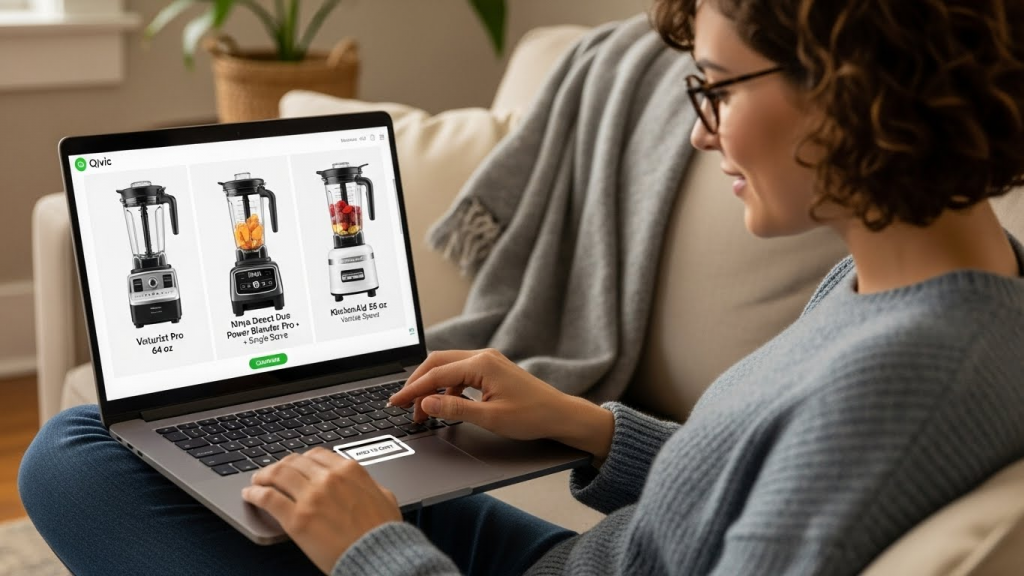
This guide gives a clear, practical answer. You will see what the Venturist Pro is built to do, what you actually get in the box, and how it stacks up against two other QVC blender options. You will also get a simple decision checklist, plus tips to get better blends with less waste.
The short answer
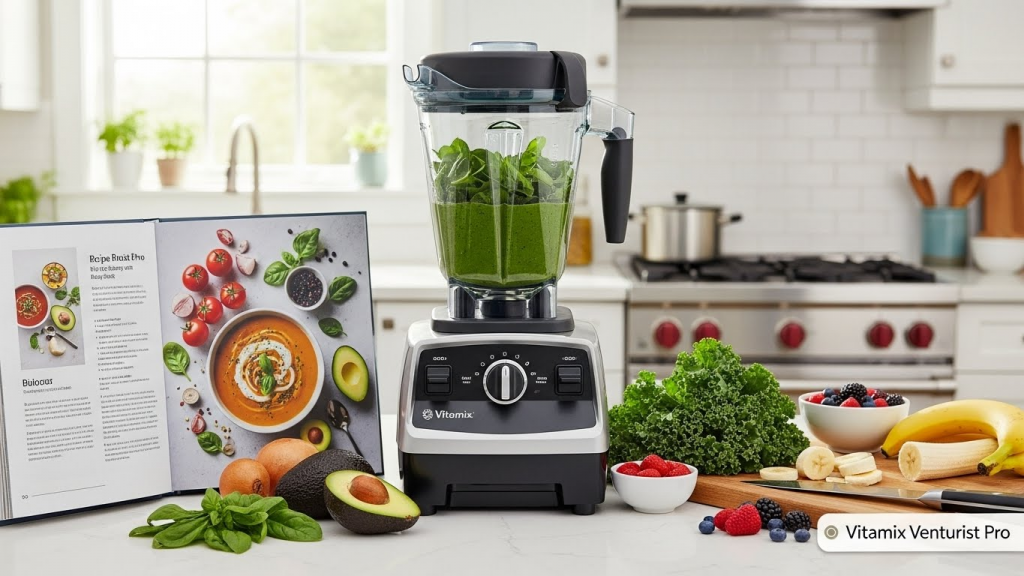
Why choose the Vitamix Venturist Pro 64-oz Blender with Recipe Book?
Because it is designed for consistent, high-speed blending with hands-on control, plus tools that make thick blends easier (a tamper), and a built-in timer to help you stop at the right texture. The included recipe book also helps you use it more often, which matters if you want real value over time.
What you get, and why it matters
What comes in the box
QVC lists the Venturist Pro bundle as including a motor base, a 64-ounce low-profile container with lid, a tamper, and a “Simply Blending” recipe book. Those items sound basic, but together they solve the most common blender pain points.
Why a tamper changes everything for thick recipes
Thick blends are where many blenders fail. Nut butters, smoothie bowls, hummus, frozen desserts, and thick sauces can stall the blades because the mix forms an air pocket. A tamper lets you keep ingredients moving without adding extra liquid. That means thicker textures without watering them down.
Why a built-in timer is more useful than it sounds
A timer does not just “count up.” It helps you repeat the same texture next time.
That is helpful if you make the same smoothie daily, or if you want your salsa chunky, not pureed. QVC highlights a built-in digital timer for this model.
The features that explain the performance
Power and control
QVC lists a 2.2 HP motor, 10 variable speeds, and a pulse feature for the Venturist Pro.
This combo matters because different foods need different approaches.
- Leafy greens and fresh fruit: ramp speed gradually for smoother results.
- Frozen fruit and ice: use higher speeds once the mix starts circulating.
- Chunky salsa: short pulses instead of a long blend.
Container size and why 64 oz is a sweet spot
A 64-ounce container is big enough for family batches. It is also practical for meal prep. Think salad dressing for the week, or a full pot of blended soup (then reheat safely on the stove).
QVC lists the included container as 64 oz, low-profile style.
A real safety note for hot blends
If you blend hot liquids, you need to be careful with steam and splatter. The Venturist Pro manual warns to use caution with hot liquids in the 64 oz container and to avoid filling to max capacity. It also advises starting on the lowest speed setting for hot blends.
That is not meant to scare you. It is meant to prevent burns, and it is smart advice for any high-powered blender.
A simple comparison: 3 QVC blender options side by side
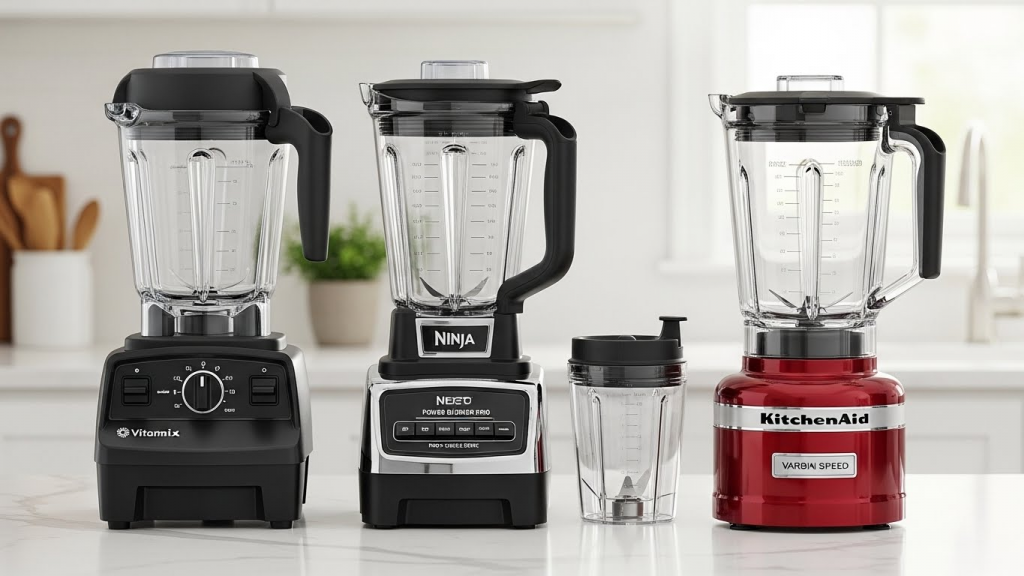
Here is a clean look at the three QVC products, based on their listed features.
| Feature | Vitamix Venturist Pro 64 oz | Ninja Detect Duo Power Blender Pro + Single Serve | KitchenAid 56 oz Variable Speed |
|---|---|---|---|
| Main pitcher size | 64 oz low-profile container | 72 oz pitcher (bundle also includes two 24 oz cups) | 56 oz jar |
| Motor / power info | 2.2 HP motor | 1800 peak watts motor base | “Intelli-Speed Motor Control” noted |
| Speed control | 10 variable speeds + pulse | Variable speed control with 10 settings (pitcher) + presets | 5-speed dial + 3 preset programs |
| Special “smart” features | Self-Detect container tech mentioned | BlendSense auto adjusts speed and time + “Liquid Detect” for single-serve | Jar design + asymmetric blade and sensing to maintain speed |
| Included extras | Tamper + recipe book | Two single-serve cups + recipe inspiration guide | Tamper included |
How to read this table (the part most people skip)
Do not focus only on “bigger pitcher” or “more watts.”
Instead, decide what kind of blending you do most:
- If you want hands-on control and thick blends without extra liquid, the tamper plus variable speed control is a big deal.
- If you want guided automation and single-serve convenience, Ninja’s preset and detection features may feel easier day to day.
- If you want a mid-size jar and simpler controls with presets, KitchenAid’s approach may fit your kitchen style.
The health angle, and why blending can support better habits
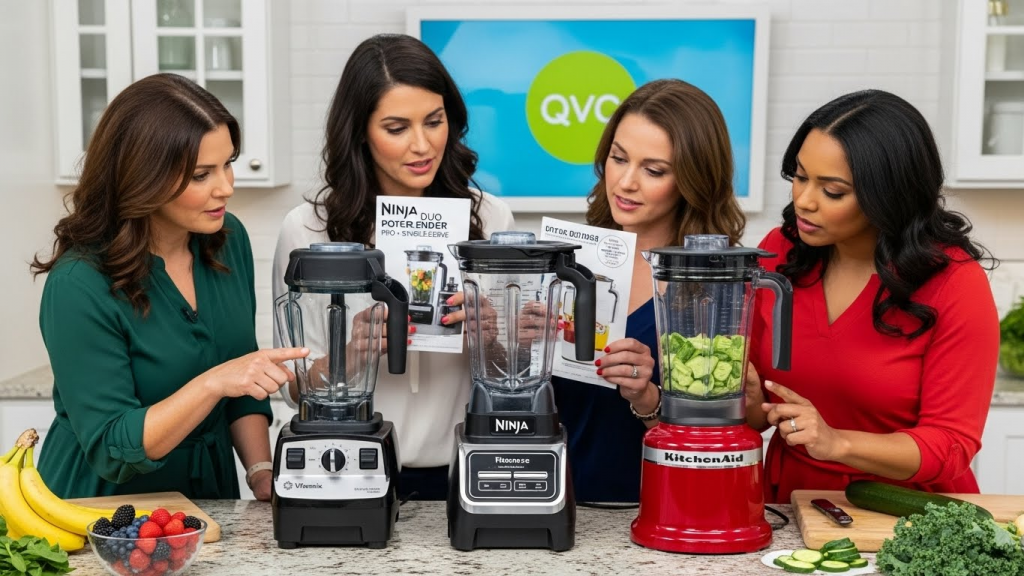
A blender will not “fix” nutrition. But it can make healthy choices easier, and that matters because most people fall short on key diet goals.
A quick stat that matters: fiber is a major gap
The CDC summarizes the Dietary Guidelines recommendation as about 22 to 34 grams of fiber per day for adults, depending on age and sex.
USDA research also shows Americans averaged 8.1 grams of fiber per 1,000 calories in 2017–18, which is about 58% of the recommended 14 grams per 1,000 calories.
That is a big shortfall.
Smoothies vs juices, a practical takeaway
Harvard Health notes smoothies can have a nutritional advantage over juice because the whole fruit or vegetable is used, so you keep more fiber.
So if your goal is “more plants,” blending can be a smart tool.
Not magic, just useful.
Mini table: fiber targets in plain terms
| What to know | Simple takeaway |
|---|---|
| Recommended fiber range (adults) | About 22 to 34 g/day, varies by age and sex |
| Typical U.S. intake vs recommendation | About 58% of the recommended level per 1,000 calories (2017–18) |
| Smoothies vs juice | Smoothies tend to keep more fiber than juice |
So, why choose the Vitamix Venturist Pro bundle specifically?
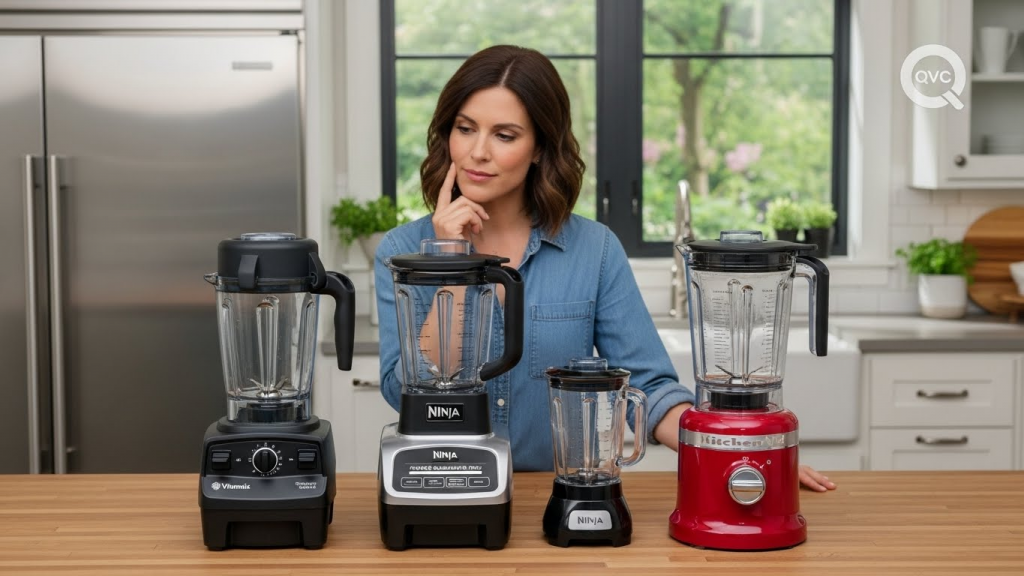
Here are the most practical reasons, based on how people actually use a blender.
You want smoother textures, fast
High-speed blending is mainly about consistent circulation.
The Venturist Pro’s variable speed range, plus the ability to use a tamper for thick blends, is built around that idea.
You want one blender that can cover multiple “kitchen jobs”
This model is positioned for smoothies, soups, sauces, frozen desserts, and more.
If you can replace a mini food chopper, a smoothie maker, and a frozen drink machine, the value story gets better.
You actually plan to use the recipe book
People buy appliances and then forget them.
A recipe book can help you build a routine, especially in the first month.
QVC notes the included “Simply Blending” book covers multiple categories like smoothies, soups, dressings, and desserts.
That is another reason why choose the Vitamix Venturist Pro 64-oz Blender with Recipe Book can be a smarter decision than buying a barebones blender.
A “cost per use” reality check (simple math, big clarity)
This is a quick way to decide if a premium blender makes sense for you.
Assume you make:
- 4 smoothies a week
- 2 sauces or soups a week
That is 6 uses per week.
In one year: 6 × 52 = 312 uses.
Now compare that to a blender that you only use once a week because it is annoying to clean or it struggles with frozen ingredients.
That would be 52 uses per year.
Even if both blenders cost the same (they do not), the blender you actually use more often gives you more value.
This is the quiet, practical reason why choose the Vitamix Venturist Pro 64-oz Blender with Recipe Book can pay off: it is easier to build a habit when results are reliable.
Who should buy which one?
Pick the Vitamix Venturist Pro if…
- You want very smooth smoothies, creamy soups, and thick blends like nut butter.
- You like manual control (you want to choose speed, time, and texture).
- You want a big container for family batches.
Pick the Ninja Detect Duo if…
- You want more “auto” help (speed and time adjustments).
- You want single-serve cups included for grab-and-go.
- You like presets and detection features.
Pick the KitchenAid 56 oz if…
- You want a slightly smaller jar.
- You want simpler controls plus a few preset programs.
- You like KitchenAid’s blending system approach and design language.
Practical tips to get better results on day one
These tips work for most blenders, but they matter more as you level up into thicker blends.
-
Use a load order that helps circulation.
Liquids first, then soft ingredients, then frozen or hard items. -
Start low, then ramp up.
This is also recommended for safety with hot mixtures. -
Use the tamper for thick blends instead of adding liquid.
That helps you keep flavor strong and texture rich. -
Stop when it is done.
Over-blending can warm your smoothie and dull fresh flavors.
Conclusion: the decision in one sentence
If you want a blender that can handle daily smoothies plus real kitchen tasks like soups, sauces, and thick blends, and you want consistent results with hands-on control, that is why choose the Vitamix Venturist Pro 64-oz Blender with Recipe Book is an easy yes for many households.
Your next step: use the comparison table above, pick the model that matches your habits, then plan your first 7 days of blends so the blender does not end up as “cabinet décor.”
The responses below are not provided, commissioned, reviewed, approved, or otherwise endorsed by any financial entity or advertiser. It is not the advertiser’s responsibility to ensure all posts and/or questions are answered.