

Outdoor spaces are doing more work than ever. Buyers still rank patios, front porches, exterior lighting, and landscaping among the most wanted home features, and Houzz’s outdoor trends research continues to track strong homeowner interest in exterior upgrades. That means patio furniture is no longer just seasonal decor, it is part of how people live at home.

The problem is that many patio sets look great for one summer, then fade, wobble, rust, crack, or end up at the curb. If you want sustainable outdoor furniture, the smartest move is not chasing buzzwords. It is choosing materials that last, materials that can handle water and UV exposure, and materials sourced or manufactured with fewer environmental tradeoffs. On that score, teak and aluminum still sit at the top of the list, with recycled HDPE close behind for buyers who want low maintenance and a smaller waste footprint.
In plain English, the best weather-proof patio sets usually come down to four questions: Will the frame resist moisture, will the finish hold up in sun, will the material age gracefully, and can you maintain it without constant sealing, painting, or replacing parts? Answer those well, and your garden furniture is far more likely to earn its footprint over time.
The short answer, what actually lasts outdoors?
| Material | Weather performance | Sustainability angle | Best for | Main caution |
|---|---|---|---|---|
| Teak | Excellent in rain, sun, and fluctuating weather | Best when responsibly sourced, ideally FSC-certified | Long-term premium seating and dining sets | High upfront cost |
| Powder-coated aluminum | Excellent corrosion resistance, low maintenance | Recyclable again and again, widely recovered in the U.S. | Modern patio sets, small-space furniture, humid climates | Lightweight pieces can feel less substantial |
| Recycled HDPE | Excellent UV and moisture resistance | Reuses plastic feedstock, can reduce virgin material demand | Low-maintenance patios, coastal homes, family spaces | Heavier aesthetic, less natural look |
| Steel with wicker overlay | Can perform well if coated and well built | Mixed, depends on lifespan and coatings | Budget-friendly conversation sets | Rust risk if coating fails |
| Acacia or eucalyptus | Good, if maintained | Better when responsibly sourced and used for many years | Warm wood look at lower cost | Needs more upkeep than teak |
Why teak still earns its reputation
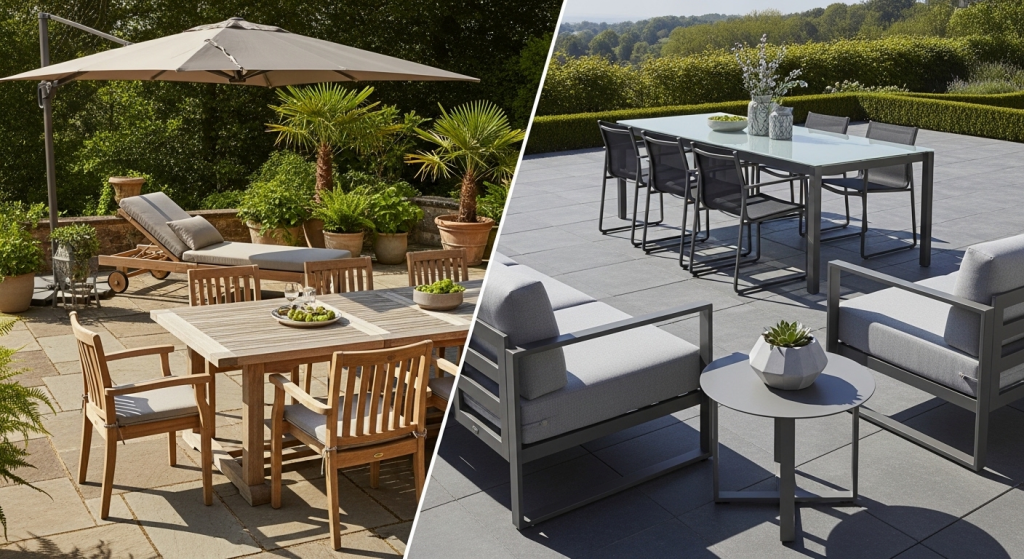
Teak keeps winning because it is naturally durable, not just chemically treated to look durable. USDA Forest Products Laboratory research notes that teak is well known for natural termite resistance, and that the heartwood’s natural durability is tied largely to quinones in the wood. That matters outdoors, because the less a material depends on fragile surface coatings alone, the better it tends to age.
There is also a sourcing question, and it matters. FSC defines sustainable forestry as managing forests so they remain healthy and usable for generations while protecting biodiversity, wildlife habitat, soil health, and local communities. So when shoppers talk about “sustainable teak,” the real issue is not just teak itself, but whether it comes from responsible forest management and traceable supply chains.
Teak is not the cheapest choice, but it often becomes the value choice over time. A well-made teak frame can outlast cheaper softwoods and low-end coated metals, especially if you are willing to do basic cleaning and accept the silver-gray patina that develops outdoors. That is why teak remains the benchmark for durable garden materials, especially in uncovered spaces.
Why aluminum rules modern patios
Aluminum’s edge is simpler: it is light, strong enough for everyday furniture applications, and naturally corrosion-resistant. The Aluminum Association explains that aluminum forms a protective oxide coating when exposed to air, and that it will not rust the way steel does. In real patio life, that means less anxiety in humid climates, rainy regions, and poolside setups.
Aluminum also has a strong sustainability story when it is part of a long product life cycle. The Aluminum Association says aluminum can be recycled repeatedly with no theoretical limitation, and that more than 80% of U.S. aluminum production today is recycled, or secondary, aluminum. That combination, durability in use plus repeat recyclability, is exactly why aluminum keeps showing up in serious conversations about sustainable outdoor furniture.
For 2026 patios, powder-coated aluminum is especially compelling because it fits the way people actually shop now. Buyers want clean lines, easier upkeep, and outdoor rooms that feel more intentional. Aluminum checks all three boxes without asking for the maintenance routine wood usually needs.
Where recycled HDPE fits in
If teak is the premium natural option and aluminum is the premium metal option, recycled HDPE is the practical sustainability workhorse. EPA notes that recycling reduces the need to extract new resources, while its plastics data shows how significant plastic waste remains in the municipal waste stream. Furniture that turns plastic feedstock into long-life durable goods does not solve the whole waste problem, but it can be a better direction than buying disposable patio sets every few years.
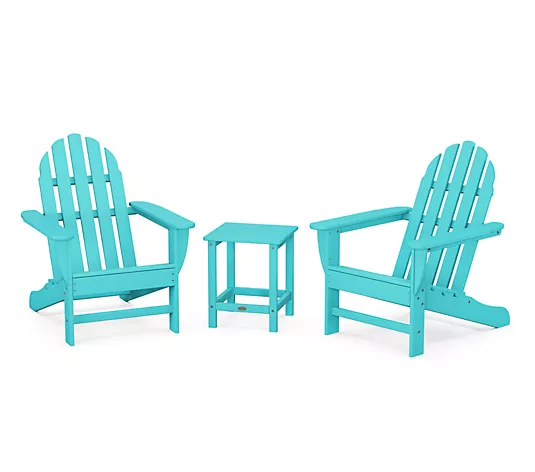
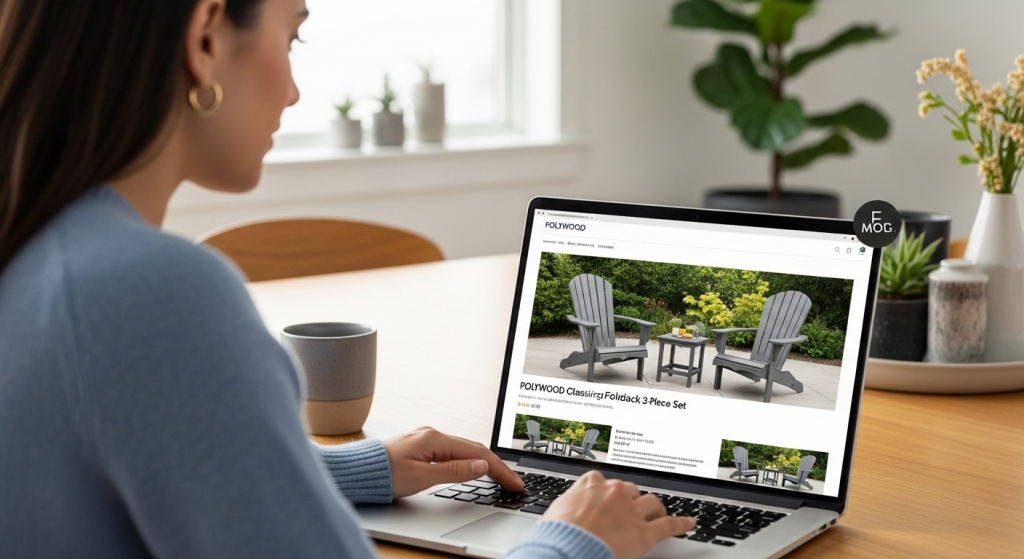
One current QVC example is the POLYWOOD Classic Folding Adirondack 3-Piece Set, which uses UV-stabilized high-density polyethylene lumber, includes marine-grade hardware, requires no painting or waterproofing, and is made with landfill-bound and ocean-bound plastics. That is a strong formula for shoppers who want weather-proof patio sets with very low upkeep.
The tradeoff is aesthetic. HDPE can look crisp and clean, but it does not deliver the same natural warmth as real teak. So the better question is not “Which is best?” but “Which compromise fits your space?” If you want a timeless wood look, teak still wins. If you want set-it-and-forget-it performance, HDPE is hard to beat.
Materials that look durable, but need a closer look
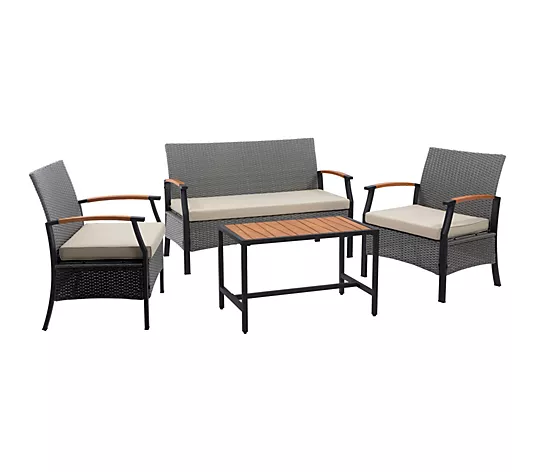
Steel-framed wicker sets can still be good buys, especially for style and comfort, but they are more condition-dependent. A current QVC Teamson set uses a powder-coated steel frame, woven polyethylene rattan wicker, weather-resistant cushions, and eucalyptus accents. That can work well, but the long-term durability depends heavily on coating quality, hardware, storage habits, and whether water gets into vulnerable points over time.
Acacia and eucalyptus also deserve nuance. They can be attractive, solid options for shoppers who want natural wood at a lower price than teak. But they are not interchangeable with teak. If a product says “teak oil finish” or “natural oil stain finish,” that does not mean the frame is made from teak. It means the finish is teak-toned or teak-style. You are still buying acacia or another wood species, with its own maintenance profile.
That distinction matters because many shoppers unintentionally compare “solid teak” against “wood with teak finish” as if they are the same category. They are not. Solid teak generally wins on natural durability; acacia often wins on upfront price.
How to choose weather-proof patio sets without wasting money
Start with the frame, not the cushion color. If the frame is weak, absorbent, or rust-prone, the set will disappoint no matter how pretty it looks on day one. Powder-coated aluminum, true teak, and quality recycled HDPE are the safest starting points for durability.
Next, look for small clues that suggest smarter outdoor design. On current QVC listings, examples include slatted tabletops that prevent pooling water, UV-stabilized material, marine-grade hardware, and fabrics marketed for resistance to fading, stains, or mold. Those features do not guarantee perfection, but they usually signal that the product was designed for real outdoor exposure, not just occasional porch styling.
Then ask a sustainability question that too many buyers skip: “Will I still want this in five years?” EPA’s waste hierarchy puts source reduction and reuse ahead of recycling. In furniture terms, the most sustainable patio set is often the one you buy once, maintain reasonably, and keep for years. Longevity is not separate from sustainability, it is a big part of it.
3 QVC patio sets worth comparing
These three QVC options are similar in purpose, outdoor seating sets for lounging or casual conversation, but they serve very different buyers.
| QVC product | Best for | Material story | What stands out | Watch-out |
|---|---|---|---|---|
| POLYWOOD Classic Folding Adirondack 3-Piece Set | Low-maintenance patios, coastal or rainy climates | UV-stabilized HDPE, made with landfill-bound and ocean-bound plastics | No painting or waterproofing, folds flat, marine-grade hardware | More casual, Adirondack look than full lounge set |
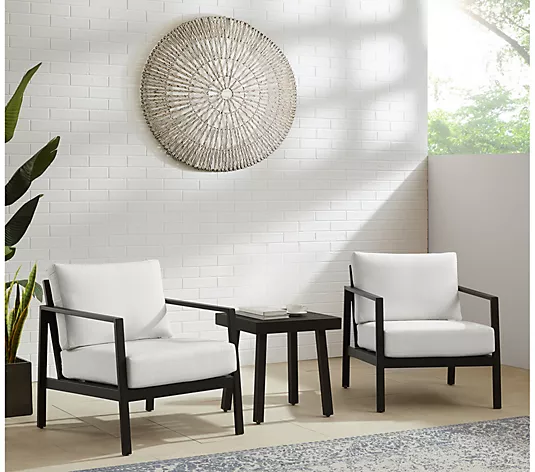
| Linon Home Holland Aluminum 3-Peice Outdoor Set | Small patios, modern decks, humid climates | Powder-coated aluminum frame, Sunbrella fabric | Resists fading, stains, and mold, slatted table helps drain water | Lighter visual presence, less warm than wood |
| Teamson Home Wooden Armrests Outdoor Conversation Set | Buyers who want a woven lounge look at a more approachable tier | Powder-coated steel frame, PE rattan wicker, eucalyptus accents | Classic conversation-set styling, weather-resistant cushions | Steel requires more care than aluminum if finish is damaged |
POLYWOOD Classic Folding Adirondack 3-Piece Set
Linon Home Holland Aluminum 3-Peice Outdoor Set
Teamson Home Wooden Armrests Outdoor Conversation Set
My take on the best use case for each one
The POLYWOOD set is the best match for shoppers prioritizing sustainability plus low maintenance. It is not pretending to be natural wood, and that honesty is part of its strength. If you want durable garden materials with minimal fuss, this is the cleanest buy of the three.
The Linon aluminum set is the best match for buyers who want a sleek, weather-smart seating area without heavy maintenance. Its aluminum frame, powder-coated finish, and Sunbrella cushions make it the most “practical modern patio” option in this comparison.
The Teamson set is the best fit for someone chasing the look of all-weather wicker and a more traditional conversation area. It offers style and comfort, but it is the one I would watch most closely for long-run finish wear because steel is simply less forgiving than aluminum when protective coatings fail. That is not a deal-breaker, it just means maintenance matters more.
PAA-style questions readers actually ask
Is teak really sustainable?
It can be, when it is responsibly sourced. FSC’s guidance makes the key point clear: sustainability is about forest management, biodiversity, soil and watershed protection, and long-term usability for communities and future generations. Look for traceable sourcing, not just the word “teak.”
Does aluminum rust outside?
No, not the way steel does. Aluminum forms a protective oxide layer, which is why it is a strong outdoor choice for furniture frames.
What is the most weather-proof patio furniture material?
For most households, powder-coated aluminum and recycled HDPE are the easiest weather-proof choices. True teak is also excellent, but it asks for more acceptance of natural aging or occasional maintenance if you want to preserve its original color.
Is recycled plastic furniture actually worth it?
Often, yes. EPA stresses that recycling helps reduce extraction of new resources, and long-life HDPE furniture can keep material in use far longer than flimsy seasonal furniture. It is especially worthwhile if you value low maintenance and plan to keep the set for years.
Final verdict
If you want the best-looking long-term investment, buy teak, but buy it carefully and prioritize responsible sourcing. If you want the easiest everyday ownership experience, buy aluminum. If you want a strong sustainability-meets-convenience option, recycled HDPE deserves a serious look. Everything else can work, but usually with more compromise.
That is why teak and aluminum still rule 2026. They solve the real patio problem better than most alternatives: they last, they handle weather, and when chosen well, they keep your outdoor room from becoming another short-lived purchase. Pair either one with quality cushions, thoughtful layout, and simple care, and you are far more likely to build a patio that feels finished, not temporary.
The responses below are not provided, commissioned, reviewed, approved, or otherwise endorsed by any financial entity or advertiser. It is not the advertiser’s responsibility to ensure all posts and/or questions are answered.