

When the lights go out, it is never just about light. It is food in the fridge, phone battery, a modem that keeps you connected, and medical gear that cannot “wait until morning.”

And when you are camping, it is the same story, just with different essentials, a cooler, a fan, lights, camera batteries, maybe a CPAP.
That is why EcoFlow DELTA Max 2: Total Power Security for Home and Camping is such a useful idea. It is portable, quiet, and fume free, so it fits both worlds.
In this guide, you will learn how to size your power plan, what the DELTA Max 2 (often listed as DELTA 2 Max) can realistically run, and which QVC bundle makes the most sense for your needs.
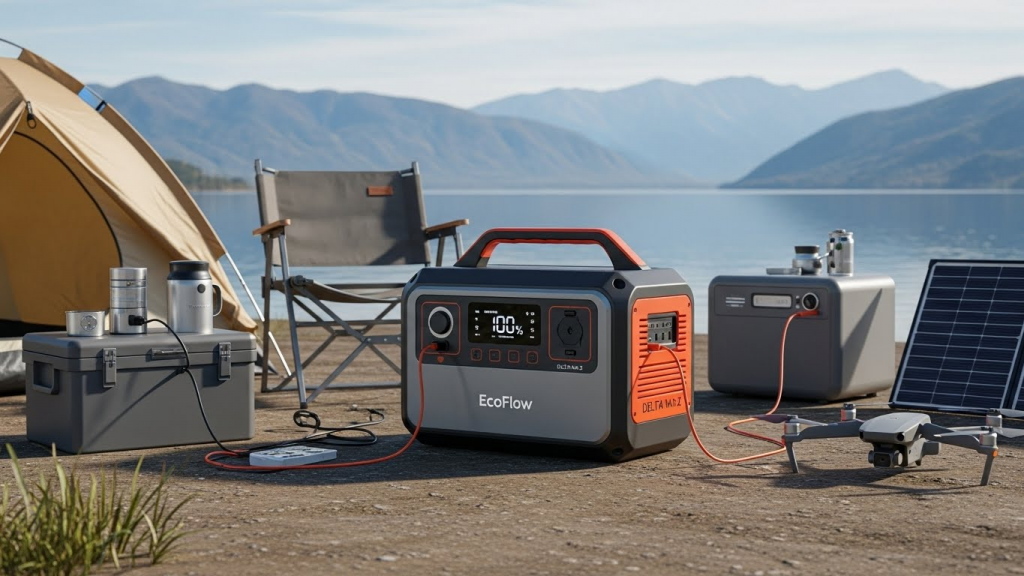
Why backup power matters more than it used to
Power outages are not rare “once a decade” events for many households. In the U.S., electricity customers averaged 11 hours of interruptions in 2024, and major storms drove a big share of that time.
Utilities track reliability with metrics like SAIDI, which is the average minutes of outage time a customer experiences in a year.
Here is the practical takeaway: your backup plan should focus on the things that protect health, food, and communication first.
EcoFlow DELTA Max 2, quick reality check on the name
If you see “EcoFlow DELTA Max 2,” you are usually looking at the product EcoFlow markets as DELTA 2 Max.
For specs and features, treat them as the same device line and confirm the numbers on the listing you are buying from (especially if it is a bundle).
What the EcoFlow DELTA Max 2 is built to do
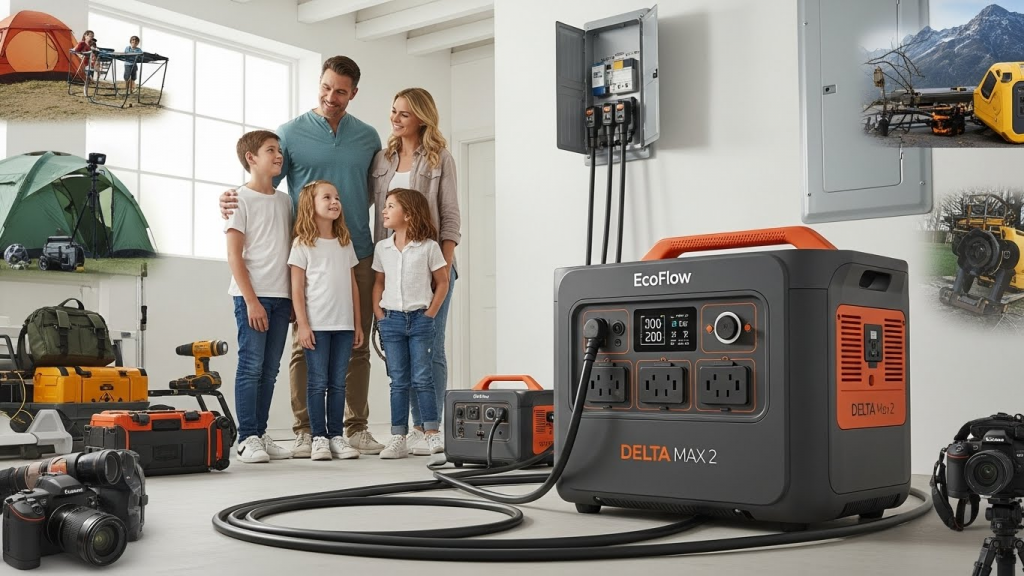
At a high level, EcoFlow DELTA Max 2: Total Power Security for Home and Camping is about three wins:
- High capacity for essentials, so you can run devices for hours, not minutes. EcoFlow lists the DELTA 2 Max at 2048Wh capacity and 2400W output.
- Fast recharging, so you can get back to “ready” quickly. EcoFlow highlights an 80% charge in 43 minutes with AC plus solar, and about 1.1 hours to 80% with AC (as listed on their product page).
- Expandable storage, so you can scale from a grab and go unit to a longer home backup setup by adding extra batteries. EcoFlow describes expanding up to 6kWh with extra batteries.
Decide what you need to power
Before you compare bundles, list your “must run” items. Keep it short.
Good starting points for most homes:
- Refrigerator
- Internet modem and router
- Phones and power banks
- A few lights
- Small medical devices (if needed)
- Fan or small space comfort item
Good starting points for camping:
- Cooler or portable fridge
- Lights
- Phone, camera, drone batteries
- Small fan
- Laptop (optional)
- CPAP (if needed)
A simple way to estimate runtime (original, practical math)
Battery runtime depends on load, inverter losses, and how hard you push the unit.
A safe, easy planning assumption is 85% usable energy after normal losses.
- Battery capacity: 2048Wh
- Estimated usable: 2048Wh × 0.85 ≈ 1740Wh usable
Estimated runtime (hours) ≈ usable Wh ÷ device watts
Estimated runtimes for common devices (planning estimates)
| Device | Typical watts | Estimated runtime (DELTA 2 Max) |
|---|---|---|
| Wi-Fi modem + router | 15W to 30W | ~58 to 116 hours |
| LED lamp | 10W | ~174 hours |
| Laptop | 50W to 100W | ~17 to 35 hours |
| Box fan | 40W to 80W | ~22 to 44 hours |
| CPAP (no heated humidifier) | 30W to 60W | ~29 to 58 hours |
| Mini fridge or efficient cooler | 60W average | ~29 hours |
| Full size fridge (average cycling) | ~120W average | ~14 hours |
EcoFlow also gives an example of “up to 14 hours” for a refrigerator based on a 120W reference load, which lines up with the estimate above.
Pick the right “power strategy” for home vs camping
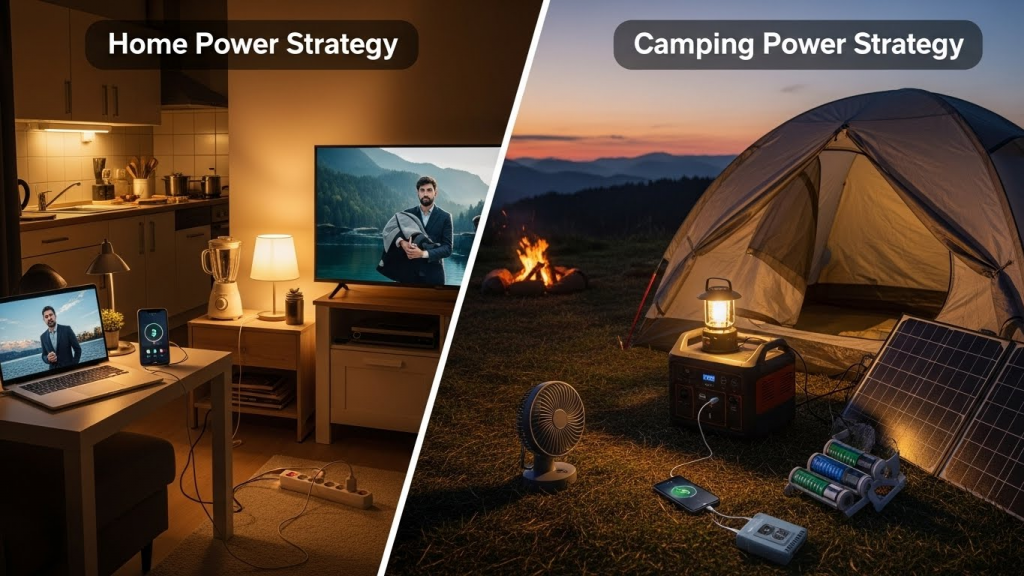
For home backup, prioritize stability over peak adventure
- Focus on your refrigerator, connectivity, and lighting.
- Plan your charging method. Wall charging is easiest, but solar helps when outages last.
EcoFlow also sells a transfer switch setup for partial home backup and describes plug and play use with a transfer switch for 120V essentials.
For camping, prioritize portability and daytime refueling
- A solar panel bundle can be worth it if you camp more than a couple of weekends per year.
- Think in “daily cycles,” charge during the day, use at night.
Safety note, why many people prefer battery power indoors
Portable battery power stations do not create exhaust. Gas generators do.
Carbon monoxide is a major risk during outages. The U.S. Consumer Product Safety Commission notes that generators were linked to 92 carbon monoxide deaths in 2020, the highest of any single consumer product category that year.
If you ever do use a gas generator, keep it outside and far from openings. FEMA’s guidance says to place generators at least 20 feet from the home, away from windows and doors. CDC guidance also warns not to run generators in a home, garage, or near windows, doors, or vents.
Compare 3 QVC options, which one fits your life
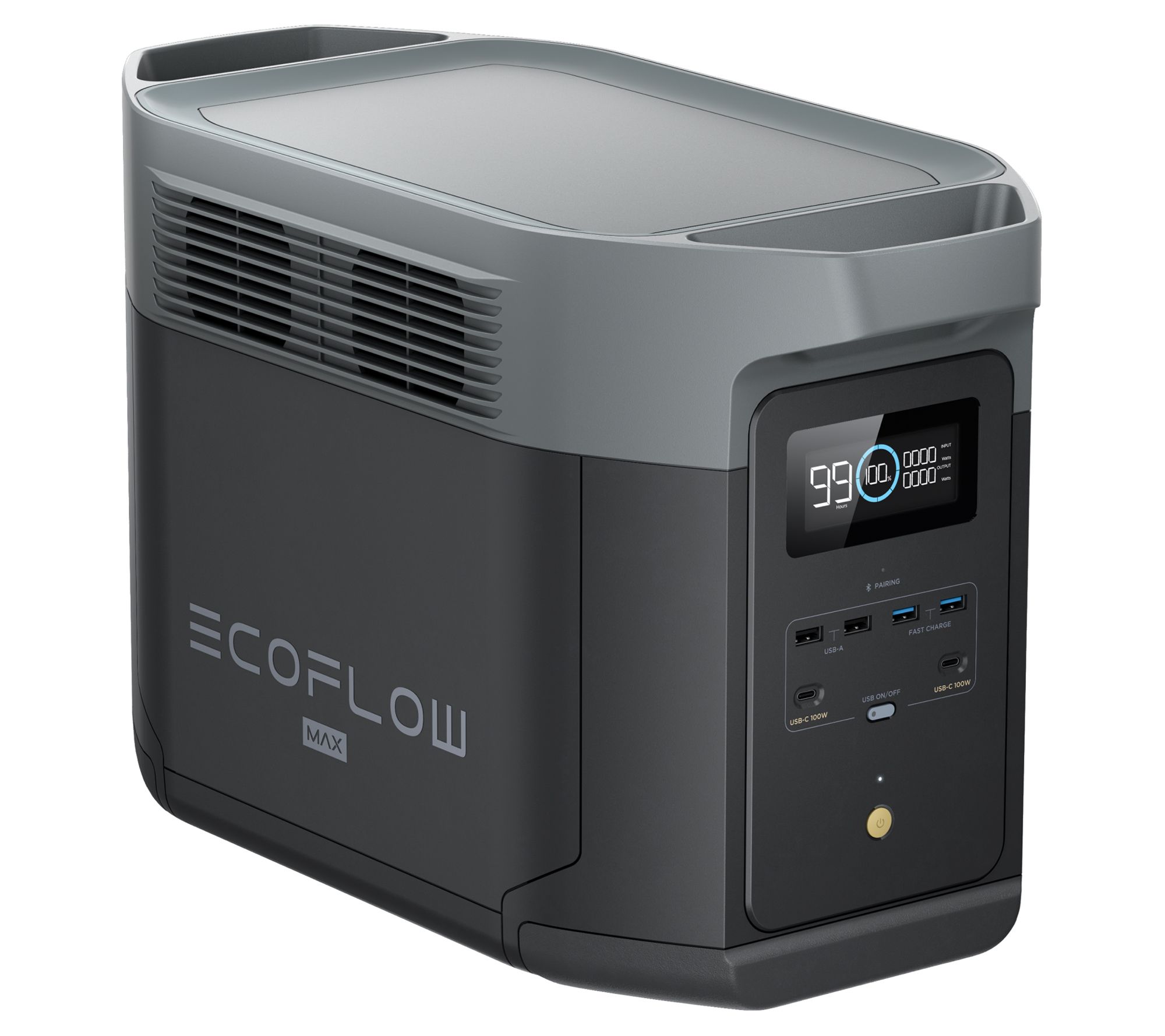

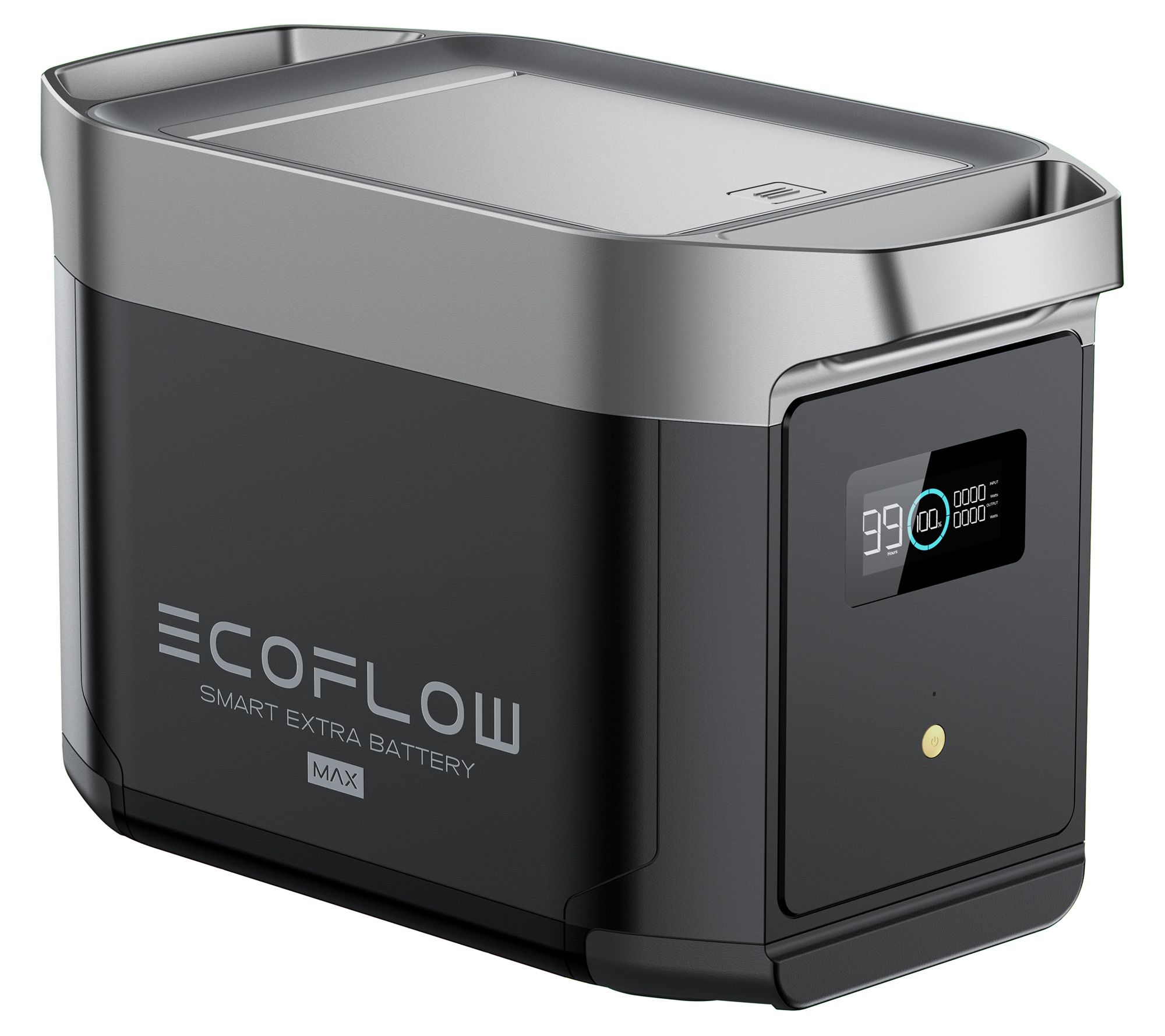
Below are three common QVC paths that map to real needs: base unit, solar bundle, and expansion battery.
Comparison table (simple, decision focused)
| QVC option | What you get | Best for | Main tradeoff |
|---|---|---|---|
| DELTA 2 Max portable power station | The core power station | First time buyers, apartment backup, short outages | No solar refuel included |
| DELTA 2 Max with 220W solar panel bundle | Power station plus solar panel | Camping, longer outages, off grid charging | Larger upfront cost and more gear |
| DELTA 2 Max extra battery | Add capacity to DELTA 2 Max | Longer runtime at home, multi day use | Requires base unit |
QVC listings also highlight practical features like multiple ports and the 2048Wh capacity on certain bundles.
What to look for in the specs (so you do not buy the wrong “2kWh” unit)
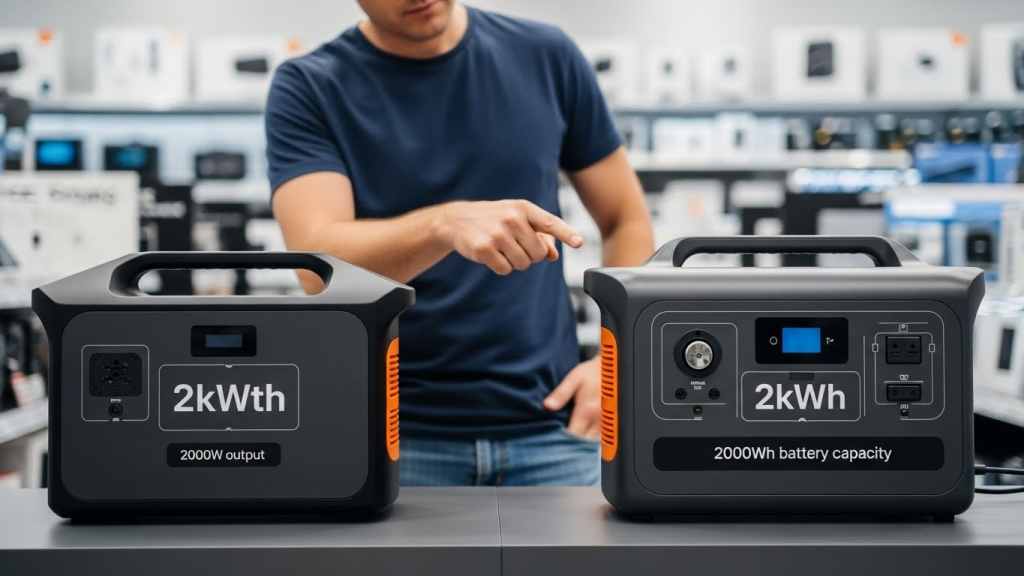
When you compare portable power stations, pay attention to:
- Watt hours (Wh): your fuel tank size
- AC output (W): what it can run at once
- Surge capability: helps with motors starting up
- Charge speed: how fast you can refill
- Solar input and MPPT: how well it uses solar power
- Battery chemistry and cycle life: long term value
EcoFlow markets the DELTA 2 Max as quiet (about 30 dB) and emphasizes fast recharge options, including AC plus solar.
A realistic home plan using the DELTA Max 2 (example)
If your goal is “keep life normal enough,” aim for:
- Refrigerator
- Modem + router
- Phone charging
- A lamp or two
- Fan at night
Tips that stretch runtime:
- Keep the fridge closed.
- Use one room for light and charging.
- Turn off outputs you are not using.
- Charge phones with USB instead of AC adapters when possible.
A realistic camping plan using the DELTA Max 2
If you camp for 2 to 4 nights, you can do a lot with:
- Lights at night
- Fan while sleeping
- Charging phones and camera batteries
- Cooler support
- Solar charging in daylight (if you have a panel)
This is where EcoFlow DELTA Max 2: Total Power Security for Home and Camping becomes more than a tagline. It is a routine: recharge by day, use by night.
Frequently asked questions (People Also Ask style)
Can the EcoFlow DELTA Max 2 run a refrigerator?
Yes, for many fridges, especially if you are only trying to keep temps safe and not open the door constantly. EcoFlow’s own example says up to 14 hours based on a 120W refrigerator load.
Can I use it indoors?
Portable battery power stations are designed for indoor use because they do not burn fuel. For fuel burning generators, CDC and FEMA both warn against indoor use due to carbon monoxide risk.
Is solar worth it?
If you camp often or worry about multi day outages, solar can be the difference between “one and done” and “steady refuel.” QVC’s 220W panel bundle is designed for that scenario.
What is a good first upgrade after the base unit?
If you already own the base DELTA 2 Max, the next upgrade for most people is more capacity, meaning the extra battery, because it extends overnight and multi day runtime.
A quick note on safety testing and peace of mind
Portable power packs and stations are commonly evaluated to safety standards. UL describes testing to UL 2743, a standard for portable power packs, as part of addressing battery safety concerns in growing portable power markets.
Conclusion
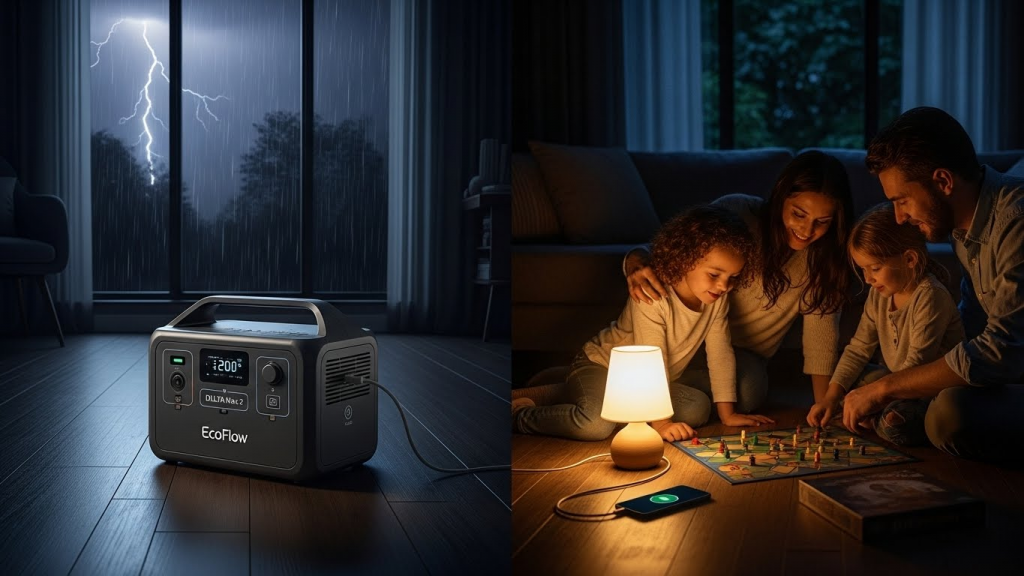
If you want one device that can handle both storm season and weekend trips, EcoFlow DELTA Max 2: Total Power Security for Home and Camping is a strong match for that “two lives, one power plan” problem.
Pick your QVC option like this:
- Choose the base unit if you want a simple, fast backup you can use today.
- Choose the 220W solar bundle if you want real off grid refueling for camping or longer outages.
- Choose the extra battery if your biggest pain is runtime, especially overnight or multi day.
Your next step: write your “must run” list, estimate watts, then choose the smallest setup that comfortably covers those essentials. That is how you get backup power that feels calm, not complicated.
The responses below are not provided, commissioned, reviewed, approved, or otherwise endorsed by any financial entity or advertiser. It is not the advertiser’s responsibility to ensure all posts and/or questions are answered.