

If you’ve ever watched your child light up while building something with their own hands, you’ve already seen the magic of STEM in action. Hands-on STEM kits aren’t just toys—they’re creativity engines. They turn curiosity into problem-solving, boost confidence, and help kids see how science and engineering connect to the real world.
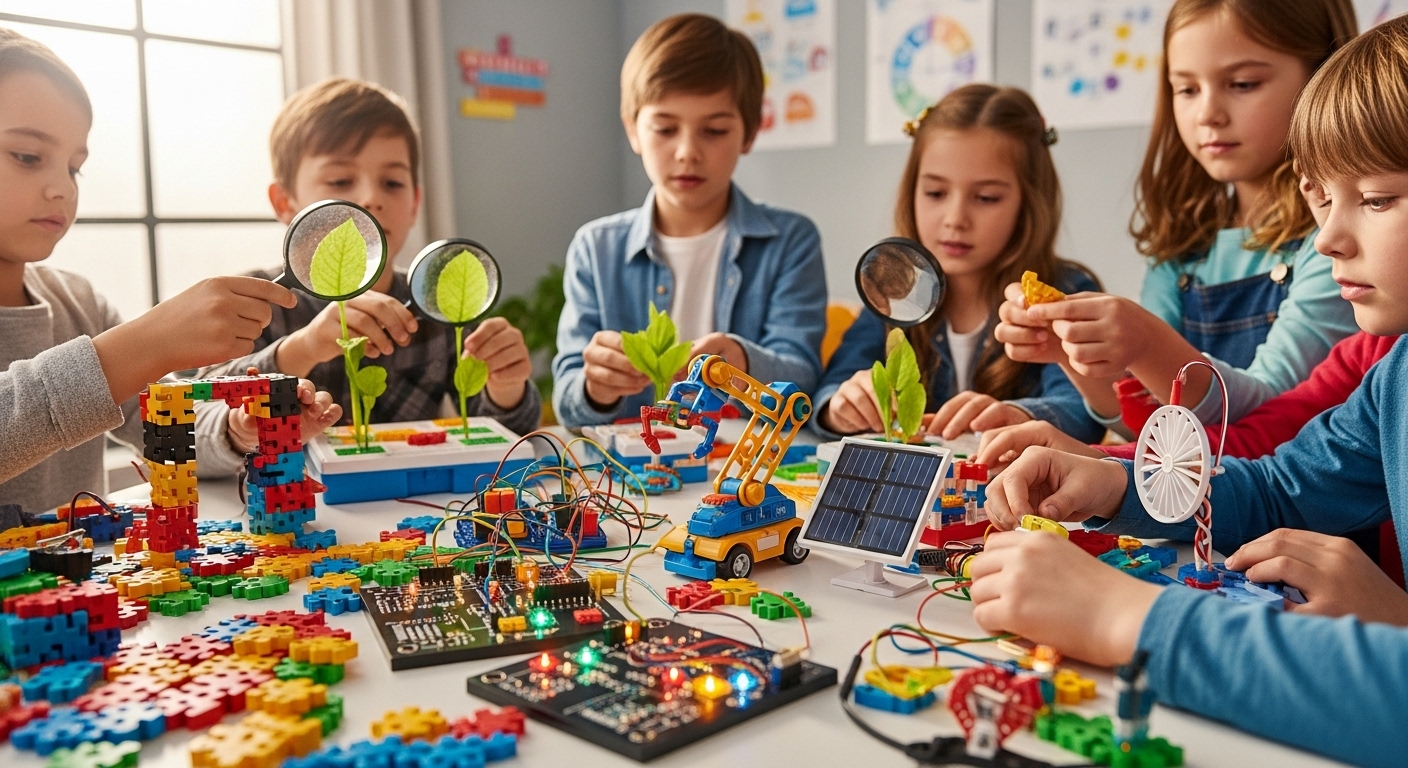
In a time when screens dominate attention, tactile play gives children the power to experiment, fail safely, and try again. This hands-on process lays the foundation for critical thinking, patience, and innovation—the same skills that drive inventors, engineers, and scientists today.
In this guide, we’ll explore why hands-on STEM kits are such powerful learning tools, how to choose the best one for your child, and what makes brands like CrunchLabs, Clixo, AceBott, and Amazon stand out in this creative learning space.


Why Hands-On STEM Kits Matter
Learning by Doing
Children retain knowledge best when they actively create. Building, connecting, or experimenting helps them visualize abstract ideas like force, motion, or circuitry. Instead of memorizing how electricity works, they see it in action—sparking lights or powering motors.
Through tactile projects, kids begin to ask why things work, not just how. That curiosity drives deeper understanding. With each experiment or build, they gain resilience by learning to handle failure as part of the creative process.
Key Benefits of Hands-On STEM Kits
- Critical thinking: Kids develop logical reasoning by solving problems and testing solutions.
- Creativity: Building and designing spark imaginative thinking and innovation.
- Fine motor skills: Assembling parts enhances coordination and focus.
- Confidence: Completing a build gives children a sense of accomplishment.
- STEM foundation: Early exposure builds familiarity with technology and engineering principles.
Hands-on learning doesn’t just prepare kids for future careers—it helps them think differently today.
How to Choose the Best STEM Kit for Your Child
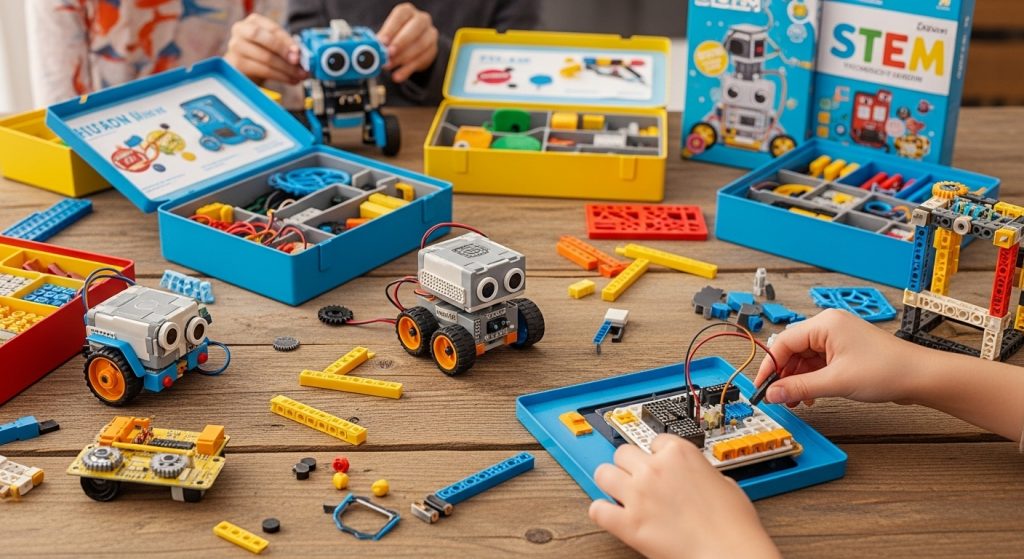
Not all STEM kits are created equal. Some focus on structure and creativity, while others teach coding or robotics. To find the right one, consider three main factors: age, complexity, and growth potential.
1. Match It to Your Child’s Age and Skills
For younger children (ages 4–7), start with large, safe, easy-to-handle pieces that emphasize creativity and exploration.
For kids 8–11, choose kits that introduce mechanics, circuits, or simple programming.
For teens, look for advanced kits involving robotics, sensors, or coding challenges.
2. Balance Guidance and Open-Ended Play
The best STEM kits blend instruction and imagination. A structured guide helps kids complete projects successfully, while open-ended options encourage them to experiment and create their own versions.
Too much structure can limit creativity, but too little guidance can lead to frustration. Look for kits that provide both clear steps and room for innovation.
3. Focus on Long-Term Growth
Good STEM kits grow with your child. They should allow expansion—new parts, modules, or challenges. This keeps interest alive and promotes continuous learning.
4. Prioritize Safety and Quality
Durable materials, clear instructions, and non-toxic components are essential. Avoid cheap kits that break easily or have unclear labeling. A high-quality kit not only lasts longer but also enhances safety and engagement.
Top Brands to Explore for Hands-On STEM Creativity
Let’s look at four standout names that represent different approaches to STEM learning—each with unique strengths to match your child’s personality and interests.
1. CrunchLabs
CrunchLabs brings engineering to life with its monthly subscription boxes designed by former NASA engineer Mark Rober. Each box arrives with materials, parts, and access to video tutorials that guide kids step-by-step through fun mechanical builds.
Every month features a new invention or challenge, such as catapults, spinners, or flying contraptions, all explained through humor and storytelling. The boxes are designed for kids aged around 8–12 but can engage even older students who love experimenting.
Why It Works:
CrunchLabs emphasizes both fun and engineering principles. Kids don’t just follow instructions—they learn why each mechanism works. The monthly delivery keeps curiosity alive, and the professional production quality makes each box feel like an event.
Best for: Families who want structured, ongoing projects that keep kids inspired over time.
2. Clixo
If creativity and imagination come first, Clixo is a perfect fit. This innovative system uses flexible magnetic pieces that bend, snap, and connect to create both flat and 3D structures. There are no screens, wires, or batteries—just the child’s hands and imagination.
Clixo stands out for its simplicity. The flexible design encourages open-ended play that builds spatial awareness, problem-solving, and design thinking. Kids can build animals, vehicles, or abstract shapes, then take them apart and start again in minutes.
Why It Works:
Clixo’s open structure promotes limitless exploration. It’s ideal for younger kids or anyone who loves tactile play and creative freedom. It also fosters collaboration—multiple kids can build together without conflict over specific instructions.
Best for: Younger children and early builders who thrive on imagination and design.
3. AceBott
For kids ready to level up into coding, robotics, or complex mechanical builds, AceBott offers versatile, educational kits designed for deeper STEM learning. The company’s kits are built to teach real concepts—motors, sensors, logic circuits, and coding basics—through hands-on experimentation.
AceBott kits vary in difficulty, making them suitable for both beginners and advanced learners. They often include programmable components, allowing kids to learn how to bring movement and automation into their designs.
Why It Works:
AceBott bridges the gap between fun and formal STEM education. Kids can physically build robots or machines, then program how they behave. This encourages critical thinking and introduces core concepts in robotics, electronics, and software.
Best for: Middle-school and pre-teen learners who want to explore real engineering or coding challenges.
4. Amazon

Amazon isn’t a brand in itself but a vast marketplace offering countless STEM kits from top names around the world. It’s a treasure trove of choices—from basic science experiment kits to advanced Arduino or robotics sets.
Parents can browse by age, subject, or difficulty, making it easy to find kits that fit a child’s unique interests. Whether you want a chemistry lab, a solar-powered car kit, or a build-your-own robot, Amazon’s selection covers every topic imaginable.
Why It Works:
The sheer variety means you can tailor learning experiences precisely. You can also build a small “STEM lab” at home, combining different kits for ongoing projects that span physics, biology, and technology.
Best for: Parents who like flexibility and want to customize their child’s STEM learning path.
Making the Most of Your STEM Kits
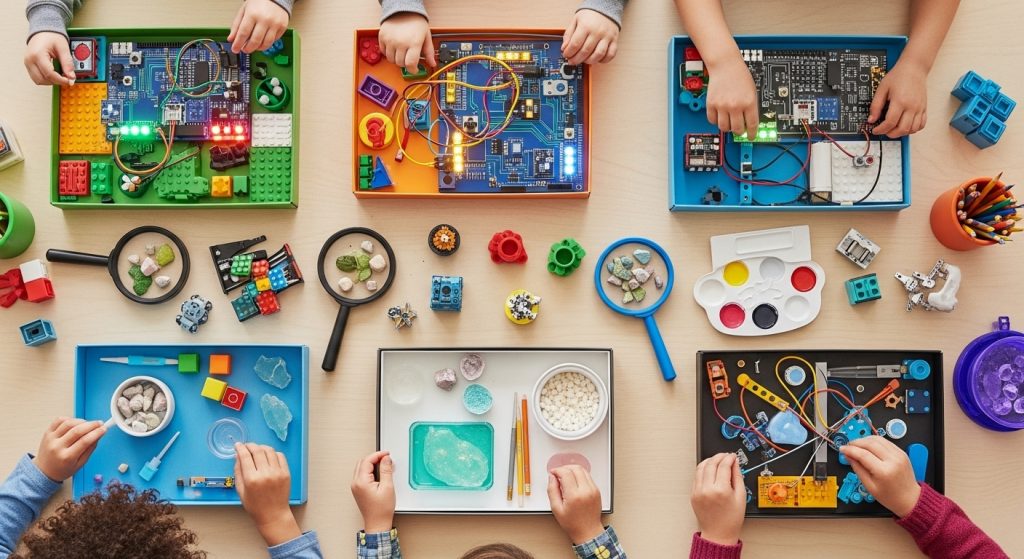
Owning a STEM kit is just the start. How you use it makes all the difference in developing real creativity and problem-solving skills. Here are a few strategies to get the most out of each project:
1. Set Creative Challenges
Once your child finishes a project, ask them to modify it. Can they make it move faster? Use fewer parts? Solve a new problem? Challenges push kids beyond replication toward innovation.
2. Encourage Reflection
After each build, talk about what worked and what didn’t. Reflection builds analytical skills and helps kids understand the “why” behind success or failure.
3. Combine Different Kits
Mix pieces from various kits—like pairing Clixo’s flexible shapes with AceBott’s sensors—to expand creativity. Combining systems reinforces the idea that creativity has no limits.
4. Make It a Routine
Turn STEM time into a weekly ritual. Whether it’s building every Saturday morning or during homework breaks, consistency turns curiosity into a lasting habit.
5. Celebrate Progress
Display completed projects or record short videos explaining each creation. Recognizing effort builds pride and motivation for future challenges.
Frequently Asked Questions
Q: What age is best to start with STEM kits?
Children as young as four can begin with simple construction or magnetic kits. As they grow, you can introduce robotics, electronics, and coding-based kits.
Q: How many STEM kits should we have?
Quality matters more than quantity. A few well-designed kits that evolve with your child’s skills will deliver more value than dozens of one-time projects.
Q: Are subscription kits worth it?
If your child enjoys routine challenges, subscription boxes like CrunchLabs provide excitement and progression. For independent learners, one-time kits like AceBott or Amazon options might be more practical.
Q: How can parents support without taking over?
Ask guiding questions instead of giving answers. Encourage experimentation and be patient with mistakes—they’re part of learning.
Conclusion
Hands-on STEM kits transform learning into discovery. They teach kids that failure is a stepping stone, not an endpoint, and show that creativity and logic can coexist beautifully.
Whether you choose the monthly surprises of CrunchLabs, the flexible imagination of Clixo, the advanced challenges of AceBott, or the endless variety on Amazon, each option opens a door to new skills and brighter curiosity.
The best kit isn’t the most expensive—it’s the one that makes your child’s eyes light up when they realize they built something that works.
Encourage experimentation, celebrate progress, and remember: every great inventor started with a few parts, a question, and the courage to try.
The responses below are not provided, commissioned, reviewed, approved, or otherwise endorsed by any financial entity or advertiser. It is not the advertiser’s responsibility to ensure all posts and/or questions are answered.



Comments 2 comments
I’ve tried a couple of these kits before and they’re decent. Curious how they compare to KiwiCo though
Love this! My kid is obsessed with CrunchLabs — totally agree that hands-on stuff keeps them off screens and actually learning.