

Clutter builds up slowly. One day you are stepping around boxes in the hallway and wondering where it all came from. You are not alone. Recent research shows that the share of United States households renting at least one storage unit rose from 11.1 percent in 2022 to 13.4 percent in 2024, the largest jump in recent years, according to a study cited by PwC and the Self Storage Association (SSA).
At the same time, there are more than 54,000 self storage facilities across the country, from huge national brands to small local operators.
With so many options, finding a unit that is close by, safe, and fairly priced can feel confusing.
That is exactly the problem online marketplaces try to solve. When you find and reserve storage in minutes with SpareFoot, you skip phone calls, drive time, and guesswork, and instead see real units and prices on one screen.
In this guide, you will learn how SpareFoot works, how it compares with Storage.com and SelfStorage.com, and how to choose the right storage deal for your situation, step by step.


Why self storage is booming and why choosing a unit feels hard

Self storage is a simple idea. It is an industry that rents secure rooms, lockers, and outdoor spaces to households and businesses, usually month to month.
Under that simple idea, a huge market has grown.
Recent industry and institutional sources show that:
- The United States has more than 54,000 self storage facilities and more than 2 billion square feet of rentable storage space.
- Analysts estimate that roughly 10 to 14 percent of households use self storage today, with usage rising over the past decade.
- The share of households renting storage units increased sharply between 2022 and 2024, absorbing more than 150 million additional square feet of space.
People rent storage for many reasons, often called the “four Ds” of life: death, divorce, downsizing, and dislocation.
On top of those big life events, smaller trends matter too:
- Smaller homes and apartments, especially in cities
- Remote work that turns spare rooms into offices
- Online shopping that brings more goods into the home
All of this creates real demand for flexible space.
Self storage snapshot
Here is a quick summary of the United States market using recent data from the Self Storage Association, PwC, CBRE, and industry almanac figures.
| Metric | Recent figure (approximate) | Source type |
|---|---|---|
| Self storage facilities in the US | 50,000 to 54,000 plus | SSA data, Wikipedia, industry data |
| Total rentable storage space | About 2.1 billion sq ft | Self Storage Almanac data |
| Share of households using self storage | Around 10 to 13.4 percent | SSA, PwC, CBRE |
| Average self storage space per household | About 13.4 sq ft | CBRE estimate |
These numbers explain why storage marketplaces exist.
With so many facilities and unit types, it is hard for a single person to compare everything on their own. This is where it helps to find and reserve storage in minutes with SpareFoot or similar sites, rather than calling facilities one by one.
How SpareFoot works and what makes it different
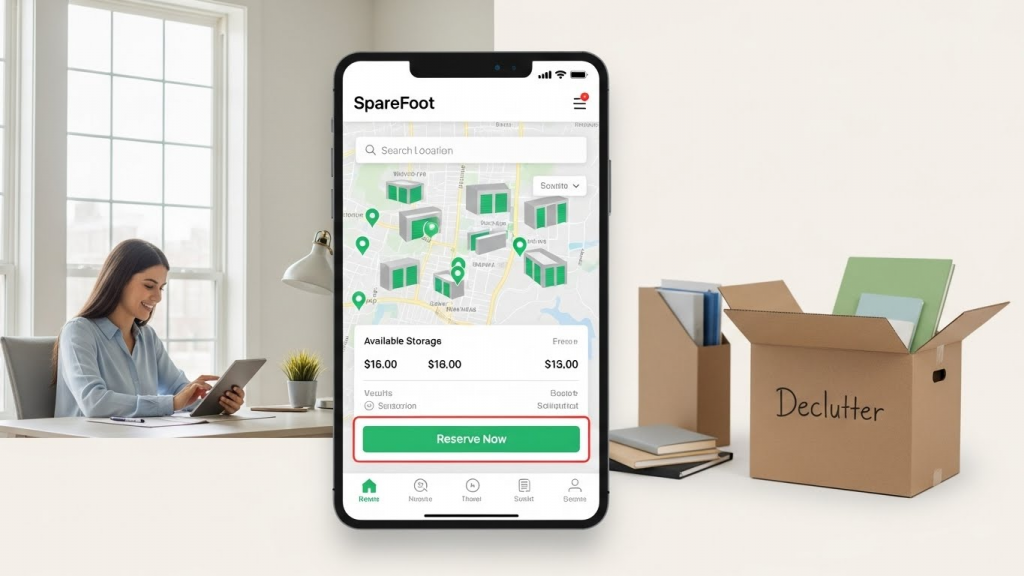
SpareFoot is an online marketplace that lets you search many self storage facilities at once, compare them, and reserve a unit online. It describes itself as the largest marketplace for finding and reserving a self storage unit in the United States.
The basic idea
SpareFoot connects two groups:
- People who need storage, for example during a move or renovation
- Storage facilities that have units to rent
Instead of browsing each facility site, you enter your ZIP code once on SpareFoot. The site shows multiple facilities, unit sizes, prices, promotions, and reviews in one place.
That is why you often see the call to action “Find and reserve storage in minutes with SpareFoot” at the bottom of their guides and tools.
Step by step, how to book a unit on SpareFoot
Here is a simple process you can follow.
-
Search by location
Go to sparefoot.com and enter your city or ZIP code.
You will see a list of nearby facilities and a map. -
Filter by needs
Use filters for unit size, climate control, drive up access, indoor or outdoor, 24 hour access, or vehicle storage.
This is a good moment to link to a separate guide on how to choose a storage unit size using anchor text like storage size guide on your own site. -
Compare prices and deals
You can sort results by price, distance, or rating.
Many listings show promotions like “first month free” or discounted online rates. -
Read reviews and check details
Each facility listing usually includes photos, customer ratings, access hours, and basic security features such as gated entry or cameras. -
Reserve online
When you are ready, you click to reserve.
In most cases, you hold a unit without paying up front, then complete the rental at the facility when you arrive. -
Move in
You bring your items and sign the rental agreement on site.
This is also a natural place to link to a moving and storage checklist or a guide on how to pack a storage unit efficiently on your own site using relevant anchor text.
Key strengths of SpareFoot
- Very broad coverage across the United States through its parent company’s marketplace network
- Clear comparison of prices and promotions for many facilities in one place
- Fast online reservations that reduce phone calls and back and forth
- Helpful educational content on moving, storage, and mindful consumption
Potential limitations:
- Not every small independent facility will appear on the platform
- You still sign the actual rental agreement with the facility, so terms and fees vary by location
For many users, the main benefit is simple. You can find and reserve storage in minutes with SpareFoot instead of spending hours calling around.
SpareFoot vs Storage.com vs SelfStorage.com
SpareFoot is part of a group of marketplaces operated by Storable, a company that provides technology tools to self storage owners. Storable notes that its marketplace brands include SpareFoot.com, Storage.com, and SelfStorage.com, which together connect storage operators with millions of renters.
Here are the three consumer facing brands we will compare. All three let you search for self storage by city or ZIP code, compare units and prices, then reserve online.
Brand comparison at a glance
| Feature or detail | SpareFoot | Storage.com | SelfStorage.com |
|---|---|---|---|
| Part of Storable marketplace | Yes | Yes | Y |
| Core focus | Self storage comparison and reservations | Self storage and vehicle storage search and booking | Self storage search and booking |
| Typical use case | Quick comparison of many local storage facilities | Finding units plus parking for boats and RVs | Straightforward storage search and price comparison |
| Strengths | Wide facility coverage, strong promos and filters | Map driven search, good at surfacing parking units | Clean interface, simple booking flow |
| Reservation model | Online reservation, rent from facility directly | Online reservation, rent from facility directly | Online reservation, rent from facility directly |
Functionally, the experience is similar. You search, compare, and reserve on the marketplace, then become a customer of the facility itself.
How to decide which site to use
- If you want the broadest set of results and deals, SpareFoot is often the first stop.
- If you are focused on vehicle storage, especially boats or RVs, Storage.com can be a strong option.
- If you prefer a very simple search experience, SelfStorage.com is also worth trying.
In practice, you can run the same ZIP code on all three sites in separate tabs. If one site shows a better promotion for the same facility, you can decide which reservation path is best for you.
How to choose the right storage marketplace and unit
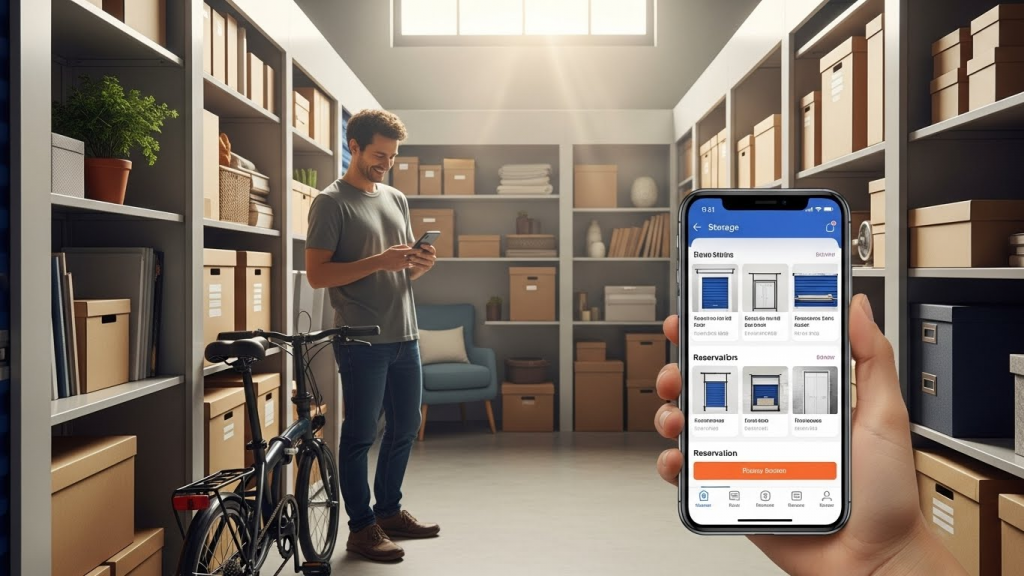
Using a marketplace is only helpful if you know what you are looking for.
Here are the main questions to answer before you book.
1. How much space do you need?
Estimate how many rooms of items you will store.
Then use common size guides:
- 5 x 5 feet, like a small closet, for boxes and small furniture
- 5 x 10 feet, for a studio or small one bedroom
- 10 x 10 feet, for a typical two bedroom apartment
Many facilities and marketplaces offer size guides that show what fits into each unit.
This is perfect anchor text for an internal resource on storage unit size comparison.
2. What type of items are you storing?
If you store furniture, electronics, or important documents, climate controlled units can protect against extreme heat, cold, and humidity.
If you store tools or outdoor gear, a simple drive up unit may be enough.
3. How often do you need access?
If you only visit your unit a few times a year, distance may matter less than price. If you visit weekly, it is worth paying a little more for a closer facility with convenient hours.
4. How important are security and reviews?
Look for:
- Gated access
- Camera systems
- Good lighting
- Strong customer reviews and recent photos
SpareFoot and similar marketplaces surface many of these details on each facility page, along with ratings and written reviews where available.
5. What is your budget?
Rents vary widely by city, unit size, and climate control. Research from CBRE and the Self Storage Association shows that self storage has remained in demand, but pricing and occupancy are sensitive to local conditions.
Use the sorter on SpareFoot or similar sites to order facilities by price, then check which ones meet your size and security needs.
Step by step guide, find and reserve storage in minutes with SpareFoot
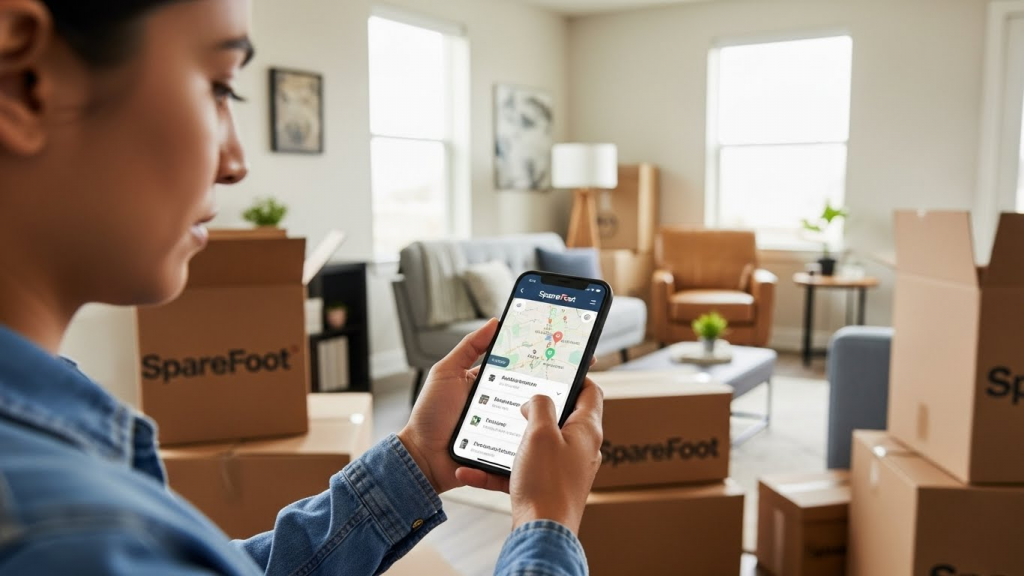
Let us walk through a realistic example. Imagine you live in a two bedroom apartment, you are expecting a baby, and you want to clear space.
You decide to find and reserve storage in minutes with SpareFoot.
Step 1 Search your ZIP code
You enter your ZIP code and choose a radius, for example 5 miles. You see a list of twenty facilities with different prices and promotions.
Step 2 Filter and shortlist
You filter for:
- 10 x 10 units
- Climate control
- Ground floor or elevator access
Then you sort by price.
You pick a shortlist of three facilities that are close enough and have good ratings.
Step 3 Compare offers
Here is what your comparison might look like.
| Option | Monthly online rate | Promo | Distance from home | Access hours |
|---|---|---|---|---|
| Facility A | 125 dollars | First month free | 1.2 miles | 6 a.m. to 10 p.m. |
| Facility B | 110 dollars | 50 percent off first two months | 3.0 miles | 24 hour access |
| Facility C | 99 dollars | No promo | 0.8 miles | 9 a.m. to 6 p.m. |
You can see that Facility C is cheapest, but has limited hours. Facility B has a strong promo and full time access, which may matter if you work late.
Step 4 Reserve online
You click the “Reserve” button on the option that fits your needs.
SpareFoot collects basic contact information and confirms the reservation, then sends details by email or text. At this point, you have saved time and secured a real unit, without driving to each facility.
You have just used the promise behind the phrase Find and reserve storage in minutes with SpareFoot in a very practical way.
People Also Ask, quick answers about storage marketplaces
Search engines often show “People Also Ask” questions when users compare storage options. Here are brief, helpful answers you can adapt, and each one can support internal linking from relevant anchor text.
Is SpareFoot legit?
Yes. SpareFoot has been operating as a storage marketplace for more than a decade and is part of the Storable family of brands used widely in the self storage industry.
It does not own storage facilities. Instead, it connects you to independent operators and large chains, then you rent directly from those companies.
Is it cheaper to book storage online?
Often, yes.
Facilities frequently offer online only promotions, such as first month free or discounted introductory rates, that you can see when you search sites like SpareFoot, Storage.com, or SelfStorage.com.
However, final pricing always comes from the facility’s rental agreement, so it is wise to read the terms.
How long can I keep a storage unit?
Most self storage rentals are month to month with no long term commitment. You can keep the unit as long as you pay on time and follow the rules.
Conclusion, key takeaways and next steps
Self storage has become a normal part of modern life. More households than ever are using storage to bridge moves, manage clutter, and adapt to changing family needs.
The problem is not finding storage. The challenge is choosing the right unit at the right price without wasting hours.
That is why it is so helpful to find and reserve storage in minutes with SpareFoot.
You learned that:
- Storage demand is rising, and there are tens of thousands of facilities across the United States
- SpareFoot, Storage.com, and SelfStorage.com are closely related marketplaces that let you compare units and reserve online
- SpareFoot stands out for broad coverage and clear deal visibility, which helps you spot promotions quickly
- A simple framework, size, items, access, security, and budget, can guide you toward the best decision for your situation
Your next step
- Decide what you will store and how long you expect to rent.
- Run the same ZIP code search on SpareFoot, Storage.com, and SelfStorage.com.
- Compare at least three facilities side by side using the questions and tables in this guide.
- Reserve the unit that offers the best mix of price, location, and security for your needs.
When you are ready to clear space and reduce stress, open a new tab, search your ZIP code, and truly find and reserve storage in minutes with SpareFoot.
The responses below are not provided, commissioned, reviewed, approved, or otherwise endorsed by any financial entity or advertiser. It is not the advertiser’s responsibility to ensure all posts and/or questions are answered.