

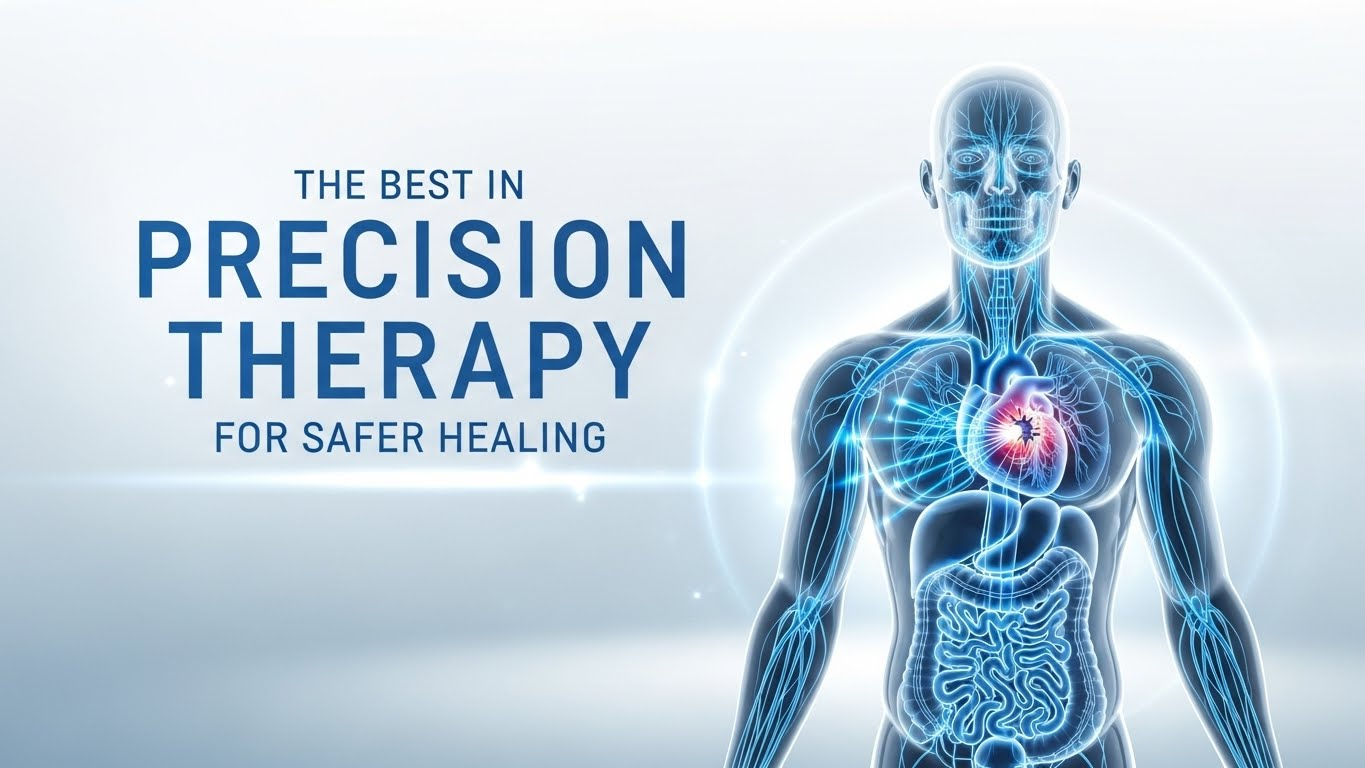
Precision medicine is changing how we treat pain and disease. Instead of giving every person the same pill and the same dose, new therapies try to deliver the right medicine, in the right amount, to the exact place it is needed. This is the idea behind The best in precision therapy for safer healing.
Traditional treatments can work, but they often spread through the whole body. That can mean stomach problems, brain fog, or more serious side effects. In some cases, such as opioid painkillers, the risks can even be life changing.
In this guide, you will learn what precision therapy is, why delivery technology matters so much, and how Novilla Pharmaceuticals compares with two similar innovators, PepGen and UGISense AG. You will also see how to judge brands that claim to offer safer, more targeted healing, so you can ask smarter questions and make better decisions.

What Precision Therapy Means for Safer Healing
From one size fits all to targeted care
Traditional medicine often follows a simple rule. A condition gets a standard drug, in a standard dose, for almost everyone. Precision medicine flips this idea. It uses data about genes, lifestyle, and environment to pick specific drugs and doses for each person.
Experts often describe the goal of precision medicine as getting the “five rights” correct: the right patient, drug, time, dose, and route of administration. When those five parts line up, you do not just treat the disease. You also lower the risk of harm.
That link between treatment and safety is vital. In the United States, adverse drug events, which include side effects and medication errors, cause about 1.5 million emergency department visits and 500,000 hospitalizations each year, with an estimated 3.5 billion dollars in extra medical costs. Many of these events are preventable.
Because of this, researchers argue that precision dosing and precision delivery are key tools to cut avoidable harm. They note that harm from drugs worldwide costs tens of billions of dollars each year, and that smarter dosing strategies can reduce those events.
In this context, The best in precision therapy for safer healing is not just a slogan. It describes a shift toward treatments that are both effective and safer.
Why drug delivery is as important as the drug
Even a great medicine can cause trouble if it goes to the wrong place or spreads too widely in the body. Modern drug delivery research focuses on:
- Sending drugs directly to specific tissues or cells
- Releasing drugs slowly over time, instead of all at once
- Keeping overall exposure low, so fewer organs are affected
Reviews on advanced drug delivery show that new materials and nanocarriers can improve how drugs are released, target the correct tissues more accurately, and increase the amount that actually reaches the intended site.
In simple terms, better delivery can mean:
- Stronger effects where they are needed
- Weaker effects where they are not wanted
- Lower doses, with fewer side effects
This is the core promise behind companies like Novilla, PepGen, and UGISense.
Novilla Pharmaceuticals: Precision Therapy for Safer Pain Relief
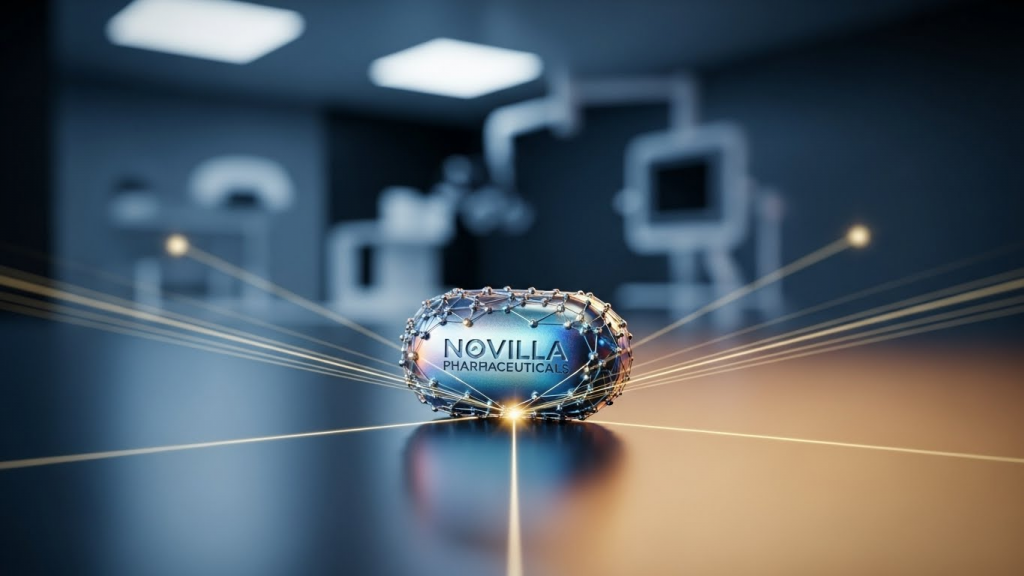
Novilla Pharmaceuticals positions itself around the idea of “Precision Therapy for Safer Healing,” which matches the focus keyword The best in precision therapy for safer healing almost word for word. On its homepage, Novilla highlights a proprietary AI driven platform and a first drug candidate, NOV-1776, developed for localized pain control.
What Novilla focuses on
Novilla is an early stage biotech company, founded in 2019 and based in the United States. It develops a new type of drug delivery system for pain that aims to act as an alternative to opioids.
Key elements of Novilla’s strategy include:
- Local administration of pain relief through a patented delivery system
- Deeper penetration into nerves and tissues under the skin, without traditional injections or electrophoresis based methods
- Use of AI to design and optimize new drug candidates, such as NOV-1776
The goal is to concentrate pain relief exactly where it is needed while keeping the rest of the body largely untouched.
What makes Novilla’s delivery approach different
According to summaries of the company’s technology, Novilla uses a charged ion based platform that can drive drugs through intact skin directly to nerves and deeper tissues.
This type of delivery offers several theoretical advantages:
- The medicine can reach nerve endings tied to pain generation
- Systemic exposure, meaning how much of the drug reaches the whole bloodstream, stays low
- With lower systemic exposure, the risk of stomach issues, sedation, and other common side effects may decrease
Novilla reports that its first AI designed candidate showed more than a doubling in efficacy compared with standard care in a human trial, with extremely low systemic exposure and no reported gastrointestinal adverse events. Although these are early data, they support the model that better targeting can improve both effectiveness and safety.
Safety and the opioid context
Many hospital and public health groups now emphasize the dangers of opioids, including dependence and overdose. Novilla’s pitch is that a localized, highly targeted pain therapy could relieve pain without relying on systemic opioids.
For people looking for The best in precision therapy for safer healing, the key takeaway is simple. Novilla is trying to keep the benefit of strong pain relief while cutting the risks that come from sending powerful drugs through the entire body.
Two Similar Brands in Precision Therapy
To understand Novilla better, it helps to compare it with other companies that also focus on targeted delivery and safer healing. PepGen and UGISense AG are good examples.
PepGen: Enhanced delivery oligonucleotides for neuromuscular disease

PepGen is a clinical stage biotech company based in Boston. It develops Enhanced Delivery Oligonucleotides (EDOs) for serious genetic neuromuscular and neurological diseases.
In plain language, PepGen works with short genetic like molecules that can correct or modify how cells make certain proteins. The challenge has always been delivery. Many of these molecules struggle to reach the right tissues in useful amounts.
PepGen’s platform aims to:
- Improve how these oligonucleotides cross cell membranes
- Deliver them more efficiently to muscle and nerve tissues
- Maintain a safety profile that is acceptable for long term use
The company’s EDO platform is built on more than ten years of research and is now in clinical trials. The focus is similar to Novilla’s focus on pain. Both tie efficacy directly to smarter delivery and tissue targeting.
UGISense AG: Antisense therapeutics with a proprietary platform

UGISense AG, based in Germany, is a biotech company that develops antisense therapeutic agents. These are short strands of modified genetic material that can switch off or alter the expression of specific genes.
UGISense uses a proprietary technology called Ugimeres, which forms the core of its platform. The company focuses strongly on cancer, including cancer stem cells, and other serious conditions.
From a precision therapy standpoint, the idea is that:
- By designing antisense molecules that bind to specific RNA sequences, the therapy can target only certain cancer cells
- The platform can be tuned for different tumors or genetic profiles
- New intellectual property can be created for each product, which encourages ongoing innovation
Comparison table: Novilla vs PepGen vs UGISense
| Feature / Brand | Novilla Pharmaceuticals | PepGen | UGISense AG |
|---|---|---|---|
| Main focus | Local, non opioid pain therapeutics using advanced skin based delivery | Genetic neuromuscular and neurological diseases using Enhanced Delivery Oligonucleotides | Cancer and other serious diseases using antisense drugs based on Ugimeres technology |
| Core technology | Charged ion based platform that drives drugs through intact skin to nerves and deeper tissues | Enhanced delivery backbone to improve tissue uptake of oligonucleotides | Proprietary antisense platform with custom molecules for each target |
| Therapeutic goal | Strong local pain relief with low systemic exposure, alternative to opioids | Disease modifying therapies that address root genetic causes | Highly targeted gene level control in tumors and other diseases |
| Stage | Early stage, human clinical trial completed for first candidate | Clinical stage, multiple ongoing trials and regulatory designations | Funded biotech with preclinical and early development pipeline |
| Tagline or core message | Precision Therapy for Safer Healing | Transforming the treatment of neuromuscular disease through next generation genetic therapies | Delivering on the promise of antisense drugs |
All three brands place delivery technology at the center of their value. Novilla applies it to pain relief, PepGen to genetic muscle disease, and UGISense to cancer. Each one reflects a slightly different side of The best in precision therapy for safer healing.
Real world impact of precision drug delivery
Fewer side effects and more safety
Drug delivery research shows that better targeting can lower side effects and doses at the same time. Reviews of nanocarriers, polymer systems, and other delivery tools report improved bioavailability, longer circulation, and the ability to aim drugs at diseased tissues while limiting exposure elsewhere.
For patients, this can translate into:
- Less stomach upset, brain fog, and fatigue
- Lower risk of organ damage from chronic exposure
- Fewer hospital visits due to adverse drug events
As one government summary notes, adverse drug events remain a major driver of emergency visits and hospital stays, which means every small gain in safety matters.
Precision dosing research also shows that using patient specific data and modeling can reduce prediction errors in drug exposure, leading to better control over effectiveness and toxicity. That is exactly the sort of shift companies like Novilla are trying to build into their platforms.
Better targeting in serious diseases
In fields like oncology, neurology, and genetic medicine, simply giving more of a drug is not always helpful. Toxicity can rise faster than benefit.
Studies on targeted drug delivery strategies for precision medicines highlight how matching delivery systems to disease biology can improve response and reduce off target effects, especially in cancer.
PepGen and UGISense fit into this pattern. Both are developing platforms built to bring specialized molecules into hard to reach tissues or tumor cells.
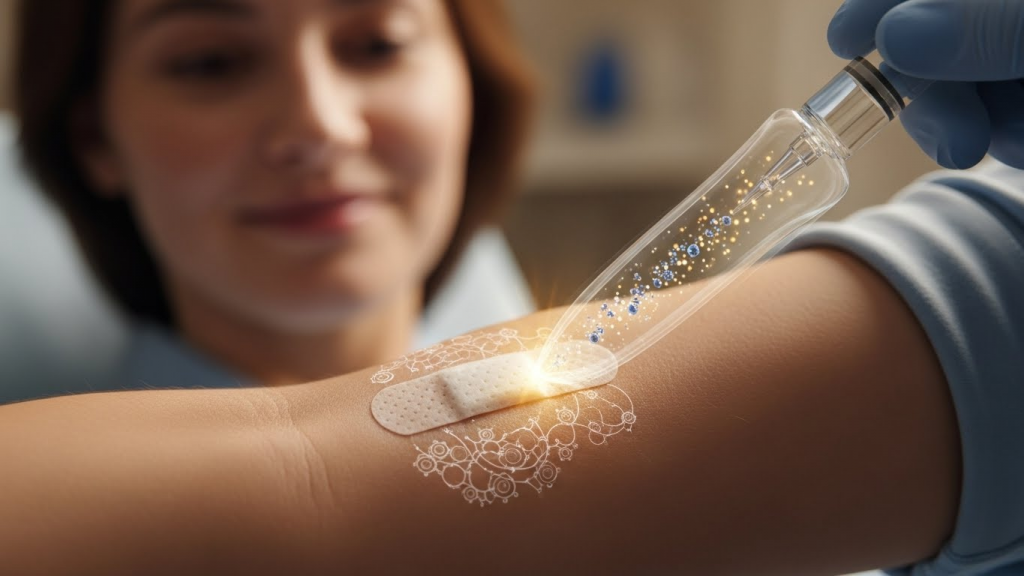
Novilla’s focus is pain, but the principle is the same. A local skin based delivery system that sends medicine only to the nerves near a painful area supports The best in precision therapy for safer healing, because it aims to deliver relief without widespread exposure.
How to judge brands that promise “precision therapy for safer healing”

Whether you are a patient, caregiver, or health professional, you can use a simple checklist when you see big claims such as The best in precision therapy for safer healing.
Look for clear explanations of the delivery technology
Ask:
- Does the company explain how its system changes where the drug goes in the body
- Are there diagrams, white papers, or scientific articles that describe the mechanism
- Is the technology described in a way that can be checked in neutral sources
For example, Novilla’s use of ion driven dermal delivery and NOV-1776 is described on its site and in public company profiles. PepGen explains its EDO platform in its science and pipeline sections. UGISense provides background on its Ugimeres antisense platform
If a brand gives only vague phrases and no details, be cautious.
Check for clinical trial evidence
Next, see whether there are clinical trials or peer reviewed publications tied to the platform.
Questions to ask:
- Are there registered clinical trials with clear goals and safety tracking
- Have any early results been shared in scientific meetings or journals
- Are adverse events and limitations discussed openly
For precision delivery and precision therapy in general, you can also search in trusted databases such as PubMed or ClinicalTrials.gov for the company name and keywords like “delivery,” “pharmacokinetics,” or “safety profile.” Reviews on targeted delivery and precision dosing can give context for what reasonable claims look like.
Evaluate safety claims carefully
No therapy is risk free. When brands make safety claims, you should look for:
- Numbers, not just adjectives
- Clear mention of systemic exposure and organ specific risks
- Comparisons with current standard of care
For example, Novilla highlights very low systemic exposure and absence of certain adverse events in a completed trial for its lead candidate. That is specific enough that doctors and regulators can evaluate it.
The future of precision therapy and safer healing

Research in drug delivery and precision medicine is moving quickly. New reviews describe how advanced materials, such as nanogels, responsive polymers, and engineered nanoparticles, are changing how drugs are carried and released inside the body.
Recent news also highlights tools like patented silk nanogel injectors that can deliver medicine directly to disease sites with less systemic toxicity, useful in cancer, wound healing, and regenerative medicine.
Artificial intelligence is starting to play a role as well. It can:
- Analyze large data sets to suggest safer dosing strategies
- Help design drug molecules and carriers that match specific tissues
- Support real time treatment decisions that balance benefit and risk
Novilla, with its AI designed drug candidate and focus on local, safer pain control, sits right in the middle of these trends. PepGen and UGISense, with their genetic and antisense platforms, show how the same logic can apply to neuromuscular disease and cancer.
In the next decade, more centers and companies are expected to make targeted drug delivery a core part of care. Universities and hospitals are already building dedicated centers focused on safer, more effective delivery.
Conclusion: How to act on this information

The best in precision therapy for safer healing is more than a marketing phrase. It reflects a real trend in modern medicine toward treatments that are tailored, well targeted, and designed with safety in mind.
Here are practical next steps:
- If you are a patient or caregiver, ask your doctor about precision options for your condition. Questions like “Are there targeted delivery therapies for this?” or “How can we reduce systemic side effects?” are a good place to start.
- If you are a health professional, explore platforms like Novilla, PepGen, and UGISense through peer reviewed literature and clinical trial registries, not just company marketing.
- If you run a health content site, build topic clusters that connect brand reviews to deeper guides on precision medicine, non opioid pain relief, drug delivery, and patient safety. Use descriptive anchor text so readers can easily explore related topics.
When you compare Novilla with similar brands, you see different paths to the same goal. Novilla focuses on local pain relief with minimal systemic exposure. PepGen targets genetic neuromuscular disease with advanced oligonucleotide delivery. UGISense aims at cancer with antisense technology.
All three help define what it means to deliver The best in precision therapy for safer healing, where treatment is not only powerful but also smarter, more focused, and safer for the people who need it most.
The responses below are not provided, commissioned, reviewed, approved, or otherwise endorsed by any financial entity or advertiser. It is not the advertiser’s responsibility to ensure all posts and/or questions are answered.