

When the lights go out, it’s more than just inconvenient. A power outage can leave food spoiling in the fridge, interrupt your work from home, or even jeopardize medical equipment. The truth? Power-outage risk is rising. According to one study, outages in the U.S. increased by 64 % over a recent ten-year span, and 83 % of those were weather-related.
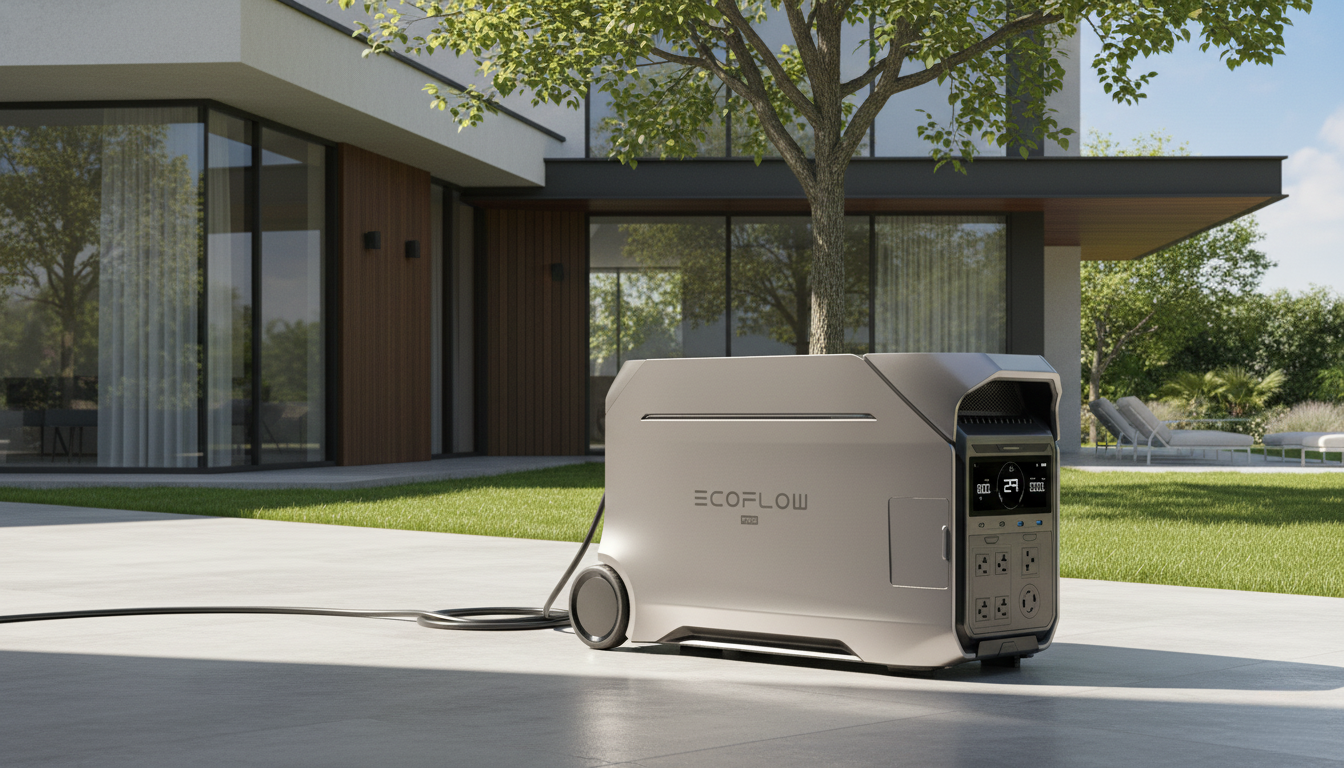
If you live in a place like Ashburn, Virginia, having a solid plan and reliable tools can make all the difference. In this article, we’ll walk you through how to prepare for power outages at home—and specifically focus on portable power solutions and tools that really work. You’ll learn what to prioritize, how to choose the right gear, and five excellent product picks to get you started.



Why Portable Power Preparedness Matters
Understand the risk
Outages are no longer rare. While major storms grab headlines, many outages happen from equipment failure, high winds, or downed utility lines. Your home might depend on electricity for:
- Refrigeration (food safety)
- Communication (internet, phone)
- Heating/cooling (especially in extremes)
- Medical or mobility equipment
What portable power solutions offer
Portable power stations, backup batteries and compact in-home systems bring advantages:
- No fuel to store (unlike gasoline generators)
- Quiet operation, minimal maintenance
- Indoor capability and safer footprint
- Flexibility: plug in what you need for the time you need it
For example, the team at EcoFlow describes systems that charge fast, run quietly indoors and can even plug into your home’s circuit panel—offering a seamless backup. Meanwhile, federal guidance from Federal Emergency Management Agency (FEMA) lists portable power or alternative sources among key prep steps.
Your mindset: More than “just lights”
Preparing isn’t about powering everything for weeks. It’s about thoughtful prioritization:
- Which devices/appliances are absolutely essential during an outage?
- How many hours do you need them to run before power might be restored?
- What are realistic backup options for your budget and space?
Step-by-Step Plan for Outage Readiness
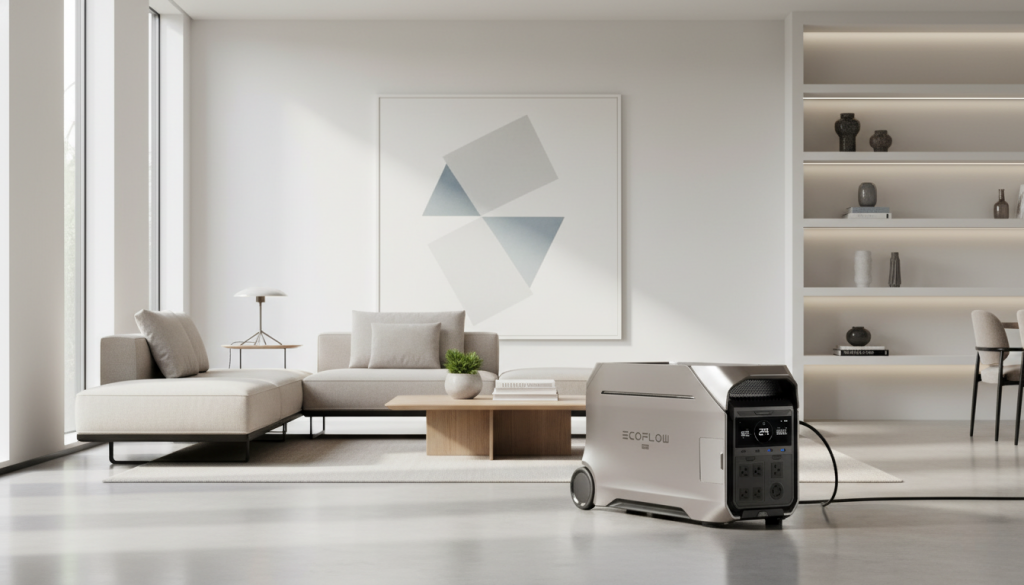
1. Inventory your essentials
Make a list of things you must keep running. Example categories:
- Refrigerator/freezer
- Internet router/modem
- Mobile phones, tablets, laptops
- Lighting (bedrooms, main areas)
- Heating or cooling (depending on season)
- Medical/mobility devices (if relevant)
Calculate approximate wattage and desired runtime. That gives you the size of power backup you need.
2. Prioritize loads
You may not need to—or be able to—power the entire house. A smart tiering:
- Tier 1: Critical loads (fridge, comms, lights)
- Tier 2: Comfort loads (TVs, extra outlets)
- Tier 3: Non-essential loads (pool pump, luxury items)
Focusing on Tier 1 means smaller, more affordable systems.
3. Choose the right tool for the job
Portable power station: Battery-based, indoor safe, good for hours to days depending on size.
Generator: Fuel-based—larger capacity, but more maintenance, noise, and safety hazards.
Hybrid/Whole-home backup systems: High cost, but ideal for long outages and high-draw homes.
4. Location & Safety Considerations
- Place portable power stations in a dry, ventilated space.
- If using fuel-generators: always outside, away from windows/doors, with CO detectors in place.
- Understand that your refrigerator may keep safe for ~4 hours if unopened in a typical outage.
5. Maintain & test your backup gear
- Keep your backup units charged/maintained.
- Run a “black-out drill”: Pull the plug (or switch off circuit) and see what stays on.
- Replace batteries or fuel as needed.
- Update family or housemate plan: where the gear is, how to connect, what to unplug.
Trusted Brands to Know
Here are three credible brands you can explore for portable power backup gear:
EcoFlow
EcoFlow is known for its cutting-edge portable power technology, offering fast-charging, expandable battery systems and home-ready backup solutions. The brand emphasizes reliability and innovation, making backup power more accessible and essential for modern households.
Short Review: EcoFlow stands out for its advanced design, indoor-safe operation, and ability to handle demanding loads with ease.
Pro Tip: Explore the larger “Home Backup” models if you want dependable power for more than just small devices during outages.
Lowe's
Lowe’s provides a wide selection of portable power stations, generators, and accessories from top brands, catering to both homeowners and professionals. Their broad inventory and easy in-store pickup make it a convenient choice for anyone preparing for outages.
Short Review: A reliable, one-stop destination with great regional availability and trusted brand options.
Pro Tip: Compare wattage, capacity, and battery chemistry (like LiFePO₄) when choosing a power station to find the right match for your home’s needs.
TractorSupply
Tractor Supply specializes in rugged, outdoor-ready power solutions designed for rural, off-grid, or farm settings. Their lineup includes heavy-duty portable power gear that performs well in demanding environments.
Short Review: Ideal for rural households or anyone seeking durable equipment built for long-term reliability.
Pro Tip: Even if you don’t purchase here, browse their inventory to compare technical specs, build quality, and performance ratings across different models.
Top Portable Power Stations That Really Work
EcoFlow DELTA 3

The EcoFlow DELTA 3 Plus offers ~1 kWh capacity and ~1,800 W continuous output, making it ideal for small homes or apartments. It can comfortably power a fridge, lights, router, and essential electronics during short to medium-length outages.
- Compact yet powerful for moderate backup needs
- Fast-charging and indoor-safe design
- Reliable brand support and warranty
- Cannot handle central HVAC or whole-house loads for extended periods
- Limited runtime for high-draw appliances
EcoFlow DELTA Pro 3

A high-end, expandable solution, the DELTA Pro 3 offers 4,000 W output (8,000 W surge) and can scale up to tens of kWh with additional batteries. Perfect for homeowners looking for serious backup power and the potential for near whole-house coverage.
- Capable of powering multiple high-load appliances simultaneously
- Expandable and future-proof design
- Smart integration options for home energy management
- Premium price point
- Heavy and may require professional installation for full home integration
Jackery Explorer 300 Plus
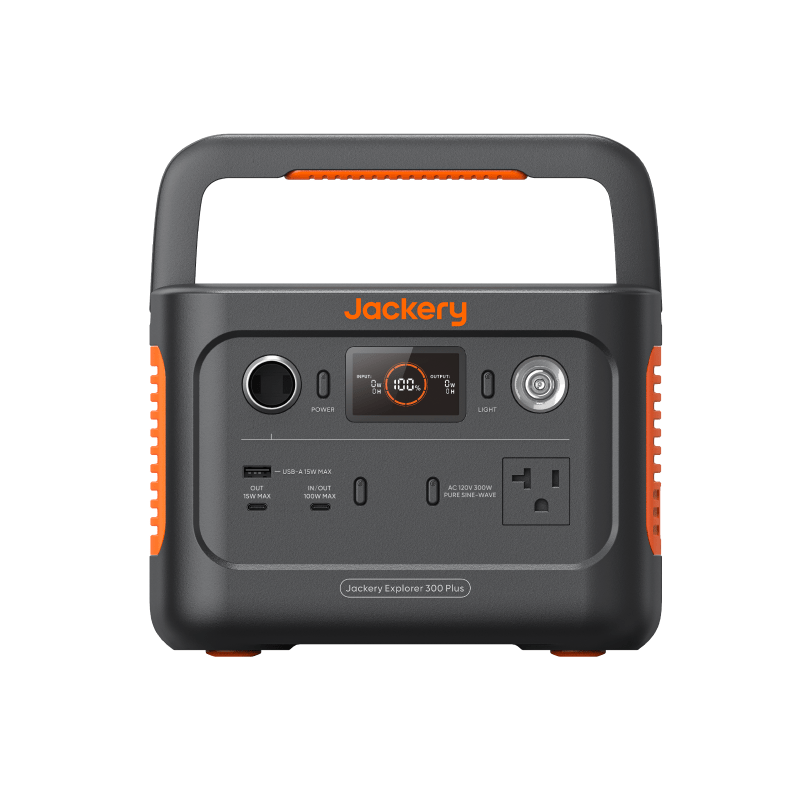
The Explorer 300 Plus is a compact 288 Wh portable power station, designed for mobile devices, laptops, and small appliances. Lightweight and easy to transport, it’s perfect for short-term outages or outdoor use.
- Extremely portable and lightweight
- Affordable for most budgets
- Quick setup and easy to use
- Limited capacity for major appliances
- Not suitable for extended whole-house power needs
DeWalt 1800‑Watt Portable Power Station DCB1800B

1800 Watt portable DEWALT power station
DEWALT generator features 4-port simultaneous charger
Four 20V MAX* batteries in (including FLEXVOLT), 15 amps out
Batteries and extension cord sold separately
Runs most variable speed power tools
With 1,800 W continuous output and just 18 lbs, this unit bridges the gap between tool-site and home use. It can run medium to heavy-duty tools and small appliances, making it versatile for work and emergency scenarios.
- High output for power tools and heavier devices
- Compact, portable, and easy to transport
- Trusted DeWalt durability and build quality
- Runtime is limited compared to larger home backup systems
- Fewer household-specific outlet options
Generac GB2000 Portable Power Station

Portable Power Anywhere - Enjoy the benefits of clean, emission-free power anywhere with the Generac 8026 GB2000. Ideal for home use, camping trips, and other outdoor activities, this portable power station provides reliable energy
Fast Solar Recharging - Experience fast and versatile recharging with the GB2000. Achieve 0 to 80% charge in just 3.3 hours from a wall outlet, or use solar, car, and generator inputs for efficient power supply
Compact and Durable Design: The GB2000 is designed to be lightweight, compact, and durable, making it easy to carry and transport. Its robust enclosure and ergonomic handle ensure long-lasting performance in various environments
Wireless Charging Convenience: Simplify your charging experience with the built-in 15W wireless charging pad. Just place your compatible devices on the pad and enjoy hassle-free charging without the need for tangled cords
Informative Display for Easy Monitoring: Stay informed about the station's status with a large multi-color 4.7" display. Providing real-time battery level, remaining runtime, and other details ensuring you always have the necessary information at a glance
The Generac GB2000 delivers ~2,100 Wh capacity, making it a reliable mid- to high-range backup solution. It can run a refrigerator for approximately 15 hours, along with essential devices like lights, laptops, and phones.
- Strong capacity and reliable brand reputation
- Safe for indoor use and quiet operation
- Multiple AC and DC outlets for flexible device support
- Relatively large and heavier than compact options
- Costly compared to smaller portable power stations
- Still not suitable for full whole-house power needs
How to pick among them
- If budget & space are tight → go compact (Jackery).
- For everyday outage readiness (fridge + modem + lights) → mid-sized (EcoFlow DELTA 3 Plus).
- If you want serious backup and have budget/space → premium (EcoFlow DELTA Pro 3 or Generac).
- If you also do tool-site/off-grid work & want crossover gear → DeWalt.
Additional pros & cons of portable power stations
- Clean operation (no fumes)
- Quiet and safe indoors
- Rapid deployment when outage hits
- Runtime limited by capacity
- Doesn’t replace large HVAC loads unless very large/expensive system
- Cost per kWh often higher than fuel-generator at scale
Frequently Asked Questions (And Smart Answers)
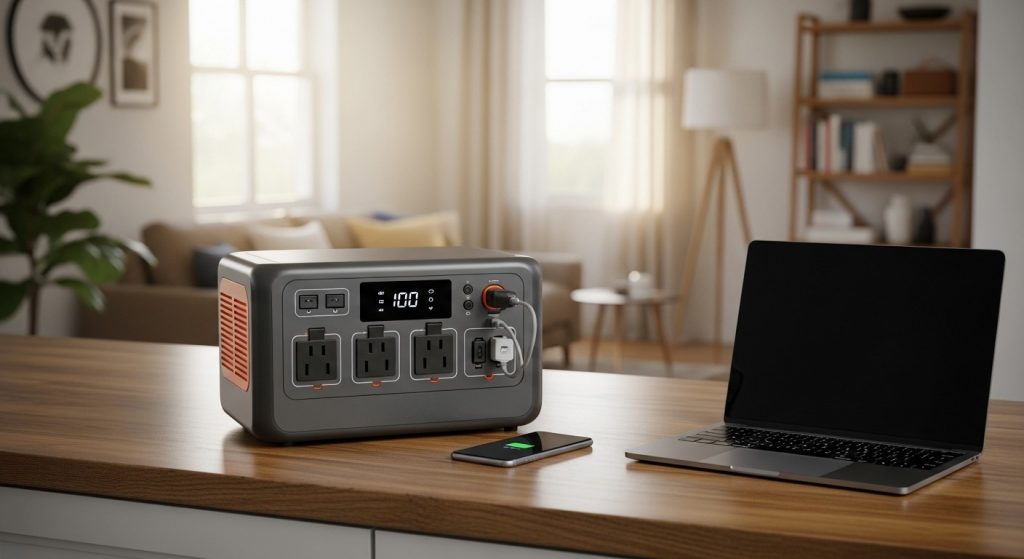
Q: How long will a power station keep my fridge running?
A: Depends on fridge wattage + station capacity + how often you open the door. Example: A 200 W fridge running 12 hrs uses ~2.4 kWh; a 1 kWh unit might give ~8–10 hrs of that load (plus losses). Your mileage will vary.
Q: Can portable power stations replace my whole-house generator?
A: Not usually—unless you pick a very large system and install proper transfer switch. For many households the sweet spot is “essential loads” not full HVAC + whole house. The expert community often points out large outages push you into tool-site/data-center sized gear.
Q: Do I also need a generator?
A: Possibly. If you face frequent extended outages (24–72+ hours) and want full HVAC + whole-house power, a generator combined with battery backup or as fallback may make sense. For shorter outages or partial loads, a portable power station can suffice.
Q: What about solar panels?
A: Solar can extend runtime by recharging the station during daylight, but it adds cost and depends on weather. Many backup-ready systems are solar-ready or expandable.
Q: How often should I test my system?
A: At least once a year, simulate an outage: unplug or switch off main circuit and run your system for a few hours to verify performance, training your family and checking gear.
Conclusion & Next Steps

Preparing for power outages doesn’t mean you need an industrial backup generator overnight. It means:
- Clarifying what matters when the lights go out
- Choosing tools sized for your actual essential loads
- Investing in reliable gear (portable power stations + possible accessories) from trusted brands
- Practicing your plan ahead of time—you’ll feel calm instead of caught off guard
Your next step today: Pick one essential scenario (e.g., fridge + router + lights for 8 hrs) and find a power station that meets that scenario. Once you have that, add a second layer (e.g., laptop + charging, plus maybe heating/cooling) when budget allows.
The responses below are not provided, commissioned, reviewed, approved, or otherwise endorsed by any financial entity or advertiser. It is not the advertiser’s responsibility to ensure all posts and/or questions are answered.



Comments 1 comment
I didn’t realize Lowe’s had so many portable power options, super convenient for pickup