

An honest Make Time Wellness review for 2026, with ingredient analysis, QVC comparisons, product links, pros, cons, and who this daily supplement for women fits best.
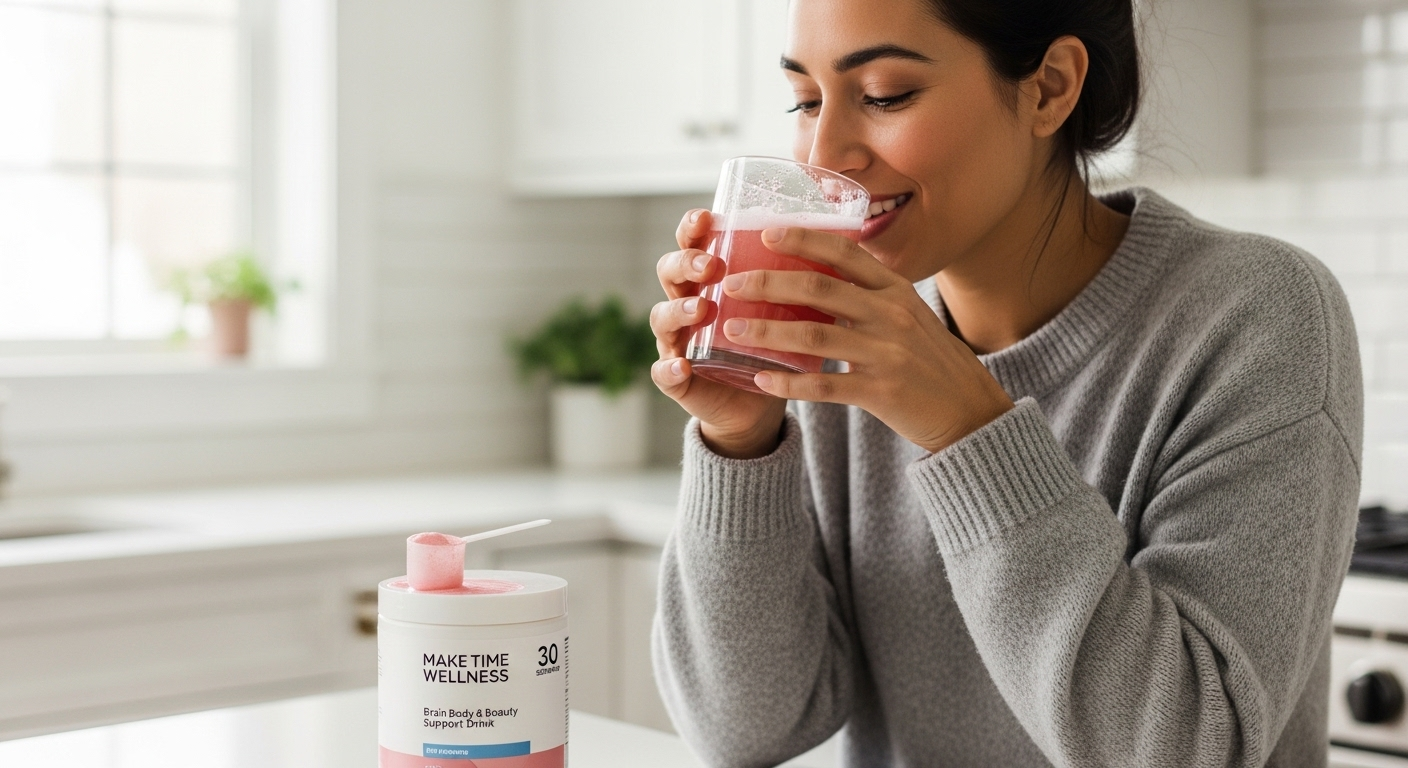
If you have been searching for Make Time Wellness reviews, you are probably asking a simple question: is this a smart daily supplement for women, or just another pretty wellness product with a strong brand story?
That is a fair question. Women already spend heavily on supplements, and the category keeps growing. CDC data shows 63.8% of U.S. women reported using a dietary supplement in the previous 30 days, which means many shoppers are not deciding whether to use supplements at all, they are deciding which one deserves a place in an already crowded routine.
Make Time Wellness stands out because it does not market itself as just a multivitamin. It leans into brain health, mental clarity, beauty support, and a simpler daily ritual. That positioning became even more visible in 2026, when the brand debuted on QVC through a beauty and wellness feature focused on holistic care.
My take is this: Make Time Wellness is most compelling for women who want a single, easy routine that blends multivitamin support with cognitive and beauty-oriented ingredients. It is less compelling if you want a low-cost basic multivitamin, or if you prefer highly targeted, evidence-heavy formulas for one specific goal.
Why Make Time Wellness is getting attention
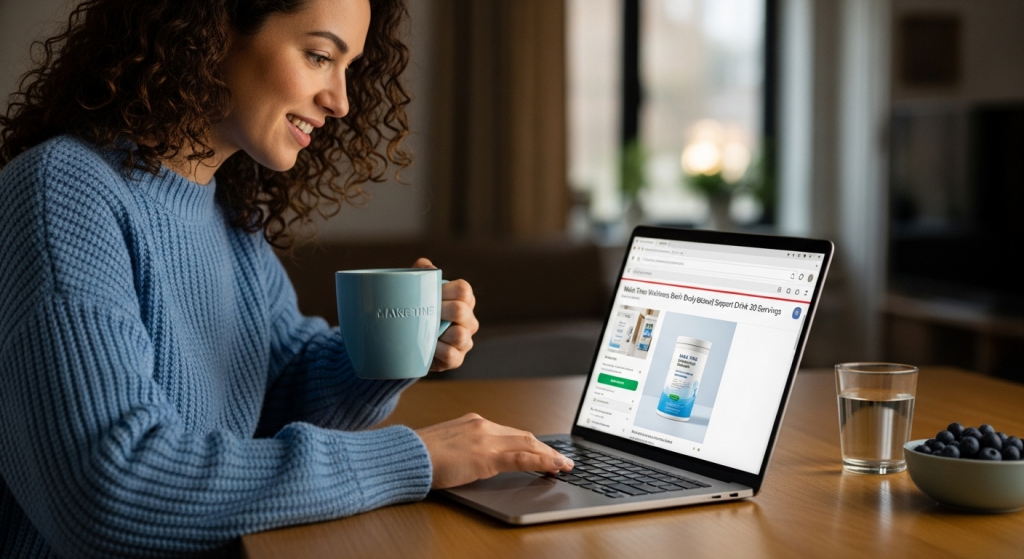
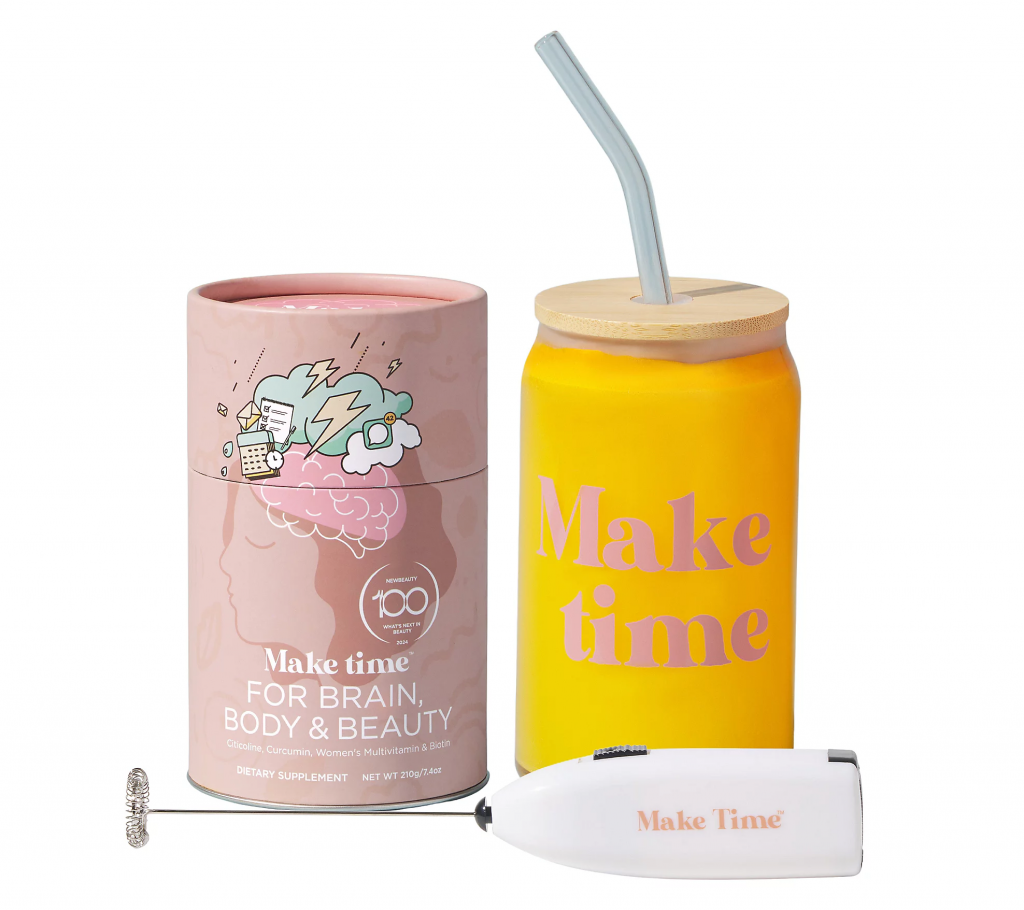
The core Make Time QVC product is the Make Time Wellness Brain Body & Beauty Support Drink, 30 servings. QVC describes it as a 30-day powder supply that includes a tumbler and USB-rechargeable mixer, with Cognizin and a multivitamin blend rich in vitamins and minerals. On the brand’s own site, the underlying powder is presented as an all-in-one daily ritual featuring Cognizin citicoline, curcumin, MCT oil, acetyl-L-carnitine, biotin, and a complete women’s multivitamin.
That combination matters because it speaks directly to a real pain point. Many women do not want five separate bottles on the counter. They want something faster, cleaner, and easier to remember. In that sense, Make Time is selling convenience as much as ingredients. That is a strong fit for anyone browsing topics like daily supplements for women, holistic morning routine, or how to simplify your wellness stack.
The brain-health angle also gives the brand a stronger identity than a standard gummy multi. The broader context matters here. The Alzheimer’s Association says nearly two-thirds of Americans living with Alzheimer’s are women, and estimates a woman’s lifetime risk at age 45 at about 1 in 5. That does not mean a supplement can prevent dementia, and no honest review should imply that. But it does explain why women’s brain health is becoming a more visible wellness category.
QVC comparison, 3 similar daily wellness products
| Product | Best for | Format | What stands out |
|---|---|---|---|
| Make Time Wellness Brain Body & Beauty Support Drink 30 Servings | Women who want a single daily ritual with brain, beauty, and multivitamin support | Drink powder starter kit | Includes 30-day powder, tumbler, and USB mixer; QVC highlights Cognizin and daily brain support |
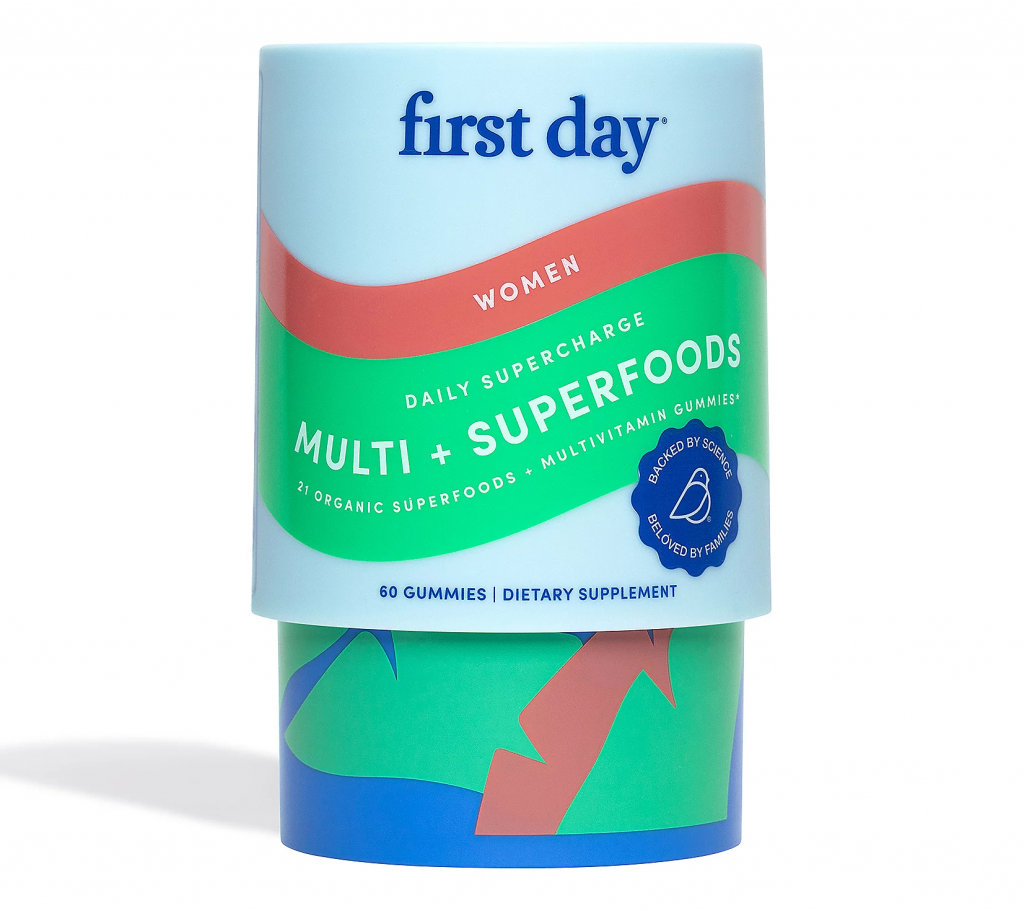
| First Day Women’s Multi Vitamin Gummy 30 Days of Supply | Women who want a simpler, mainstream daily multi | Gummies | 13 micronutrients plus an organic fruit and veggie blend |
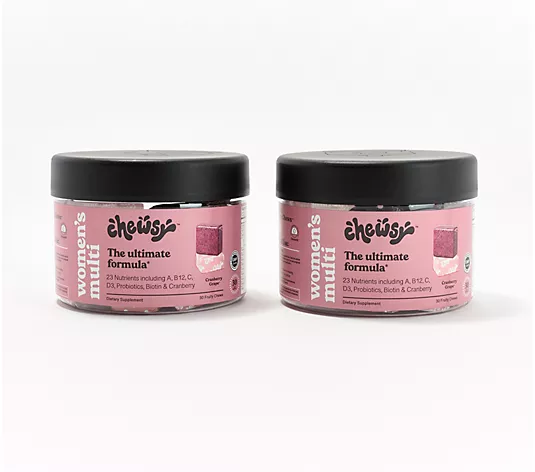
| Chewsy Women’s Multivitamin Chew, 60 servings | Women who want a straightforward chewable multivitamin | Chew | QVC says it provides 100% of the recommended daily requirement for vitamins A, C, D, E, and B vitamins |
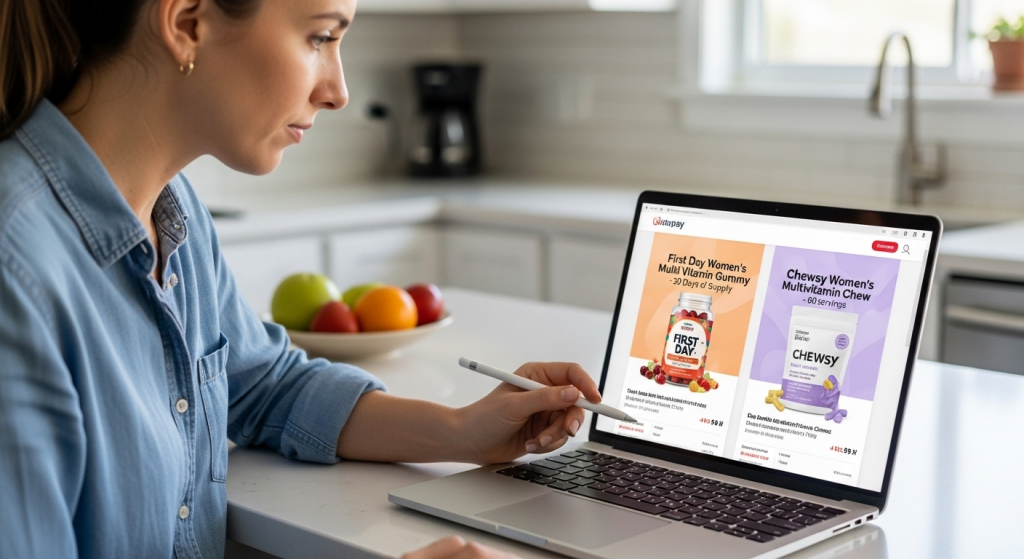
Here is the short version of that table. Make Time is the most lifestyle-driven and the most distinctive. First Day looks like the best “easy daily multi” alternative. Chewsy is the most traditional of the three and reads like a simple vitamin-first option.
Make Time Wellness Brain Body & Beauty Support Drink 30 Servings
First Day Women’s Multi Vitamin Gummy 30 Days of Supply
Chewsy Women’s Multivitamin Chew, 60 servings
What is actually in Make Time Wellness, and does the formula make sense?
The strongest part of Make Time’s formula is not the beauty language. It is the structure. On the official site, the powder combines a women’s multivitamin with Cognizin citicoline, curcumin, MCT oil, acetyl-L-carnitine, and biotin. That gives the product a broader use case than a plain daily multi. It is trying to cover nutrient support, mental clarity, energy, and outward beauty in one step.
The ingredient that deserves the most attention is citicoline, specifically Cognizin. Make Time’s science page cites a randomized, double-blind, placebo-controlled study in healthy adult women in which 250 mg/day of citicoline improved attention and accuracy and reduced errors on cognitive tasks. Independent literature also supports that citicoline has potential benefits for attention and memory in some populations, though results are not the same as proving every branded formula will work for every user.
That distinction matters. The science supports citicoline as an ingredient worth taking seriously. It does not automatically prove that every promise in a lifestyle-forward supplement ad is equally strong. In other words, Make Time has a better evidence story than many influencer-led wellness products, but it still sits in the supplement category, not the drug category. FDA says dietary supplements are not intended to diagnose, treat, cure, or prevent disease.
The biotin story is more mixed. Biotin is popular in beauty supplements, and Make Time uses it as part of its hair, skin, and nails pitch. But NIH’s Office of Dietary Supplements says the scientific evidence behind biotin for beauty claims is limited, outside certain deficiency-related cases and a few small studies. That does not make biotin useless. It just means this is the part of the formula where marketing often runs ahead of the strongest proof.
The multivitamin side is easier to defend. NIH notes that multivitamin and multimineral supplements can help people meet recommended nutrient intakes when food alone falls short. That is the most practical reason to consider Make Time. Not because it is magic, but because it may simplify consistency for women who are already stretched thin. If your content hub covers women’s multivitamin benefits or nutrient gaps in busy lifestyles, this section links naturally into those topics.
What real buyers should like, and what should make them pause
The biggest pro is convenience. QVC sells the product as a ready-to-use starter kit, and the official site frames the powder as a no-pill daily ritual. For people who hate swallowing capsules or juggling multiple bottles, that is a real advantage.
Another pro is differentiation. First Day and Chewsy look like solid daily vitamin options, but neither appears positioned around cognition in the same way. If your main problem is not just “I need a vitamin,” but “I feel mentally drained and want a more functional routine,” Make Time has the clearer identity.
A third pro is that Make Time feels current without being completely trend-chasing. Its 2026 QVC debut, women’s brain-health story, and multi-benefit format line up with where the wellness category is moving, especially around inside-out beauty and simplified routines.
Now the cons.
First, the formula is broad, which is good for convenience but weaker for precision. If you know you specifically need iron, magnesium, vitamin D, omega-3s, or menopause support, a one-size-fits-most daily drink may not be the smartest tool. NIH also reminds consumers that supplements should not replace a healthy diet or prescribed treatment.
Second, beauty support is not equally evidence-backed across every ingredient claim. Biotin is the best example. It is popular, but the proof for stronger hair, skin, or nails in the average healthy adult is still limited.
Third, shoppers should still treat “clean” or “science-backed” language with healthy caution. NCCIH notes that supplements can interact with medicines, and products carrying independent third-party testing marks such as USP can offer added reassurance. The FDA also warns that some supplements can interfere with medications, surgery, and lab tests. Biotin, in particular, can affect certain test results, including some hormone-related assays.
There is also a pricing wrinkle that many reviews miss. On QVC, the starter kit was listed at $78.00, while the brand’s own site lists the powder at $49.99. That does not mean QVC is overpriced, because the QVC version includes a tumbler and rechargeable mixer. But it does mean value-minded shoppers should compare the bundle against the refill-style product before buying. That is a useful, practical difference, and it is one of the clearest original takeaways from comparing the official listings side by side.
One more point. The brand’s own site highlights strong customer satisfaction, but the way those numbers are framed varies by page. One page says 4.8 based on over 1k+ happy customers, while another says 4.8 based on 68K happy customers. That is not proof of anything wrong, but it is a reminder to judge the product on ingredients, fit, and routine value, not headline testimonials alone. This is my inference from the brand’s own pages.
Final verdict: Is Make Time Wellness worth buying in 2026?
Yes, for the right buyer.
If you want a stylish, all-in-one wellness product that goes beyond a basic multi, Make Time Wellness is one of the more interesting daily supplements for women in 2026. The citicoline angle gives it a stronger reason to exist than many beauty-first powders. The format is genuinely convenient. And the QVC starter kit makes it feel approachable for someone who wants a simple ritual, not a shelf full of bottles.
But if you want the cheapest daily multivitamin, or you prefer ingredients with very strong, condition-specific evidence, First Day or Chewsy may make more sense. They are simpler. They are easier to understand at a glance. And for some shoppers, simpler is better.
The smartest next step is this: choose Make Time if your priority is brain health support plus routine simplicity. Choose one of the QVC multivitamin alternatives if your priority is basic daily coverage with less lifestyle branding. That is the clearest answer behind all the noise around Make Time Wellness reviews, daily supplements for women, and holistic health 2026.
The responses below are not provided, commissioned, reviewed, approved, or otherwise endorsed by any financial entity or advertiser. It is not the advertiser’s responsibility to ensure all posts and/or questions are answered.