

K18 molecular repair mask promises salon-level repair in four minutes. Here is how its biomimetic hair science compares with similar QVC hair treatments.

Damaged hair can be frustrating because it rarely looks like just one problem. It can feel dry, snap at the ends, lose bounce, and turn rough after bleach, heat styling, or chemical services. That is exactly why the K18 molecular repair mask has caught so much attention. It is positioned as more than a basic conditioner or moisture mask. It is sold as a molecular repair treatment that works in just four minutes.
The big idea behind K18 is biomimetic hair science. In plain English, “biomimetic” means designed to imitate a natural biological process or structure. K18 says its peptide is developed through biotechnology and optimized to match hair’s keratin structure, so it can reconnect damage sites at a molecular level.
That sounds impressive, but what does it really mean for someone standing in the shower, staring at fried ends after highlights or too many hot-tool days? It means K18 is trying to solve a different problem than a traditional mask. Most masks focus on softness, slip, and moisture. K18 is marketed first as repair, then as softness and smoothness. Official directions also show that difference: you shampoo, skip conditioner, apply the mask to towel-dried hair, wait four minutes, and do not rinse it out.
Why the science angle matters
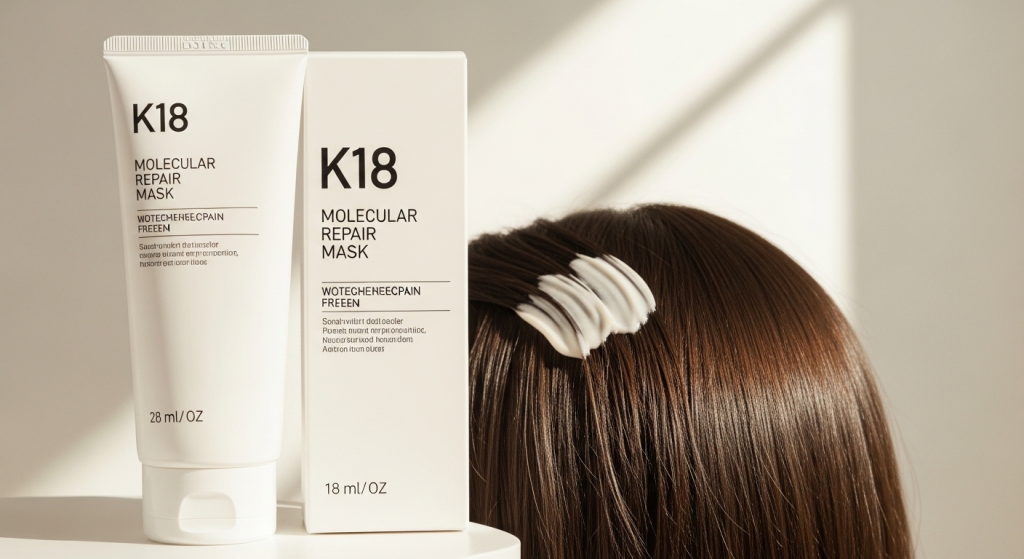
Human hair is made mostly of keratin protein, and the hair shaft includes a cuticle on the outside and a cortex within. Research also shows that bleaching and other chemical processes can damage both the cuticle and the cortex, which helps explain why overprocessed hair can feel weak, rough, and less elastic.
That is where the K18 pitch lands so well. The brand says its K18PEPTIDE repairs hair across multiple bond types, including polypeptide chains and disulfide bonds, after damage from bleach, color, chemical services, and heat. Whether you love the science language or not, the positioning is clear: this is meant to feel like a professional hair treatment at home, not just another creamy mask that coats the outside of the strand.
To be fair, that does not mean every damaged head of hair will suddenly feel brand new. If your ends are heavily split or breaking, no topical product replaces a trim. But if your main issue is processed, weakened, rough-feeling hair that still has enough integrity to recover, K18 makes a strong case as a repair-first option. That is especially true for readers searching terms like heat-damaged hair, bond-building hair masks, or leave-in hair treatment, all of which naturally connect to this topic.
What makes K18 different from a traditional hair mask
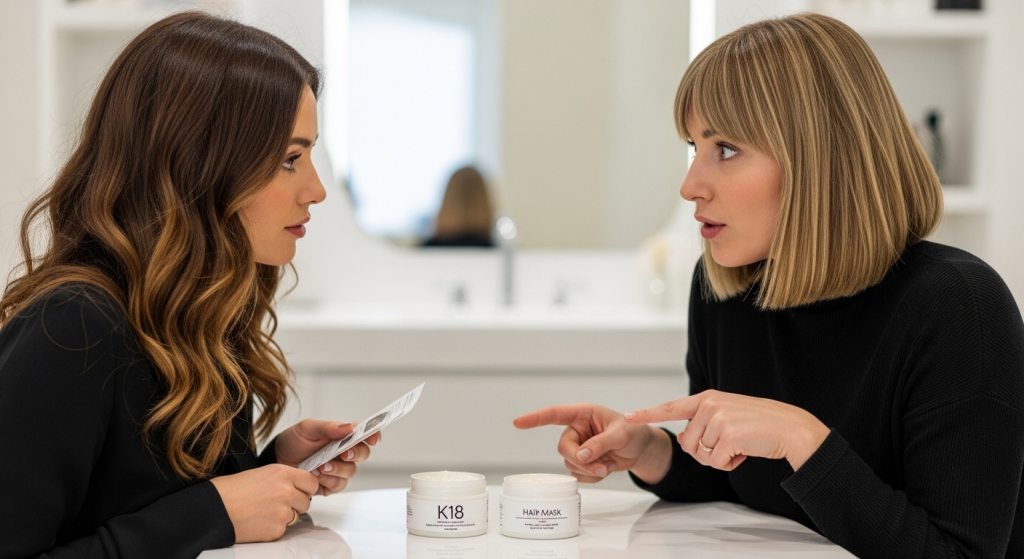
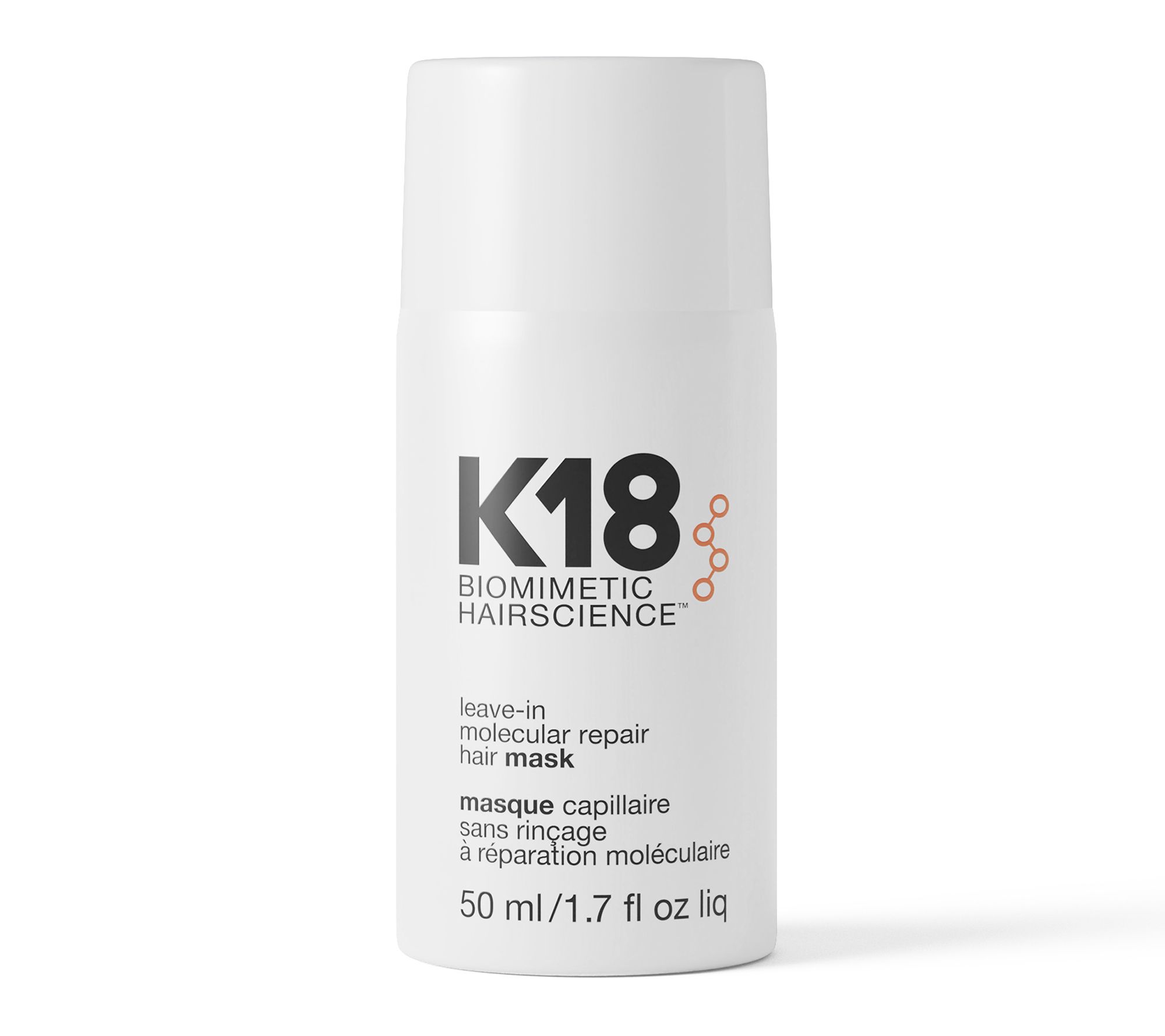
The easiest way to understand K18 is to stop thinking of it as a spa-like treatment mask. It is closer to a concentrated leave-in repair step. The official product page calls it a leave-in treatment mask that works on the molecular level in just four minutes, and the brand instructs users to skip conditioner so the peptide can penetrate effectively.
That routine is a real advantage. Many repair treatments ask for longer shower time or multiple steps. K18 keeps it simple. Use it for the first four to six washes when you start, then weekly as needed. For busy readers who want color-treated hair care without adding a complicated routine, that convenience is part of the appeal.
It also helps explain why K18 has become so visible in salon conversations and at-home routines. The product is not asking you to replace everything. It is asking you to carve out one high-impact step.
QVC comparison, 3 similar hair repair products
Below is a clean comparison of three similar QVC products. I chose one leave-in molecular repair option and two rinse-out bond or moisture masks so readers can see the difference in use case, speed, and texture.


| Product | Type | Best for | Timing | Current QVC listed price |
|---|---|---|---|---|
| K18 Leave-In Molecular Repair Hair Mask | Leave-in repair mask | Bleach, color, chemical, and heat-damaged hair; readers who want a faster professional hair treatment at home | 4 minutes, no rinse | $75.00 |
| Olaplex No. 8 Bond Intense Moisture Mask 3.3 oz | Rinse-out moisture mask | Dry, dull hair that needs softness, shine, and body | Weekly, rinse-out | Price not clearly shown in the page text captured during research |
| amika The Kure Bond Repair Mask | Rich rinse-out repair mask | Dry, damaged hair that needs moisture plus breakage support | 10 minutes, rinse-out | $42.00 |
The table above is based on current QVC product pages and official use directions. K18 is the quickest and most treatment-like, Olaplex No. 8 reads as the moisture-first option, and amika The Kure sits in the middle as a richer repair mask with a more nourishing feel. That last point is an editorial read based on each product’s format, directions, and description.
Which product wins for which need
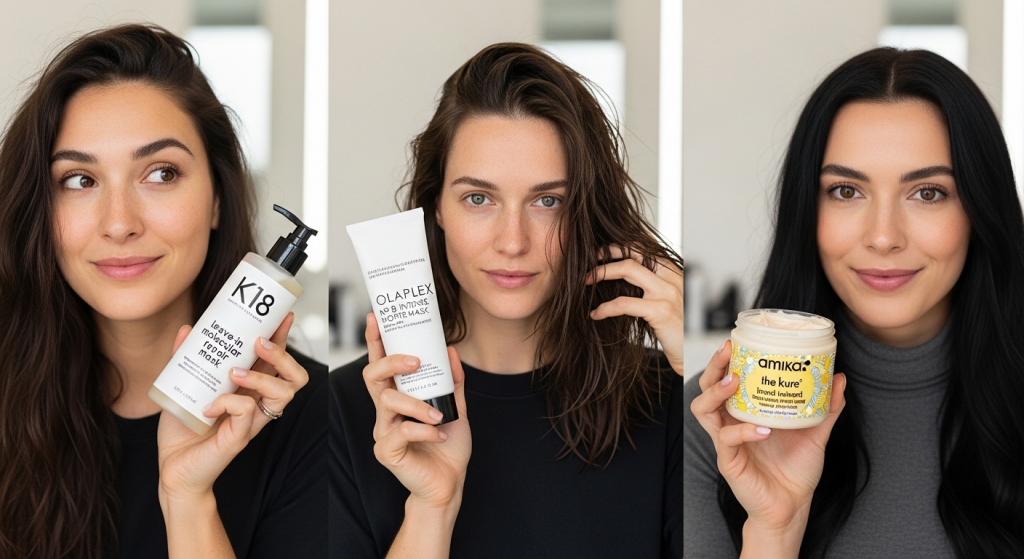
If your hair feels overprocessed, choose K18
If your hair has that familiar post-bleach texture, stretchy when wet, rough when dry, and weirdly fragile all day, K18 is the most targeted pick in this group. Its main selling point is damage repair at the molecular level, and the leave-in format supports the idea that it is meant to keep working beyond the shower.
This is the product I would highlight for readers searching K18 molecular repair mask by name, or for anyone specifically asking whether salon-style repair can be done at home.
If your hair mostly needs softness and shine, choose Olaplex No. 8
Olaplex No. 8 is described by QVC as a multi-benefit at-home mask that moisturizes, smooths, and adds body and shine. That makes it a better fit for readers whose hair is more thirsty than structurally compromised. If someone says, “My hair looks dull and feels dry, but it is not snapping off,” this product likely makes more sense.
If you want a richer mask experience, choose amika The Kure
amika The Kure is described as ultra-moisturizing and focused on reducing breakage while helping prevent future damage. QVC also highlights mango and shea butter, borage oil, and sea buckthorn, which signals a more plush, conditioning experience. For readers who enjoy a classic mask texture and do not mind a 10-minute treatment, it is an appealing choice.
Is K18 worth the higher price?
At the time of research, QVC listed K18 at $75 for 1.7 oz, while amika The Kure was listed at $42 for 8.4 oz. That makes K18 look expensive on a simple dollars-per-ounce basis. But that is not really how readers buy it. K18 is sold as a concentrated treatment, used in small amounts, with a different goal than a generous rinse-out mask.
So the value question is not “Which one gives me the most product?” The better question is, “Which one solves my actual problem?” If the problem is serious processing damage, K18 is easier to justify. If the problem is mostly dryness and manageability, one of the lower-cost rinse-out masks may be the smarter buy.
How to use K18 so it actually performs well
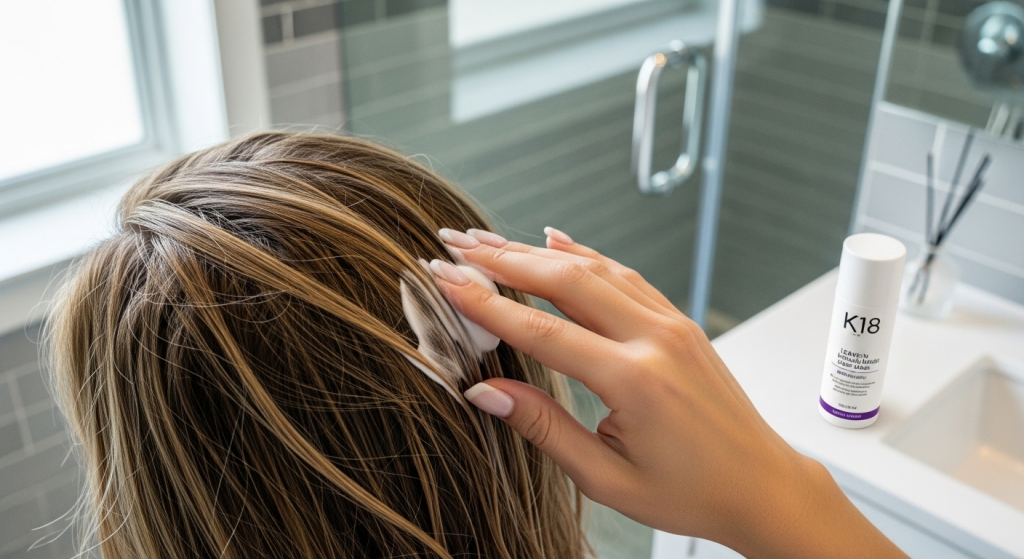
A lot of disappointing results with hair treatments come from using the right product the wrong way. K18 is one of those products where directions matter. The official process is very specific:
Step 1: Shampoo only
Do not condition first. K18 says conditioner can leave a film that blocks the peptide from penetrating effectively.
Step 2: Towel-dry well
The hair should be damp, not dripping. This helps keep the product concentrated where it needs to work.
Step 3: Use less than you think
K18 recommends one to three pumps, depending on length and density. That is far less than most people use with a standard mask.
Step 4: Wait the full four minutes
Do not rush this part. The four-minute pause is the entire premise of the product. After that, style as usual.
Step 5: Stay consistent at the start
QVC says to use it for four to six washes when you first start, then once a week. That is useful guidance for readers building a damaged hair repair routine.
What “biomimetic hair science” really means for shoppers
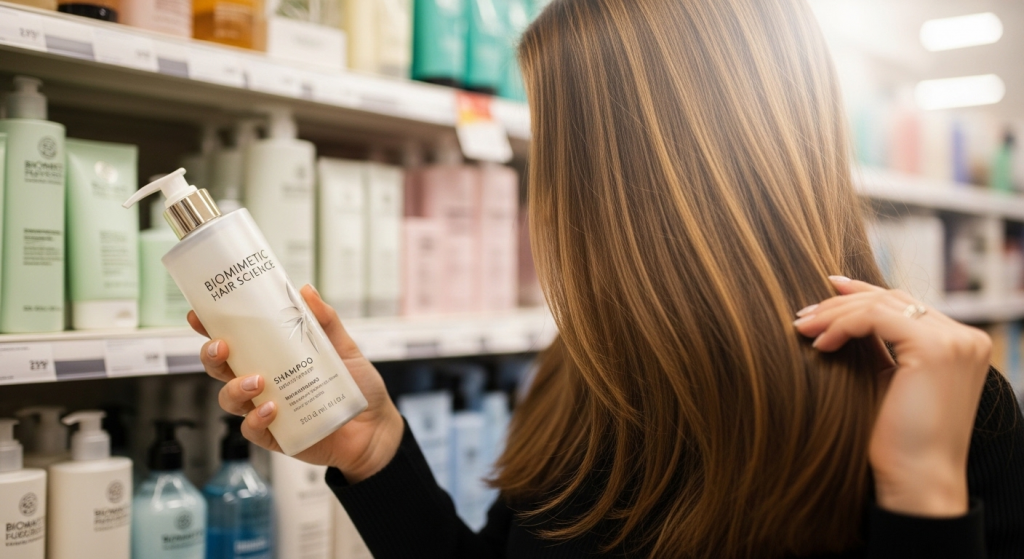
Beauty marketing can get vague fast, so this phrase deserves a plain-language translation. In this context, biomimetic hair science means K18 is presenting its peptide as something modeled after hair’s natural structure, rather than just an oil, butter, or protein coating. The goal is to imitate part of hair biology closely enough to support repair at a deeper level. That is the core story behind the product.
That does not mean consumers need a chemistry degree to decide whether it is useful. A simpler way to think about it is this: if your hair is damaged enough that conditioner alone is not cutting it, K18 is trying to meet you one level deeper.
Who should skip K18
K18 is not the best fit for every reader.
If your hair is healthy and you just want a weekly softness boost, it may be more product than you need. If you love rich, creamy masks and the ritual of a long shower treatment, a rinse-out option like amika or Olaplex may feel more satisfying. And if your damage is really haircut territory, K18 may improve feel and manageability, but it will not permanently erase split ends.
That honesty actually helps K18’s case. The product is strongest when framed as a targeted solution for processed hair, not a universal miracle for everyone.
Final verdict
The K18 molecular repair mask stands out because it does not behave like a traditional mask. It is faster, more treatment-focused, and built around a compelling biomimetic hair science story. Official brand materials and QVC listings consistently position it as a four-minute, leave-in repair step for bleach, color, chemical, and heat damage.
Among the three QVC products compared here, K18 is the best choice for readers who want a true professional hair treatment at home and are dealing with real processing damage. Olaplex No. 8 is better for moisture, shine, and softness. amika The Kure is best for a richer, more nourishing mask experience with breakage support.
If your audience is searching for fast repair after bleach, coloring, or too much heat, K18 is the strongest editorial pick. If they are mostly chasing softness and gloss, one of the rinse-out masks may be the smarter value.
The responses below are not provided, commissioned, reviewed, approved, or otherwise endorsed by any financial entity or advertiser. It is not the advertiser’s responsibility to ensure all posts and/or questions are answered.