

If your home feels chilly but you do not want to crank the whole-house heat, a Duraflame infrared stove can feel like the sweet spot. You get a classic stove look, a flame effect you can run year-round, and quick supplemental warmth for the room you are actually using.

This guide helps you decide if the Duraflame Infrared Stove: Ambiance and Heat in One Compact Design idea fits your space, your comfort goals, and your electric bill. You will also find three QVC models to compare side by side.
Quick comparison: 3 Duraflame stove heaters on QVC
All three options below are designed as supplemental heat sources, not a replacement for central heating. Two are in the 5,200 BTU class, and one is a smaller portable unit.
Best Overall - Duraflame Infrared Electric Fireplace Stove Hea ter w/ Remote
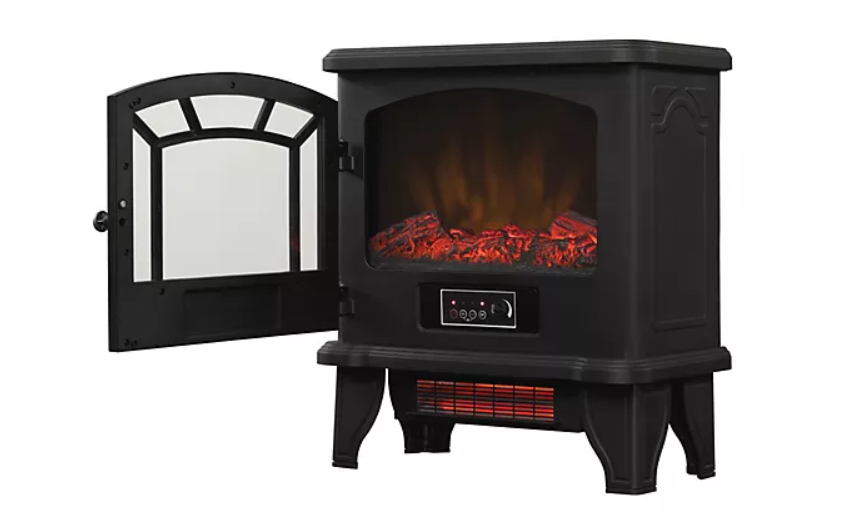
Best Mid Range - Duraflame Infrared 23" Stove Heater w/ Spectrafire 3D Color Flames
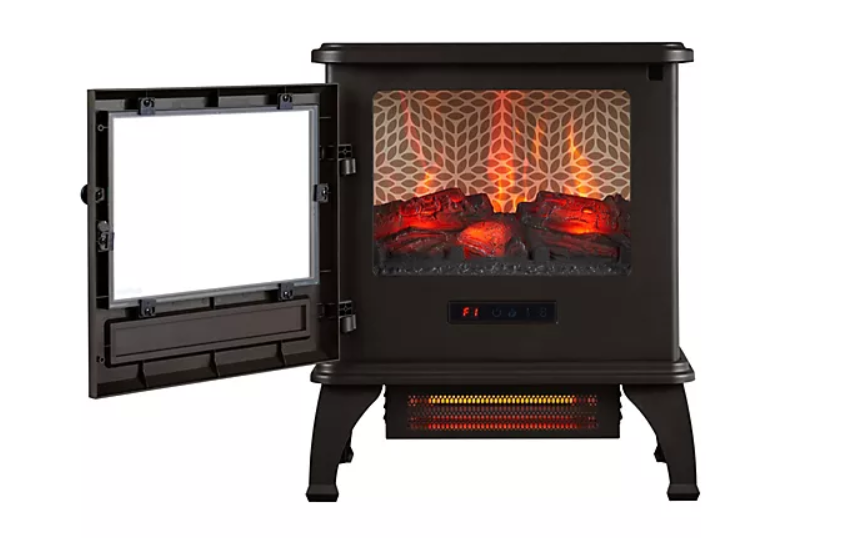
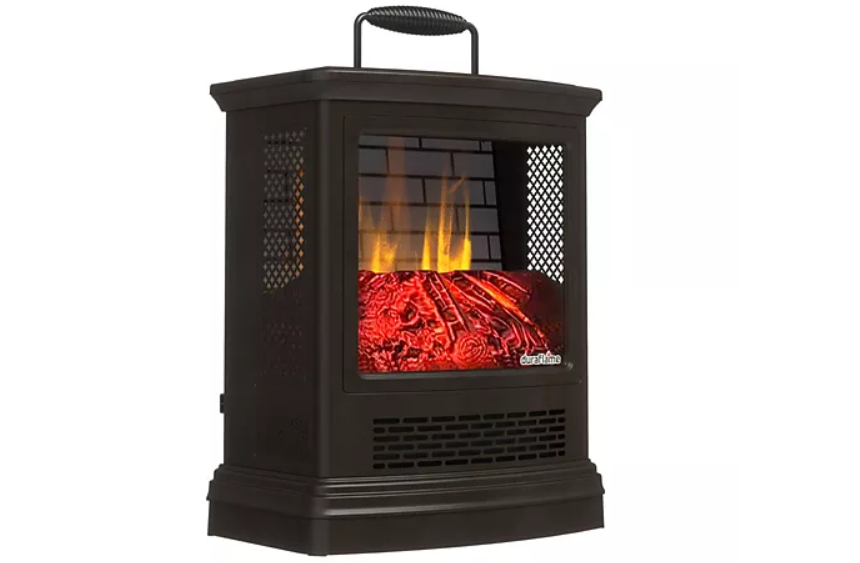
Cheaper Option - Duraflame Portable Stove Heater with 3D Flame Effect
| QVC pick | Best for | Heat output | Power | Standout features |
|---|---|---|---|---|
| Duraflame Infrared Electric Fireplace Stove Heater w/ Remote | Classic stove look, simple controls | 5,200 BTU | 1,500W | Rolling flame effect with or without heat, adjustable thermostat, remote |
| Duraflame Infrared 23" Stove Heater w/ Spectrafire 3D Color Flames | Most “wow” ambiance, extra display controls | 5,200 BTU | (120V plug-in) | 5 flame colors + Auto Cycle, 5 brightness + speeds, 30 min to 9 hr timer, three-sided viewing |
| Duraflame Portable Stove Heater with 3D Flame Effect | Small rooms, desk-to-bedroom portability | 4,600 BTU | 750W or 1,500W | Carry handle, two heat settings, compact footprint |
What “infrared” heat really means
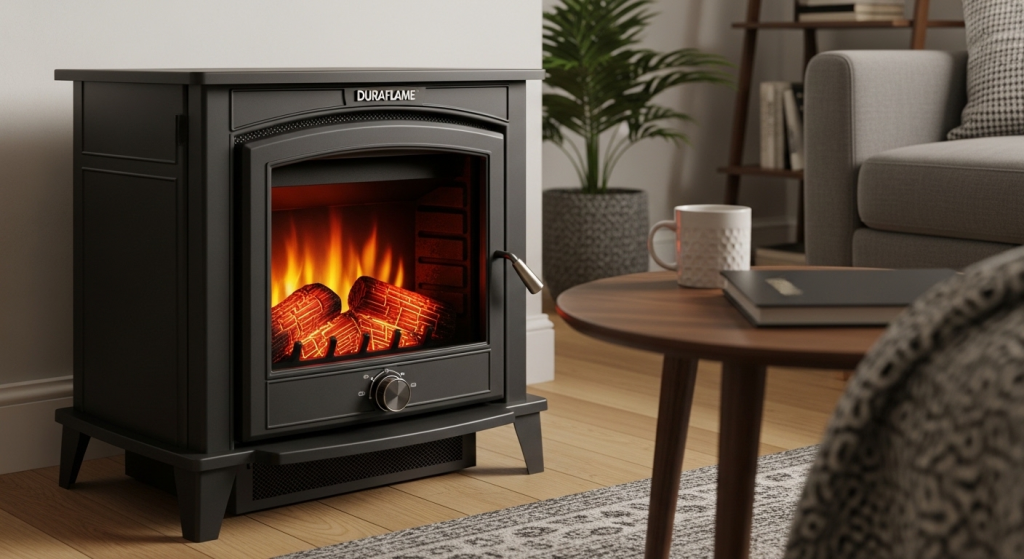
Infrared is a type of electromagnetic energy that humans often experience as heat.
That matters because many “infrared” space heaters are built to feel warm quickly when you are near them, since radiant heat can warm surfaces and people directly, not just the air.
Most stove-style infrared heaters are still electric space heaters at heart. They plug into a standard outlet, use a heating element, and often include a fan to move warmth into the room. For example, Duraflame stove manuals and listings commonly describe a fan-forced infrared element heater and a thermostat range around the low 60s to low 80s Fahrenheit, depending on model.
What you should expect from the “infrared” label
- Fast comfort in your zone: Great if you are on the couch, at a desk, or in a bedroom.
- Not magical efficiency: A 1,500W electric heater is still a 1,500W electric heater. The savings come from heating one room instead of the whole house.
- A cozy look that runs without heat: Many models let you run flame effects in “visual-only” mode.
How to choose the right Duraflame stove for your room
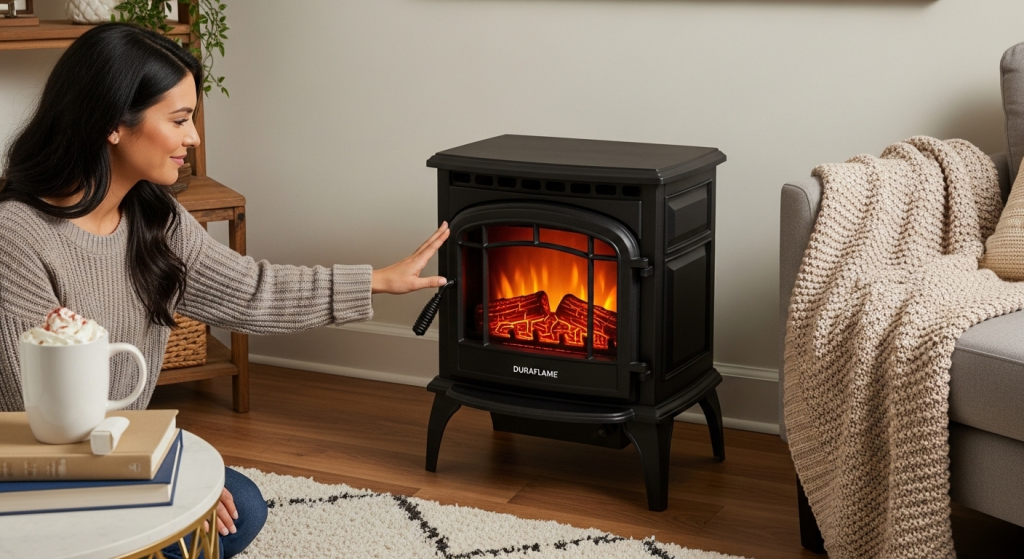
Start with room size, but read the fine print
You will often see claims like “up to 1,000 sq ft.” One QVC listing also explains it as “increases temperature in a 1,000 sq ft room up to six degrees” and clearly notes it is meant as supplemental heat.
That is a helpful reality check: in a large open area, you might get a noticeable bump, but not “whole-home warmth.”
Use this quick rule of thumb:
- Small rooms (100 to 250 sq ft): portable model can be enough.
- Medium rooms (250 to 450 sq ft): 5,200 BTU class is usually the safer bet.
- Large open spaces (450+ sq ft): still possible, but expect “comfort where you sit,” not wall-to-wall uniform heat.
Decide what you care about more: ambiance or simplicity
If you want the most “fireplace vibe,” look for:
- multiple flame colors, brightness, and flame speed controls
- three-sided viewing panels
- a timer for nighttime wind-down routines
If you want “set it and forget it,” prioritize:
- thermostat plus remote control
- a clear door or front window so you can see the flame effect easily
Think about portability and storage
If you will move it room to room, the carry handle and lighter weight on the portable unit matter a lot.
If it will live in one spot, the bigger stove styling and larger viewing window can feel more “built-in.”
Callout tip: If you are creating a “best electric fireplace heaters” hub page, these stove models are a perfect internal link target using anchor text like electric fireplace stove heaters or portable electric fireplace heaters.
What it costs to run
A common high setting for these heaters is 1,500 watts, which is 1.5 kilowatt-hours (kWh) of energy if it runs continuously for one hour.
To keep the math grounded, use the latest national average residential electricity price from the U.S. Energy Information Administration. For November 2025, EIA reports 17.78 cents per kWh (residential).
Estimated operating cost
| Setting | Energy use | Cost per hour at 17.78 cents/kWh | Cost for 8 hours |
|---|---|---|---|
| High (1,500W) | 1.5 kWh | about $0.27 | about $2.13 |
| Low (750W) | 0.75 kWh | about $0.13 | about $1.07 |
These are “worst-case” estimates because a thermostat cycles on and off once the room reaches your set temperature.
How to lower the real cost
- Use it for zone heating, the room you are actually in, and lower central heat a bit.
- Close doors, block drafts, and add a rug, heat stays where you pay for it.
- Use a timer so it is not running longer than needed.
Safety first: simple rules that prevent most problems
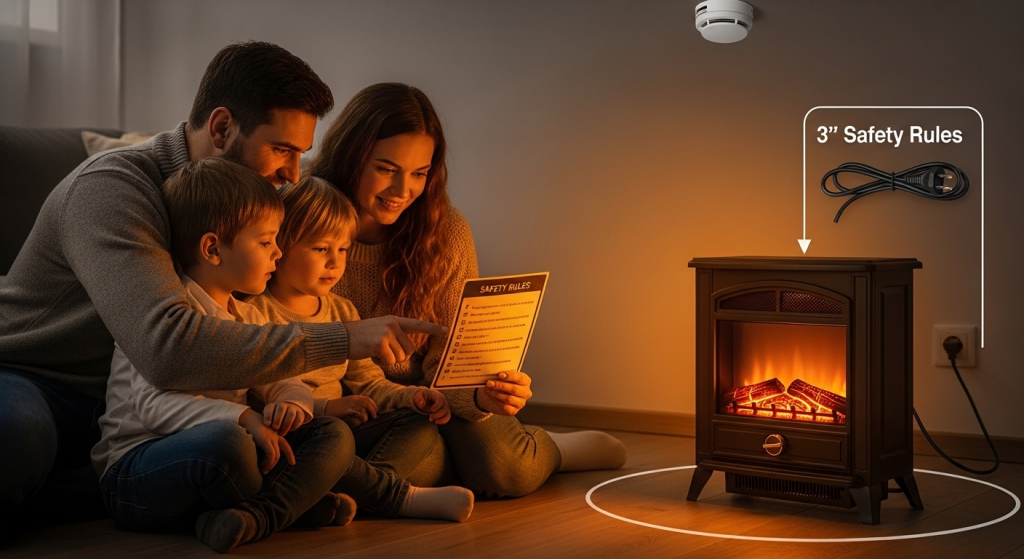
Portable heaters are involved in an average of 1,600 fires per year, with an average of 70 deaths and 150 injuries annually (CPSC, 2020 to 2022).
So yes, stove heaters can be cozy, but only if you treat them like any other space heater.
Do this every time you use it
- Keep it at least three feet away from drapes, bedding, furniture, and anything that can burn.
- Plug it directly into a wall outlet, not a power strip.
- Turn it off when sleeping.
- Choose models with recognized safety certifications (many listings note CSA listed, and DOE also calls out looking for labels like UL).
Does an infrared stove “dry out the air”? Here is the truth
You may see claims that infrared heat “retains humidity.” One QVC listing even states that “100% of the starting relative humidity” remains after 24 hours.
Here is the key science: relative humidity depends on temperature. Warm air can hold more water vapor, so if you heat the air without adding moisture, relative humidity drops. NOAA explains relative humidity is measured relative to the air’s temperature.
NASA also notes that when saturated air is warmed, it can hold more water, so relative humidity drops.
Practical takeaway
- An electric heater does not “remove water” from your home like a dehumidifier.
- But warming a room often makes it feel drier because the relative humidity percentage can drop.
If dry air bothers you in winter, the fix is usually a humidifier, better sealing, or more balanced ventilation, not a different heater.
Real-life setup tips (so it looks good and works better)
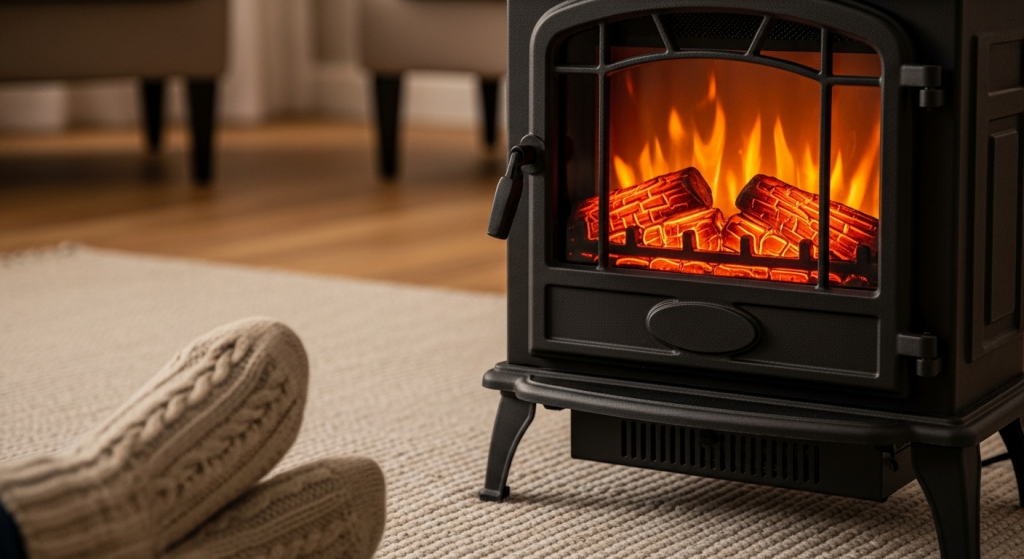
Placement that improves comfort
- Put it near where you sit, but out of walkways. DOE recommends a level surface away from foot traffic.
- Aim the front toward the seating area, radiant warmth is directional.
Make it feel like decor, not an appliance
- Add a small hearth pad or heat-safe mat under it (for the look and to define the “no-clutter zone”).
- Pair it with warm lighting so the flame effect does not have to do all the heavy lifting.
Noise expectations
Most stove heaters have a fan, so you will hear gentle airflow. If you want quieter, run it on a lower setting when possible, or let it cycle at your thermostat setpoint.
FAQ (People Also Ask style)
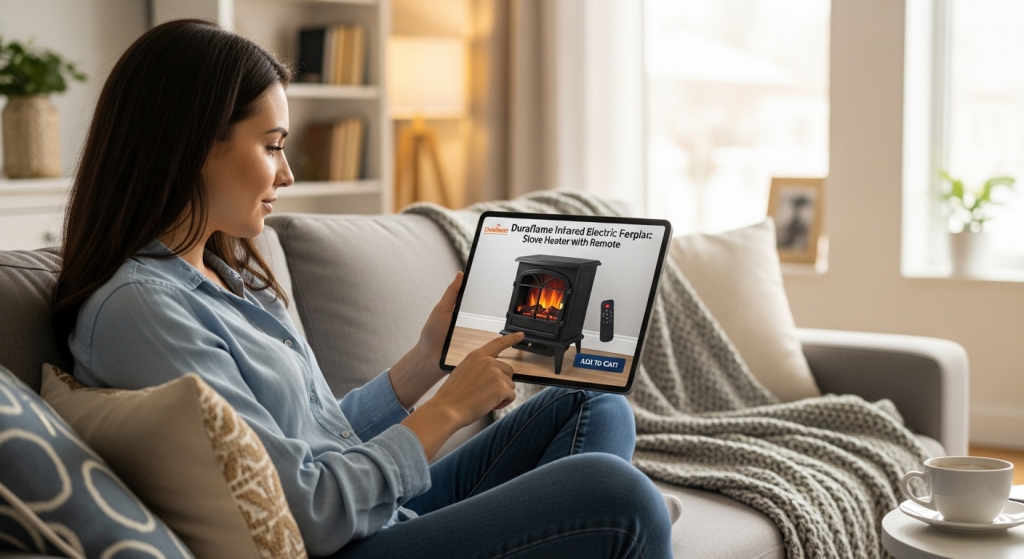
Can you run the flame effect without heat?
Yes, these QVC listings describe flame effects that can be used with or without heat.
Will it heat a whole 1,000 sq ft area?
Treat that as a best-case scenario. One listing frames it as a temperature increase of up to six degrees in a 1,000 sq ft room and emphasizes supplemental heat.
Open layouts, high ceilings, drafts, and poor insulation reduce results.
How much electricity does it use?
On high, many are 1,500W models.
Using EIA’s November 2025 average residential rate, that is roughly $0.27 per hour if it ran continuously.
Is it safe to use with an extension cord?
CPSC and DOE recommend plugging electric space heaters directly into a wall outlet, not an extension cord or power strip.
What temperature range do these thermostats support?
A common range shown in Duraflame stove documentation is around 62°F to 82°F, depending on model.
Is an infrared stove better than a ceramic space heater?
It depends on your goal. If you want the fireplace look and a warm “nearby” feel, infrared stove style is a strong choice. If you want compact, fast heat with less visual footprint, a ceramic tower heater may fit better.
So, which QVC Duraflame stove should you pick?
Use this simple decision path:
- You want the most ambiance controls: choose the Spectrafire 3D color flame model (colors, speeds, brightness, timer).
- You want a classic stove look with straightforward heat: the DFI-550-22 style listing is a clean, traditional option with remote and rolling flame effect.
- You want portability for small spaces: the compact carry-handle model is easiest to move and offers 750W or 1,500W.
Conclusion: cozy vibes, smart heat, small footprint
A Duraflame stove heater can be an easy upgrade for comfort, especially if you want “fireplace ambiance” without smoke, soot, or a remodel. The real win is zone heating, warming the space you are using, while keeping safety rules tight.
Actionable next step: Measure your room, decide if you want portability or a larger viewing window, then pick a model with the flame features you will actually use. After that, set it up with a clear three-foot safety zone and plug it straight into the wall.
The responses below are not provided, commissioned, reviewed, approved, or otherwise endorsed by any financial entity or advertiser. It is not the advertiser’s responsibility to ensure all posts and/or questions are answered.