

If you love warm, mellow tones and finger-friendly playability, a nylon-string is hard to beat. This 2025 guide spotlights Fender’s best budget classical options—plus the strongest alternatives under $500—so you can pick confidently without getting lost in specs or sales hype.
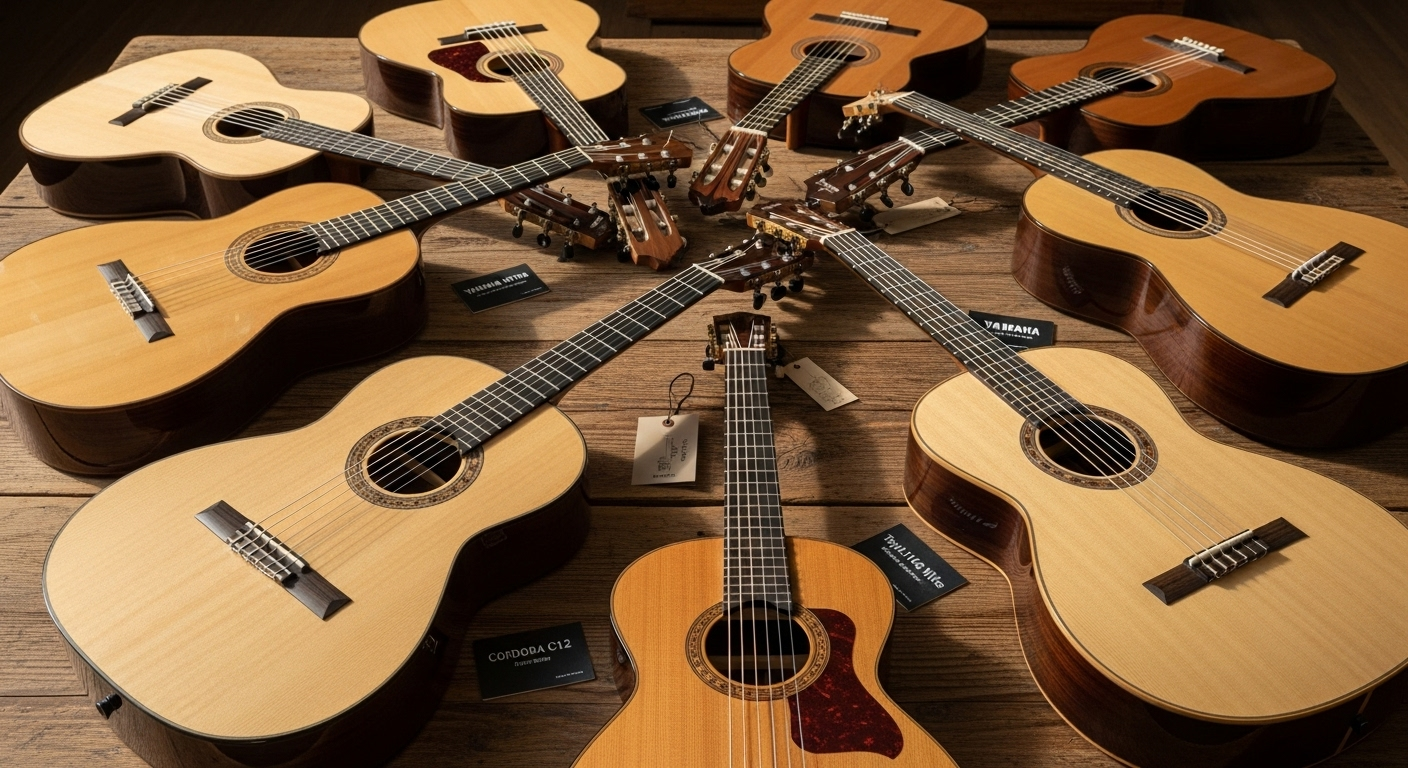
Focus keyword used in context: best classical guitars 2025 (Fender and alternatives under $500).
At-a-Glance Picks (Under $500)
| Model | Why it’s great | Top / Back & Sides | Scale / Nut | Electronics | Typical street |
|---|---|---|---|---|---|
| Fender CN-60S | Easiest step-up from steel-string; solid top, comfy neck | Solid spruce / mahogany | 650 mm / ~43–45 mm | No | $209.99 (Sweetwater). |
| Fender CN-140SCE | Gig-ready nylon with cutaway & Fishman preamp; includes case | Solid cedar / ovangkol or walnut (per run) | 650 mm / ~43 mm | Yes (Fishman) | $449.99 (Fender), $399.99 listed historically at Guitar Center (stock varies). |
| Fender FA-15N (¾) | Best small-body starter; super comfy for kids/travel | Laminate (mahogany neck) | ¾ size | No | $188.99 (Fender). |
| Yamaha C40II | Benchmark beginner full-size; amazingly consistent | Spruce / meranti (varies by region) | 650 mm / ~52 mm | No | Often $189–$219 (Yamaha USA listings/packages). |
| Córdoba C5 | Solid-top “Spanish-style” feel & tone on a budget | Solid cedar (or spruce SP) / mahogany | 650 mm / ~52 mm | No | Typically <$400; CE cutaway/electric variant around $499 (Sweetwater). |
| Ibanez GA3 | Ultra-affordable all-rounder with standard classical geometry | Spruce / meranti | 650 mm scale | No | Commonly <$200 (specs via Ibanez). |
| Takamine GC1 | Traditional feel with Takamine build quality | Spruce / mahogany | Nut 50.8 mm | No (see GC1CE for electronics) | Usually $300–$350 (specs via Takamine). |
| Ortega R121 | Great value + truss rod & gig bag included | Spruce / mahogany | 650 mm scale / 52 mm nut | No | Typically $250–$350 (specs via Ortega). |
Prices are typical street prices at the time of writing and can fluctuate by finish, retailer, and availability.






Why a Nylon-String in 2025?
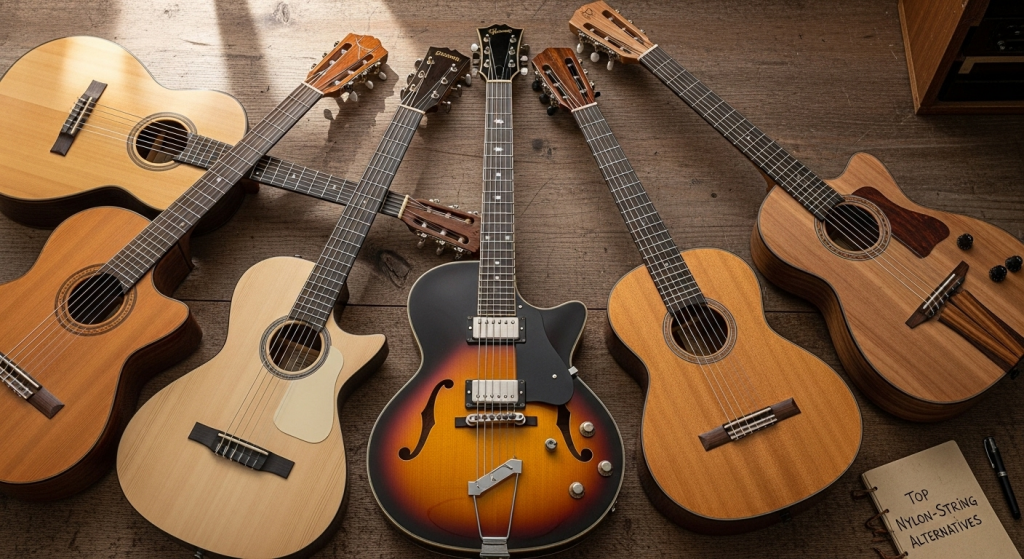
Nylon strings are lower tension than steel and feel softer on your fretting hand—ideal for beginners, fingerstyle, bossa nova, folk, and flamenco. Modern full-size classicals use a ~650 mm scale and ~48–54 mm nut width, which gives your picking hand more room for clean arpeggios.
Translation if you’re coming from acoustic/steel-string: expect a wider neck, a flatter fingerboard, and machine heads that face backwards. Strumming is still possible, but nylon guitars really shine with fingerpicking.
How to Choose (Quick Decision Map)

- Player & size
- Adults & teens: full-size (650 mm).
- Younger students / travel: ¾ size like Fender FA-15N.
- Tone goal
- Cedar top (e.g., Fender CN-140SCE, Córdoba C5): warm, quick response.
- Spruce top (e.g., Fender CN-60S, Yamaha C40II, Ibanez GA3): bright, clear, more headroom.
- Plug-in or not
- Playing live/recording direct? Get onboard electronics (CN-140SCE, Takamine GC1CE, Córdoba C5-CE).
- Home practice/lessons? A pure acoustic like CN-60S or C40II is perfect.
- Neck feel
- If you find traditional 52 mm classical nuts wide, Fender’s Classic Design CN series uses an easier-playing neck profile closer to steel-string spacing—great for cross-over players.
Spotlight on Fender (Best Nylon-String Options Under $500)
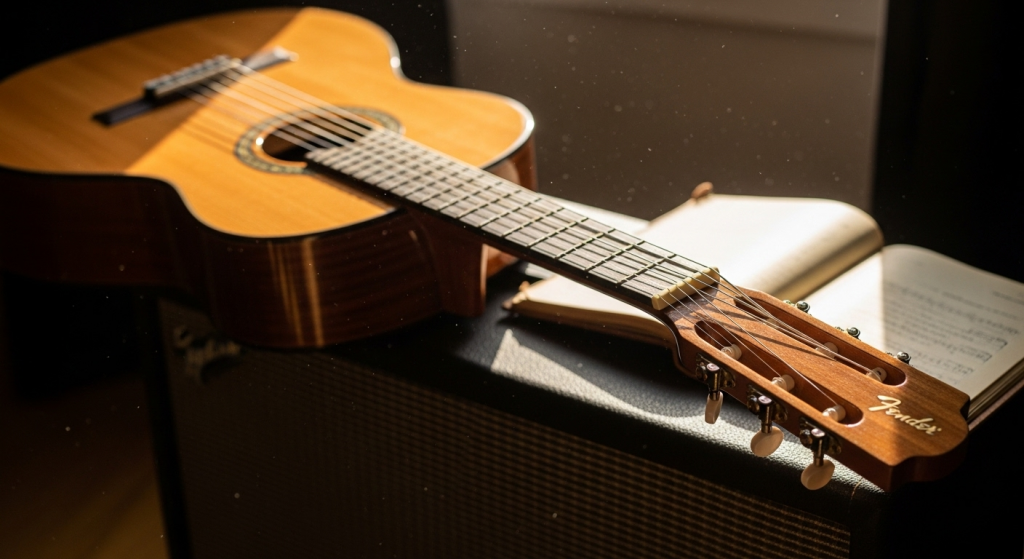
Fender CN-60S (best overall value for beginners)
Fender swapped the typical extra-wide classical neck for a friendlier profile, so steel-string players feel “at home” on day one. The solid spruce top and traditional fan bracing deliver lively projection that encourages good right-hand dynamics. At around $209.99, it’s one of the most feature-rich entry nylon-strings. Consider this your “do-everything” starter that you won’t outgrow quickly.
Good for: first nylon, crossover players, brighter tone seekers.
Watch for: no onboard pickup (use a soundhole mic or clip-on when needed).
Fender CN-140SCE (best affordable stage/classroom nylon)
If you want to plug in, this thinline concert body with cutaway and Fishman electronics is a bargain. It features a solid cedar top for warmer, immediate response, and usually ships with a case—rare at this price. Street price typically sits just under our $500 ceiling (Fender lists $449.99; some retailers vary with stock cycles).
Good for: open mics, worship teams, school ensembles, singer-songwriters.
Watch for: thinline body = slightly less acoustic volume than deep classicals (trade-off for comfort).
Fender FA-15N ¾ (best compact/child-friendly)
A ¾-size nylon with a comfy “C” neck, light build, and included starter options via Fender packs. Great for smaller hands and car-seat travel. It’s also the most budget-friendly Fender nylon (around $188.99).
Good for: young students, travelers, casual couch practice.
Watch for: laminate construction is durable but won’t resonate like a full solid-top.
Top Alternatives Under $500 (Yamaha, Córdoba, Ibanez, Takamine, Ortega)
Yamaha C40II
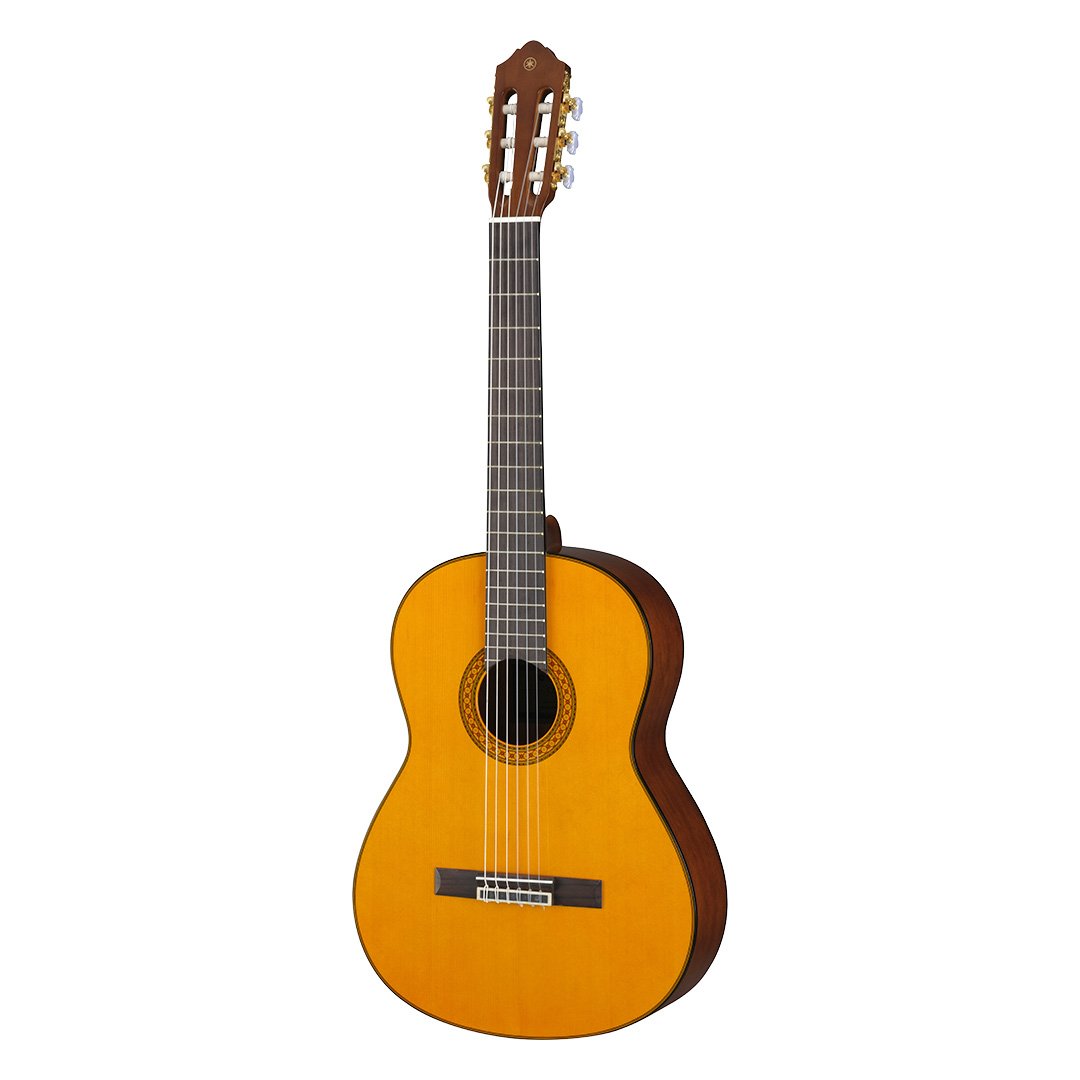
A staple in lesson studios, the C40II is consistent, durable, and surprisingly resonant. It’s often sold solo or in Yamaha’s GigMaker bundle with a gig bag and tuner—nice value if you’re starting from zero.
Choose it if: you want a proven, no-fuss full-size that teachers already know.
Córdoba C5 (and C5-SP)

Handmade in the traditional Spanish style with a solid cedar (or Engelmann spruce in SP) top, the C5 feels a notch more “classical” than many entry rivals. It’s one of the best sub-$400 solid-top choices; if you need a pickup, the C5-CE sits right around $499 on promo cycles.
Choose it if: you want that classic Spanish vibe and rich cedar response.
Ibanez GA3
Lightweight, comfortable, and 650 mm scale with standard classical dimensions. It’s a popular budget pick that still feels “real” under the fingers—perfect for classroom fleets or a first personal instrument.
Choose it if: you want the lowest possible price without giving up standard geometry.
Takamine GC1 (see GC1CE for electronics)
Takamine’s G-Series brings their pro build quality to entry budgets. The GC1 uses a spruce/mahogany recipe with a 50.8 mm nut for a familiar classical feel; the GC1CE adds a cutaway and onboard preamp/tuner if you need to perform amplified.
Choose it if: you like Takamine acoustics and want that “workhorse” reliability.
Ortega R121 (Family Series)

Outstanding spec sheet for the money: spruce top, two-way truss rod, 12-hole bridge, 52 mm nut, and gig bag included. That truss rod is a big plus for long-term setup stability—rare on entry classicals. Multiple fractional sizes are available (7/8, ¾, ¼) for students.
Choose it if: you want thoughtful hardware and an included bag at a student price.
Specs That Matter (And Why)
-
Top wood (cedar vs. spruce):
Cedar = warm, immediate response (great for light right-hand touch). Spruce = clearer highs and more headroom (good if you dig in). See model pages above for exact tops. -
Scale length & nut width:
Standard full-size classicals use ~650 mm scale and ~48–54 mm nut. The wider nut helps right-hand accuracy; beginners often find it cleaner for arpeggios. -
Bracing:
Traditional fan bracing supports that warm, fundamental-rich classical tone (you’ll see it called out on many solid-top models, e.g., CN-60S and Córdoba C5). -
Electronics:
If you’ll plug into PA or interface, onboard Fishman or brand preamps (CN-140SCE, GC1CE, C5-CE) make life easier and reduce feedback vs. external mics. -
Neck profile:
Fender’s CN models intentionally use an “easier-playing” profile closer to steel-string spacing—great if you’re switching from dreadnought or electric.
Mini “People Also Ask” (FAQs)

Are nylon strings easier on fingers than steel?
Yes. Nylon has lower tension and a softer feel than steel, which is why beginners often report less finger soreness while building calluses.
Can I put steel strings on a classical guitar?
No—don’t do that. Classical guitars are designed for lower-tension nylon; steel strings can damage the top, bridge, and neck. (If you want “hybrid” feel, pick Fender’s CN series for a friendlier neck without changing string type.)
What size should kids use?
Start with ¾ (like Fender FA-15N) or ½/¾ Ortega sizes depending on reach. Teachers often move advancing students to full-size by early teens.
Is a cutaway worth it on classical?
If you play up the neck or plan to perform amplified, yes. Otherwise, a non-cutaway (often with a deeper body) will give a touch more acoustic volume. See CN-140SCE, C5-CE, GC1CE for cutaway/electric options.
Recommended Bundles & Accessories
- Beginner packs: Yamaha GigMaker and Fender’s Acoustic Starter Pack bundle a gig bag, tuner, and essentials—good value if you’re buying your first guitar.
- Strings: Fresh nylon sets dramatically improve tone and intonation; Fender’s classical sets are a reliable, affordable option. (Change every 3–4 months with regular play.)
Buyer Scenarios (Choose Your Path)
-
“I’m brand-new and under $250.”
Pick Fender CN-60S (full-size) or Fender FA-15N (¾). Both are comfortable, durable, and easy to resell or keep as backups. -
“I want a classical that feels familiar after steel-string.”
Fender CN-60S for pure acoustic or CN-140SCE if you need to plug in. The necks are designed to feel less “wide.” -
“Spanish vibe & richer acoustic tone.”
Córdoba C5 (cedar) or C5-SP (spruce). If you need stage use, C5-CE. -
“Traditional feel, proven brand.”
Yamaha C40II—a studio standard that keeps action and intonation student-friendly. -
“I need the absolute cheapest that still works right.”
Ibanez GA3—full 650 mm scale, classical string spacing, and solid classroom pedigree. -
“Value with extra setup control & bag included.”
Ortega R121—two-way truss rod and 12-hole bridge are standout features at this price.
Quick Setup Tips (To sound Your Best Fast)
- Fresh strings + stretch: New nylon takes longer to settle than steel; stretch gently and re-tune over a few days. (Great “first setup” habit to teach students.)
- Action check: If buzzing or high action bothers you, a tech can adjust saddle height and—on models like Ortega with truss rods—relief as well.
- Right-hand nails: Even short, shaped nails can brighten your tone noticeably on nylon.
Conclusion & Next Step
For most players shopping under $500 in 2025, Fender’s CN series nails the brief: CN-60S if you’re focused on acoustic tone and comfort; CN-140SCE if you want a plug-in, cutaway nylon that’s stage-ready. If you prefer a more traditional classical feel, the Córdoba C5 and Yamaha C40II remain gold-standard alternatives, while Ibanez GA3, Takamine GC1, and Ortega R121 offer rock-solid value with distinct strengths.
Your move: choose your scenario above, click through to confirm current pricing/availability, and add fresh strings. Ten minutes of daily practice will do more for your tone than any upgrade—so grab one of these best classical guitars for 2025 and start playing.
The responses below are not provided, commissioned, reviewed, approved, or otherwise endorsed by any financial entity or advertiser. It is not the advertiser’s responsibility to ensure all posts and/or questions are answered.