

If you’re eyeing an engagement ring or a meaningful jewelry upgrade in 2025, you’re probably seeing a mix of timeless solitaires, sleek modern settings, and lots of smart customization tools. James Allen (part of Signet Jewelers) continues to lean into tech—think 360° HD imagery, real-time gemologist consults, and virtual try-on—while expanding flexible choices in natural and lab-grown diamonds and colored gemstones.

This guide highlights the latest James Allen trends, what’s actually new and useful this year, and simple tips to choose the perfect ring or accessory for your budget and style.

2025 Snapshot: What’s Trending at James Allen
- Tech-first shopping: 360°/super-zoom diamond imaging, Real-Time Diamond Inspection with non-commissioned gemologists, and a smartphone Virtual Ring Try-On help you evaluate stones and settings with confidence—without a showroom.
- Customization at scale: James Allen’s Ring Studio lets you design your ring (metal, head, shank, pavé, hidden details) and pair it with your exact stone—then view it in motion before you buy.
- Natural vs. lab-grown clarity: Lab-grown diamonds remain widely available and far more affordable than mined stones, but 2025 brings sharper grading and pricing realities across the market.
- Sustainability signals: Conflict-free diamond commitments, RJC membership, and a vendor protocol that goes beyond the Kimberley Process are front-and-center in James Allen’s policy pages.
- Colored stones surge: Blue, green, and yellow sapphires—durable, iconic, and vivid—continue to grow as center-stone alternatives and as accents in toi-et-moi and bezel designs.
Headline Trends You’ll Actually See When Shopping
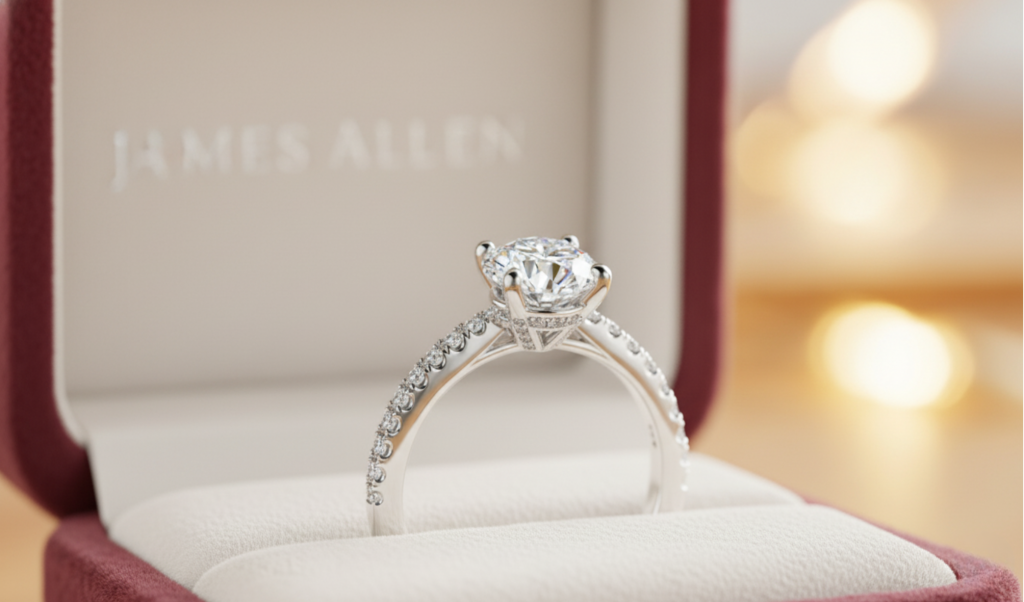
1) Precision viewing becomes the norm
James Allen’s Diamond Display Technology shows the actual stone in 360° HD with up to ~40x magnification (many listings show even higher super-zoom). Pair that with a free, real-time consult so a gemologist can screen-share, mark inclusions, and compare options side-by-side. It’s the best of in-store expertise with online inventory scale.
2) Design-it-your-way (without guesswork)
With Ring Studio, you control the head, shank profile, pavé options, hidden halo, metal color, and engraving—then visualize changes on the spot. If you love to iterate (or want to compare “classic vs. modern” versions), this is 2025’s sweet spot.
3) Shapes & settings: the modern-classic mashup
Across the broader market, round remains most popular, while oval is nearly tied for #1; emerald and princess round out the top tier. Hidden halos and side-stone looks (think tapered baguettes) are especially visible in 2025. East-west and bezel settings are growing for sleek, low-profile designs.
What you’ll notice at James Allen:
- Full range of settings—solitaire, pavé, halo, hidden halo, three-stone—in all major metals.
- Strong assortment of oval, emerald, cushion, pear, and classic round stones—each shown with interactive views for easier comparisons.
4) Colored gemstones step into the spotlight
Sapphires (blue, green, yellow) deliver “quiet luxury” color with everyday durability (9/10 on Mohs). Expect more sapphire centers, toi-et-moi pairings, and diamond-sapphire accents for custom looks—especially in yellow gold.
Natural vs. Lab-Grown in 2025: What Changed and How to Decide
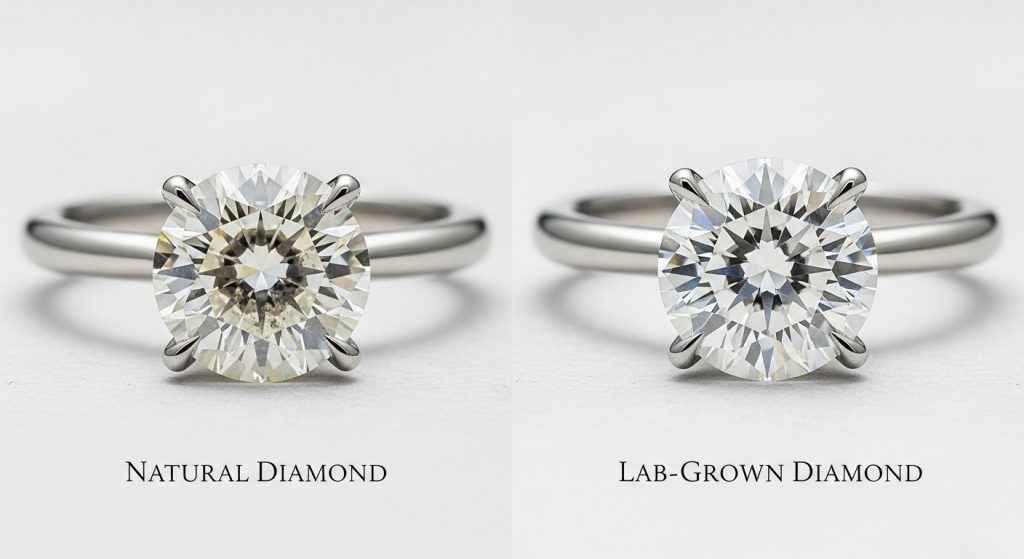
Pricing & grading are shifting
- Prices: Multiple studies show lab-grown retail prices are a fraction of natural diamonds. Recent research places an average 1-ct lab-grown near ~$1,000 vs. ~$4,200 for a 1-ct natural (exact prices vary by quality and market conditions).
- Grading: In Oct 2025, GIA announced simplified grading language for lab-grown (e.g., “premium” vs. “standard”), acknowledging tighter color/clarity bands than in natural stones. Lab-grown stones are laser-inscribed with report numbers.
- Market dynamics: Lab-grown supply is abundant; wholesale prices have fallen dramatically in recent years, which can widen retailer margins and pressure resale values (typically negligible for lab-grown).
Practical takeaways
- Choose lab-grown if you want maximum size/quality per dollar and don’t prioritize long-term resale.
- Choose natural if you value rarity and traditional value retention (still subject to market swings).
- For either option: rely on 360° videos + a real-time gemologist consult to judge inclusions, light performance, and cut quality for your stone.
Sustainability & Sourcing: What James Allen Commits to (And What it Means)
- Conflict-free claims: James Allen states every diamond it sells is certified conflict-free, in compliance with the Patriot Act, Kimberley Process, and UN resolutions.
- Beyond KP: James Allen describes a proprietary Diamond Responsible Sourcing Protocol (DRSP) for vendors and membership in the Responsible Jewellery Council (RJC). These are positive signals, though note that “conflict-free” via Kimberley Process is not the same as a full ethical audit of all social/environmental impacts.
- Context from independent sources: Gemological and industry groups have long explained that KP focuses on conflict financing rather than broader labor or environmental standards—so use KP as a baseline, not an end point.
How to shop responsibly on James Allen:
- Filter for the specs you want, then use live inspection to review the actual stone’s clarity features and get answers on sourcing documentation.
- Consider natural sapphires or other gems when color (and durability) matter more than a diamond’s rarity.
Visuals You Can Use While Deciding
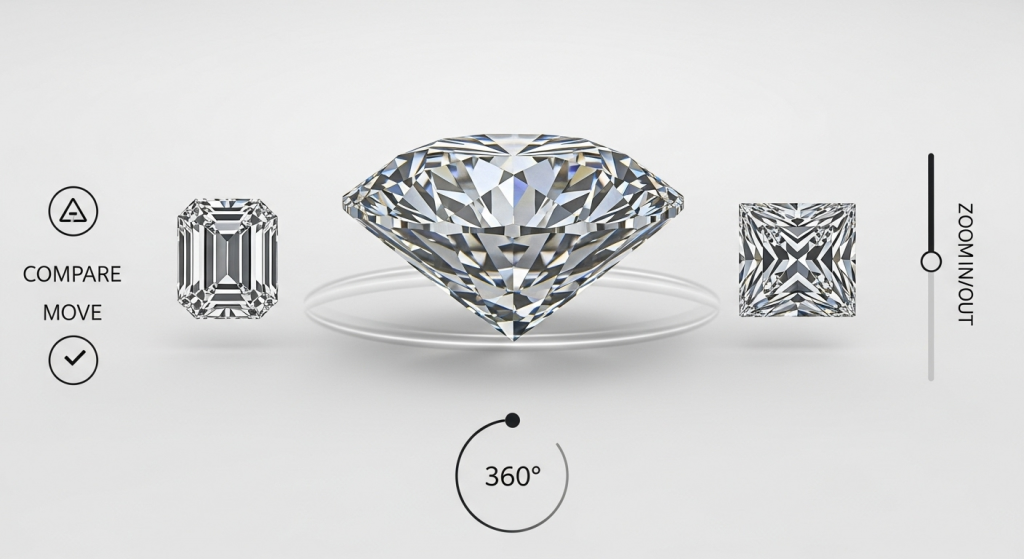
- 360° HD diamond viewer (move, zoom, and compare multiple stones).
- Virtual Ring Try-On (see settings on your hand from your phone).
- Ring Studio (build your custom design and preview changes)
Quick Tables to Compare Your Options
A. Popular shapes & who they fit best (market data + 2025 trends)
| Center-stone shape | Why people pick it | 2025 note |
|---|---|---|
| Round | Best light return; classic look; easiest to match with bands | Still #1 overall by a hair; pairs with any setting |
| Oval | Elongates finger; looks larger per carat | Nearly tied with round for popularity this year |
| Emerald | “Hall of mirrors” flashes; elegant, architectural | Clean lines match bezel/east-west trends |
| Princess | Contemporary square brilliance | Sparkly, great in classic solitaires or halos |
Source for market shape mix: The Knot 2025 Real Weddings insights (round ~28%, oval ~25%, emerald ~10%, princess ~10%).
B. Natural vs. lab-grown diamonds (2025 reality check)
| Factor | Natural Diamond | Lab-Grown Diamond |
|---|---|---|
| Typical price (1 ct) | ~$4,200 (quality-dependent) | ~$1,000 (quality-dependent) |
| Resale value | Historically stronger | Generally minimal |
| Rarity | Natural rarity | Manufactured supply |
| Grading | Full 4Cs (GIA/AGS/IGI, etc.) | 2025 shift to simplified lab-grown categories by GIA; still report-backed and laser-inscribed |
| Best for | Heirloom/tradition, value retention | Size/quality for budget, fashion-forward looks |
Pricing/grading context: BriteCo research (2025); Financial Times on GIA’s 2025 grading update.
How to Choose Your Perfect James Allen Ring in 7 Steps
- Set a total budget (stone + setting + tax/insurance). If you’re flexible, list two tiers: your ideal and your ceiling.
- Pick a shape that flatters your hand and style (use virtual try-on to demo multiple silhouettes).
- Decide natural vs. lab-grown based on size goals vs. long-term value expectations (use the table above).
- Prioritize cut first for brilliance. Use 360° to check for lifeless areas or distracting inclusions and ask a gemologist to compare two to three close contenders.
-
Match metal to color:
- Yellow/rose gold can be more forgiving of warmer (J–K) color grades—especially with oval/emerald shapes.
- White gold/platinum showcases icy whites (D–G) but may reveal color tints in fancy shapes; weigh price vs. appearance in 360°.
-
Choose the right setting height for daily wear:
- Bezel or low cathedral = secure, snag-resistant.
- Hidden halo = extra sparkle without a bulky profile (and very “2025”).
- Customize finishing touches: hidden details, milgrain, surprise diamonds, or an engraving via Ring Studio—then save screenshots for easy A/B comparisons.
What to Buy Beyond Engagement Rings (Quick Picks to Explore)
- Matching wedding bands (straight, contour, pavé, bezel)
- Sapphire jewelry (earrings/pendants for “something blue” or everyday color)
Here are 5 Standout James Allen Picks for The 2025 Aeason
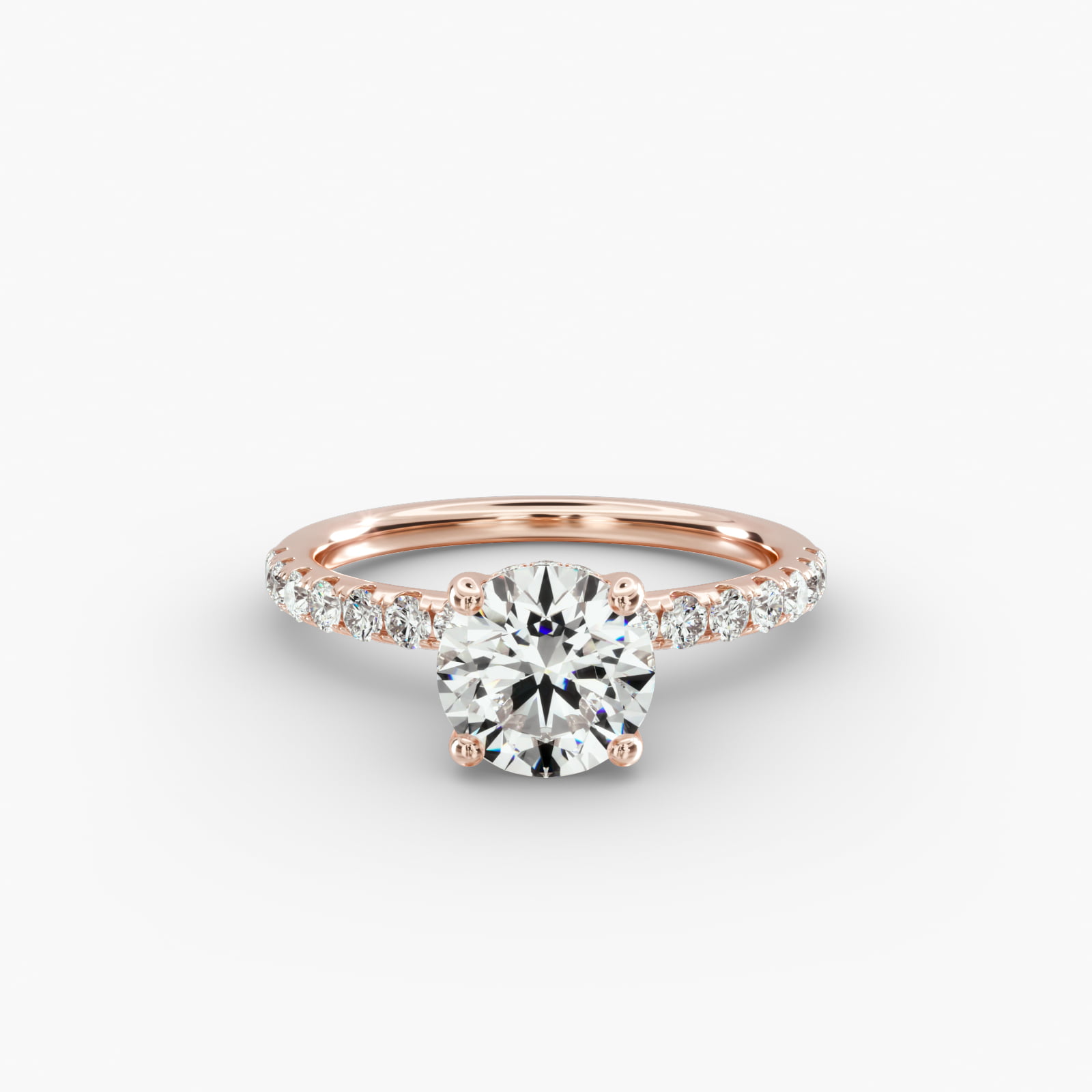
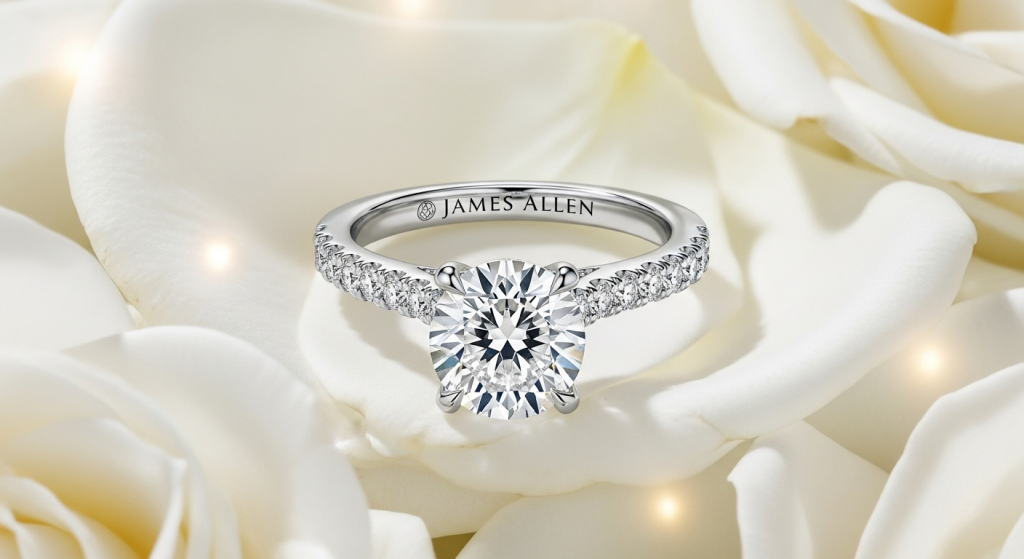
Crown Pavé Hidden Halo Engagement Ring
Modern sparkle with a discreet hidden halo that makes the center look larger.
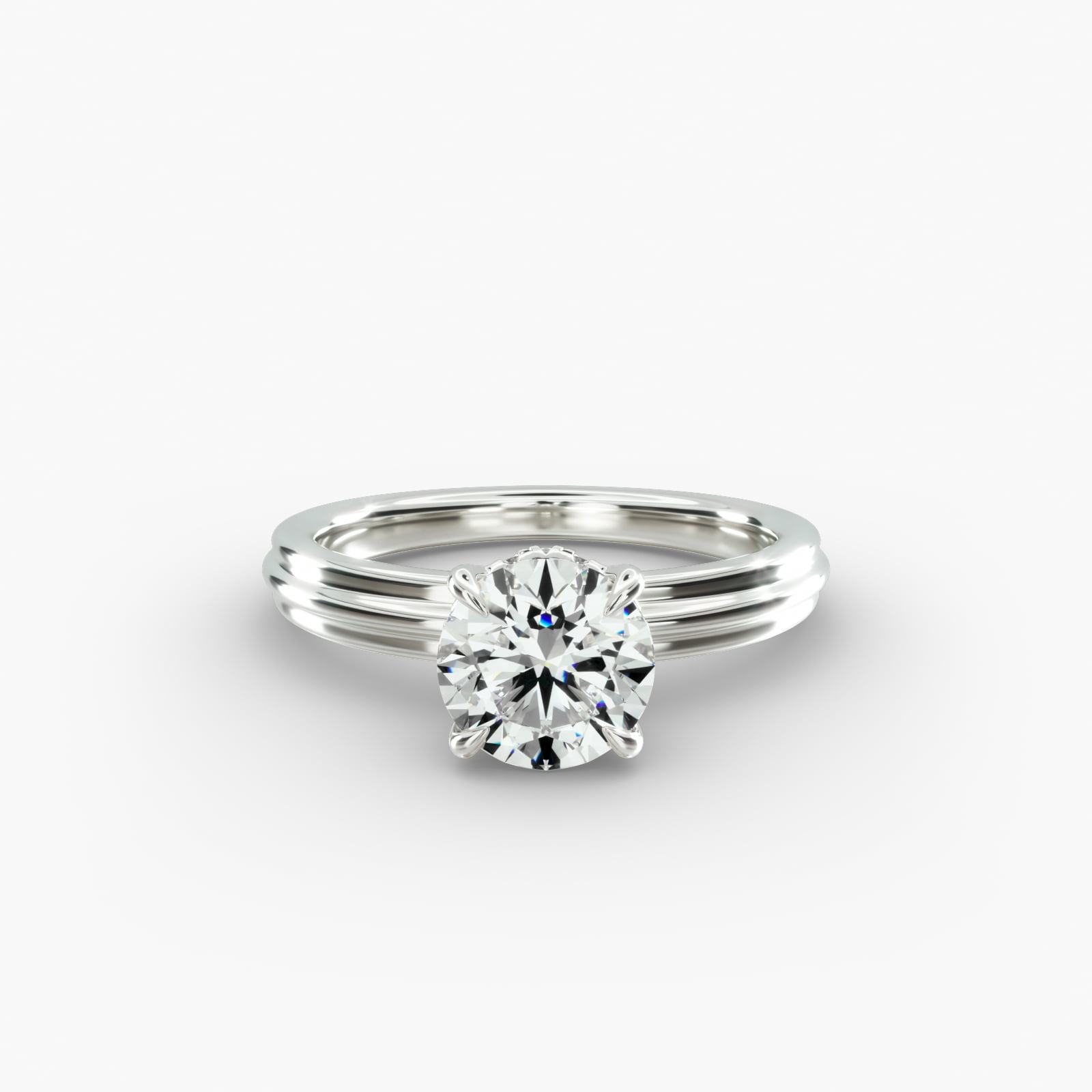
Sculpted Hidden Halo Solitaire (Platinum)
A clean solitaire profile with a subtle, sculpted hidden halo.
Sculptural Waves Collection
Asymmetric bands and rings from James Allen’s innovation studio; bold, fluid silhouettes for stacking.
Golden Hour Collection
On-trend gold earrings, necklaces, and bracelets designed for everyday layering.
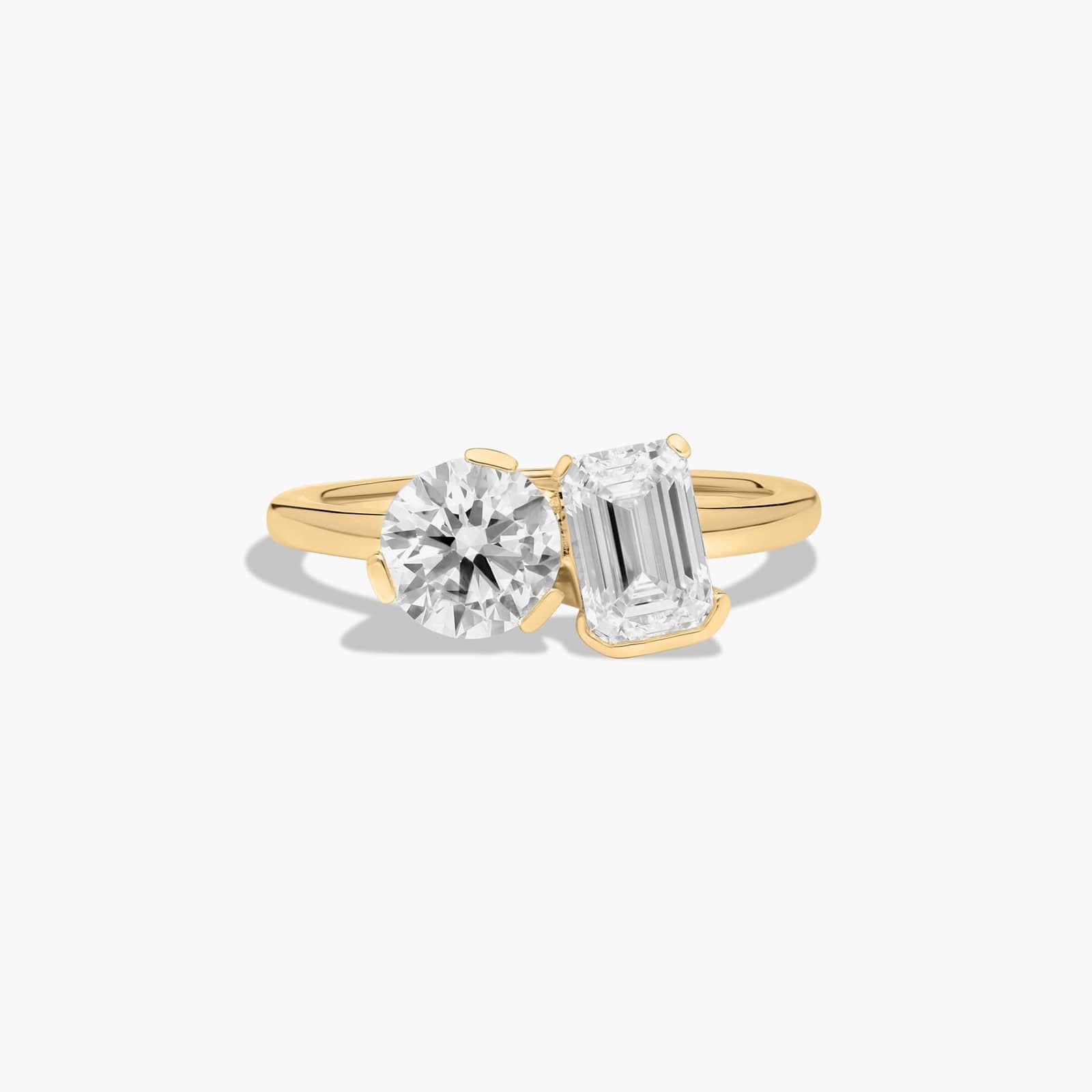
Toi et Moi Lab-Grown Diamond Ring (Round + Emerald, 14K Yellow Gold)
The year’s romantic two-stone favorite in a chic, wearable design.
Responsible Shopping Checklist (Sustainability Made Simple)
- Ask for documentation: request the grading report and any sourcing details via Real-Time Diamond Inspection.
- Understand “conflict-free”: it references Kimberley Process compliance; for broader ethics, look for additional assurances (RJC membership, vendor protocols).
- Evaluate lab-grown claims carefully: energy sources vary by producer; grading is evolving. If climate impact is your priority, ask about the producer or consider colored gems.
Real-World Buying Tips (That Save Money)
- Let the setting do the work: A slender pavé shank or hidden halo adds finger coverage so you can drop ~0.10–0.20 ct without losing perceived size. Compare in 360°.
- Go just under “magic” weights (0.90 ct vs. 1.00 ct; 1.40 vs. 1.50) for price breaks with minimal visual difference—especially in oval or emerald cuts that face up large.
- Color trade-offs: In yellow/rose gold, a well-cut H–J stone can look gorgeous and free up budget for cut or carat.
- Clarity sweet spots: A well-placed SI1/SI2 inclusion can be eye-clean in many shapes; verify with 360° and a gemologist live screen-share.
FAQ's
Can I customize a ring online and still see it “on hand”?
Yes—use Ring Studio to configure your design and Virtual Try-On to preview it on your hand via smartphone.
Does James Allen offer both natural and lab-grown diamonds with reports?
Yes—stones come with lab reports; lab-grown reporting/labels are evolving industry-wide in 2025 (see GIA update). Use live inspection to review any report with a gemologist.
What about ethics and sourcing?
James Allen states all diamonds are conflict-free and notes RJC membership and a vendor protocol; remember KP ≠ full ethical certification, so ask for extra context if that’s a priority.
Conclusion: Classic Taste, Modern Tools
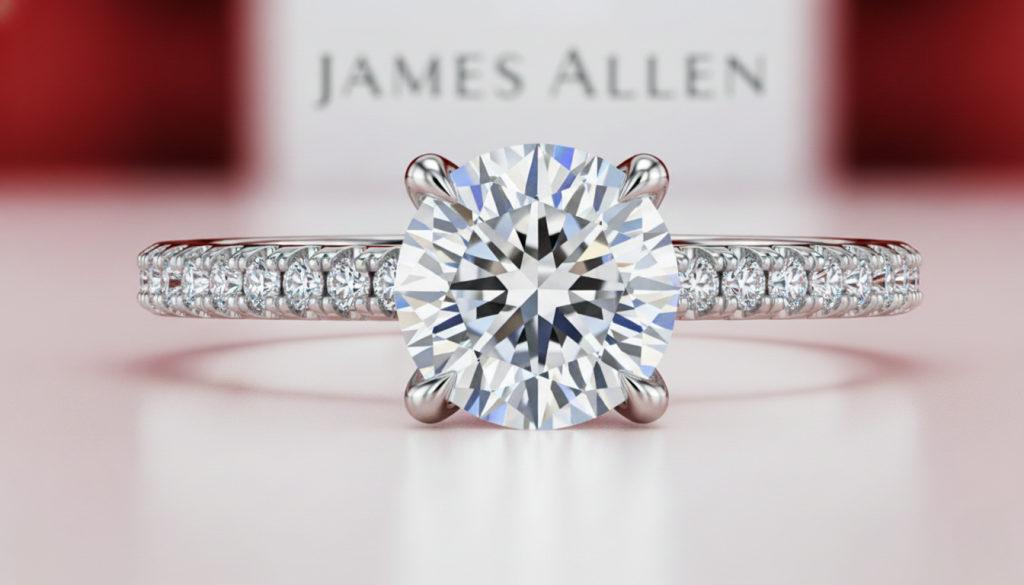
The best part of shopping James Allen in 2025 is how transparent you can make the process: inspect real stones in 360°, talk to an expert on demand, and customize details live until your ring feels exactly right. Whether you favor a round solitaire in platinum or a green-sapphire bezel in yellow gold, the combination of tech, selection, and customization makes it easier to stay within budget—without compromising on beauty or quality.
Next step: shortlist 3–5 stones you love in 360°, schedule a Real-Time Diamond Inspection, and test your favorite settings with Virtual Try-On. You’ll move from “overwhelmed” to “absolutely sure” in a single session.
The responses below are not provided, commissioned, reviewed, approved, or otherwise endorsed by any financial entity or advertiser. It is not the advertiser’s responsibility to ensure all posts and/or questions are answered.