

If you’re turning the volume up, then down, then up again just to catch dialogue, you’re not alone. Flat TVs look amazing, but their built-in speakers are small and cramped, so voices can sound thin, muffled, or lost under music and effects. Speaker design also matters, especially for low frequencies, where enclosure size and tuning affect performance.

So, is the Bose Solo II Soundbar (Bose Solo Soundbar Series II) a smart, easy upgrade, or should you pick something else?
This guide helps you decide quickly, then shows how the Solo II stacks up against three simple, popular QVC soundbar options.
A 60-second decision: is the Solo II a “yes” for you?
| If you want… | The Solo II is a good fit when… | You should look elsewhere when… |
|---|---|---|
| Clearer dialogue fast | You want a simple bar with a remote and “Dialogue mode” | You want voice control, Wi-Fi streaming, or app control |
| Minimal setup | Your TV has optical, coaxial, or 3.5 mm audio out | You want a single HDMI cable and TV-remote control via HDMI ARC |
| Better sound than TV speakers | You mainly watch shows, news, sports, YouTube | You want big movie bass or surround expansion |
Diagnose Your TV Audio Problem (before you buy anything)
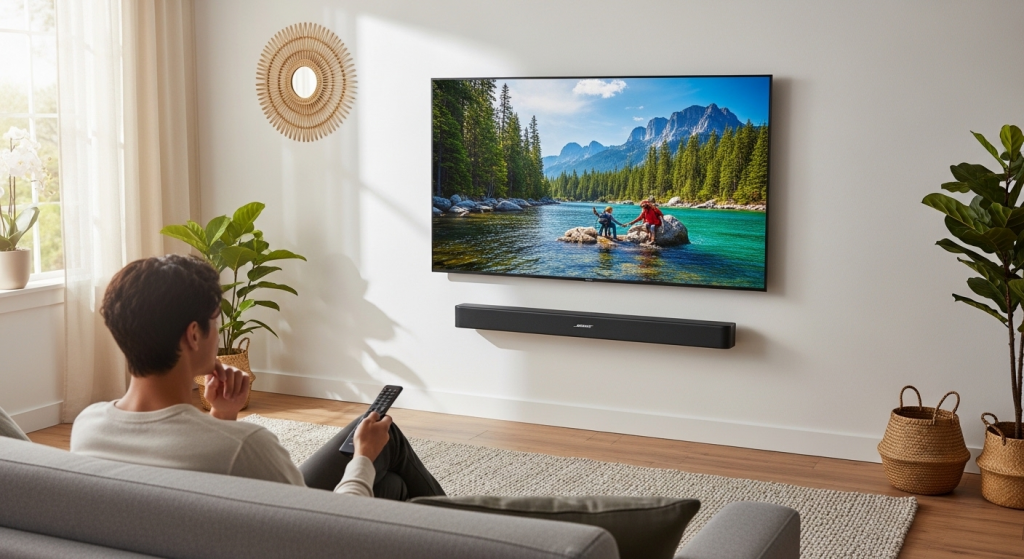
Why TV dialogue is hard to hear
There are two big reasons people struggle with TV speech:
-
TV speakers are physically limited.
Thin cabinets leave little room for proper speaker enclosures and driver placement, which can reduce fullness and clarity, especially in the lower range. -
Hearing challenges are common, even for people who do not think of themselves as “hard of hearing.”
About 15% of U.S. adults report some trouble hearing, and difficulty grows with age.
In national survey data, 16.8% of adults reported trouble hearing without a hearing aid, and it rises sharply in older groups.
Background noise makes it worse: an estimated 21% of adults had difficulty following conversation in background noise in 2014.
Quick stats that matter for TV watching
| Group (U.S.) | Any trouble hearing (without hearing aid) |
|---|---|
| Adults 18–39 | 5.5% |
| Adults 40–69 | 19.0% |
| Adults 70+ | 43.2% |
These figures come from national survey reporting summarized by CDC.
The “port check” that saves you from buyer’s remorse
Flip your TV around (or check settings and model specs) and look for:
- HDMI ARC / eARC: easiest day-to-day control (TV remote can often control volume). ARC sends audio “upstream” over a single HDMI cable.
- Optical (TOSLINK): common, reliable digital audio. It uses the S/PDIF standard and is usually limited compared with newer HDMI audio features.
- Coaxial digital (RCA) or 3.5 mm analog: older but still useful.
Bose Solo II Soundbar review (what it does best)
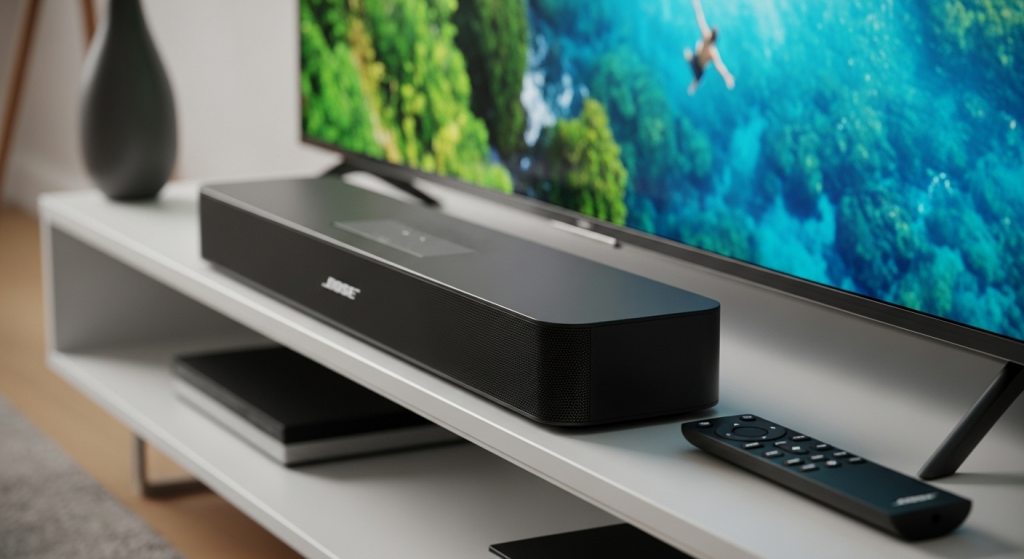
What “Bose Solo II” really is
Most shoppers who say “Bose Solo II soundbar” mean the Bose Solo Soundbar Series II. Bose positions it as a compact bar focused on clearer speech and simple setup.
Key features that matter for an easy upgrade
- Dialogue mode for speech clarity (a dedicated feature and remote control workflow).
- One-connection setup to the TV, typically via optical (included with Bose refurb packaging details and FAQs).
- Inputs supported: optical, coaxial, and analog (3.5 mm).
- Bluetooth for quick music or podcast streaming from a phone.
Technical sizing also stays compact (about 21.6 inches wide and under 3 inches tall, per Bose specs on the refurbished listing).
The biggest limitation (and it’s a deal-breaker for some)
The Solo II is built for simplicity, but it does not focus on HDMI ARC convenience. If you want the “one HDMI cable, TV remote controls volume” lifestyle, you’ll probably prefer a model with HDMI ARC. ARC is specifically designed to eliminate separate audio cables and simplify connectivity.
What the Solo II is great at
If your top priority is: Easy TV Audio Upgrade: Is the Bose Solo II Soundbar Worth It? then here’s the clearest “yes” scenario:
- You watch dialogue-heavy content (news, dramas, reality TV, sports commentary).
- You want a compact bar that does not take over your room.
- You want straightforward controls without apps, accounts, or Wi-Fi setup.
- Your TV has optical out, coaxial, or 3.5 mm out.
Who should skip it
You should likely skip the Solo II if:
- You want Dolby Atmos, smart features, or a voice assistant.
- You want to expand into a bigger system later (sub, surrounds).
- You hate juggling remotes and you want HDMI ARC.
Compare 3 QVC soundbar options (simple upgrades, different strengths)
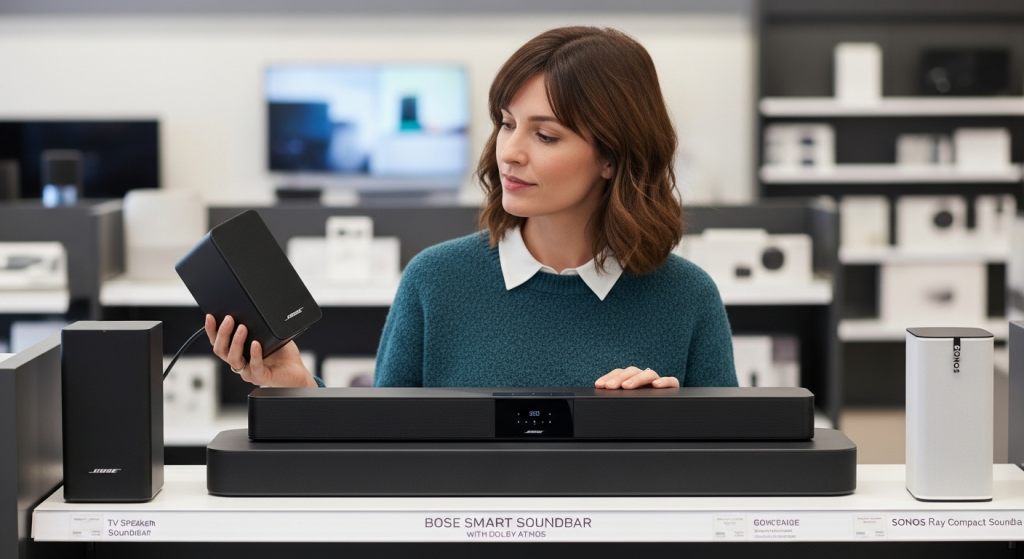
Below are three “easy upgrade” picks currently listed on QVC, with the key details that affect daily use.
Best Overall - Bose TV Speaker
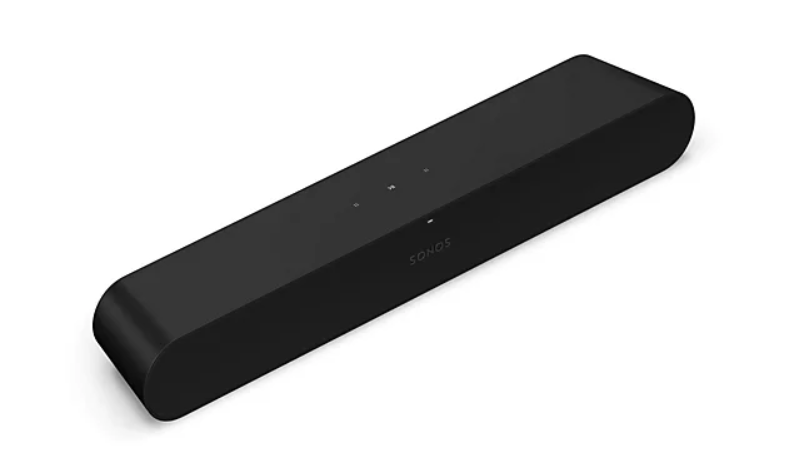
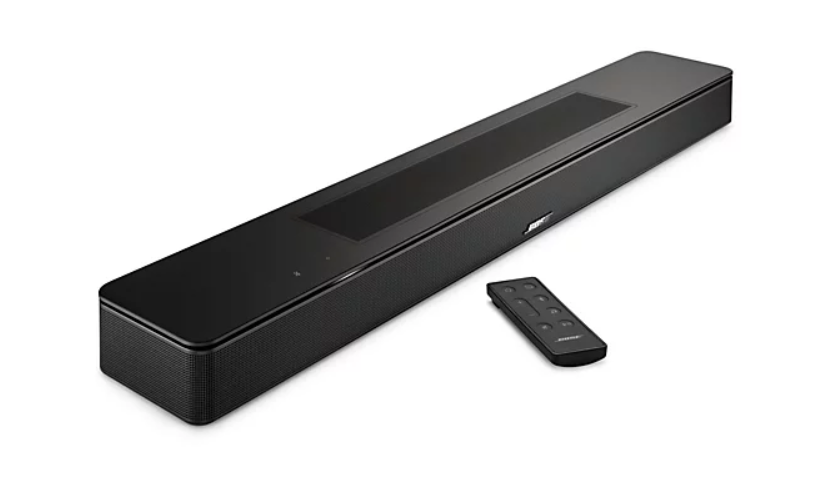
Best Mid Range - Bose Smart Soundbar
Cheaper Choice - Sonos Ray
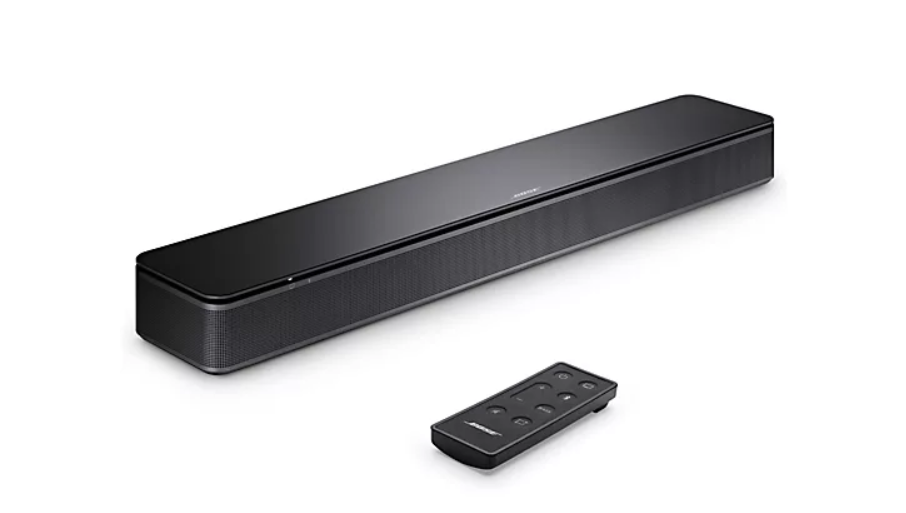
Bose TV Speaker Bluetooth Soundbar (QVC)
This is the “keep it simple, but add HDMI ARC” style of Bose bar.
Highlights from QVC’s listing:
- Dialogue mode
- Dolby Digital decoding
- HDMI ARC
- Bluetooth
- Compact size (about 23.38 inches wide)
If you want fewer cable headaches and basic TV-remote integration, this is often the easier “Bose-style” choice than the Solo II.
Bose Smart Soundbar with Dolby Atmos (QVC)
This is a bigger jump: modern formats, voice, and wireless features.
QVC highlights include:
- Dolby Atmos
- Built-in Amazon Alexa
- Works with Google Assistant
- Wi-Fi + Bluetooth
- Includes HDMI cable (per included items list on QVC page)
If you want a “smarter TV audio hub,” this is the Bose lane.
Sonos Ray Compact Soundbar (QVC)
This is for people who want an app-based ecosystem and clean setup, but with an important caveat: it requires optical audio out.
QVC highlights include:
- Wi-Fi
- Works with Apple AirPlay 2
- Trueplay room tuning
- Speech enhancement and night sound
- “TV with optical digital audio output required”
If your TV has optical out and you like the Sonos ecosystem idea, Ray is a strong “small room” contender.
Quick comparison table: QVC picks vs the Solo II mindset
| Feature that changes the experience | Bose TV Speaker (QVC) | Bose Smart Soundbar (QVC) | Sonos Ray (QVC) | What this means for “Bose Solo II” shoppers |
|---|---|---|---|---|
| HDMI ARC convenience | Yes | Noted HDMI included, smart model | No (optical required) | If you want ARC, Solo II is usually not the best fit |
| Smart features (Wi-Fi, voice) | No mention | Yes | Yes | Solo II is intentionally “no fuss,” not “smart hub” |
| Dialogue tools | Dialogue mode | Smart processing plus Atmos | Speech enhancement | Dialogue is the entire point of Solo II style bars |
| Connection requirement | Flexible | HDMI included | Optical required | Check TV ports first |
How to set up any soundbar the easy way (and avoid lip-sync issues)
-
Start with HDMI ARC if you have it.
ARC is meant to simplify the cable path by letting TV audio go back to the sound system through one HDMI cable. -
If you do not have ARC, use optical.
Optical is based on S/PDIF, and it’s common on TVs. -
In TV settings, set audio output to “External speakers” (or similar).
Then set digital format to a compatible option (often PCM or Dolby Digital). -
Fix the “voices too low, explosions too loud” problem.
Try the bar’s dialogue or speech mode first. If that’s not enough, reduce “dynamic range” in TV settings (often called Night Mode).
FAQ (People Also Ask style)

Easy TV Audio Upgrade: Is the Bose Solo II Soundbar Worth It if I only want clearer dialogue?
Often, yes, if your goal is clarity with minimal setup. Dialogue-focused modes exist specifically to lift speech without cranking the overall volume. Bose documents Dialogue Mode behavior and control.
Does the Bose Solo II have HDMI ARC?
The Solo Soundbar Series II is commonly used with optical, coaxial, or 3.5 mm audio connections, per Bose’s own FAQs and specs.
If HDMI ARC is a must, consider a model that explicitly lists HDMI ARC (like the Bose TV Speaker on QVC).
Will optical audio sound “worse” than HDMI?
Not automatically. For many everyday TV uses, optical can sound very good. The difference is usually convenience and supported formats: S/PDIF has limits compared with newer HDMI audio capabilities.
Can I add a subwoofer later?
If expandability is important, look carefully at the model’s system compatibility. Some compact bars are meant to stay simple. (This is where stepping up to a smart ecosystem model can help.)
Easy TV Audio Upgrade: Is the Bose Solo II Soundbar Worth It in 2026, or should I buy newer tech?
It’s “worth it” when you value simplicity and speech clarity over modern home-theater features. If you want voice control, Wi-Fi, and newer surround formats, the value shifts toward newer smart soundbars.
Conclusion: the honest verdict
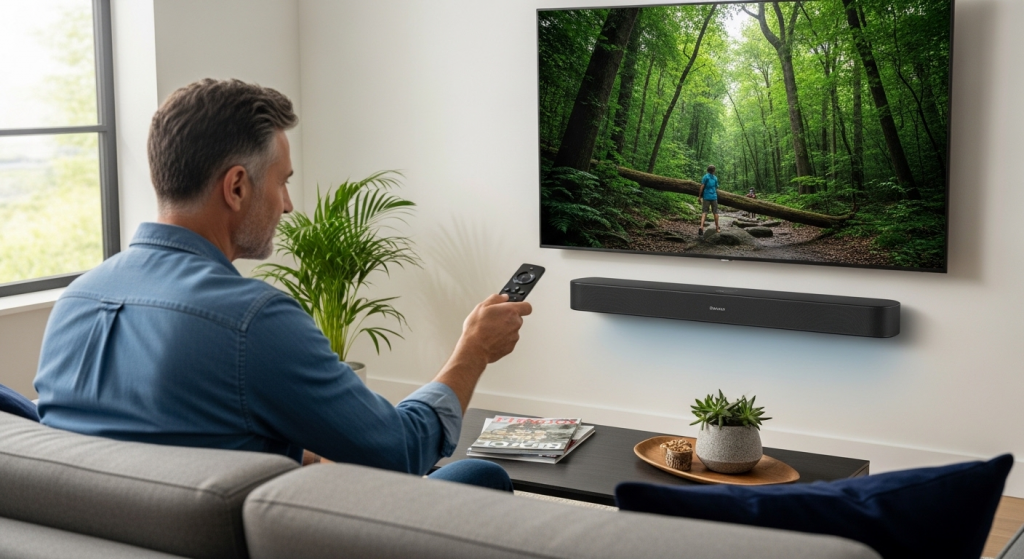
Easy TV Audio Upgrade: Is the Bose Solo II Soundbar Worth It?
Yes, for the right person.
If you want a compact, straightforward soundbar that prioritizes clearer speech and avoids complex setup, the Solo II style of soundbar is the point. Hearing challenges are common, and speech clarity tools can make daily TV watching less frustrating.
If you want HDMI ARC simplicity, smart features, or a more future-proof platform, pick one of the QVC options below instead.
Next step: do the 30-second port check on your TV, then choose the bar that matches your ports and your patience level.
The responses below are not provided, commissioned, reviewed, approved, or otherwise endorsed by any financial entity or advertiser. It is not the advertiser’s responsibility to ensure all posts and/or questions are answered.