

Our Dyson V15 Detect review looks at HEPA filtration, laser dust detection, allergy-friendly cleaning, and 3 similar QVC vacuums to help you choose the right model for 2026.

Spring cleaning gets a lot harder when dust, pet dander, and pollen make every room feel like a trigger. That is why a strong vacuum matters, but the best vacuum for allergies 2026 is not just the one with the biggest motor. ACAAI recommends a vacuum with a HEPA filter to reduce dust, pet dander, and other allergens, and EPA says true HEPA performance also depends on a sealed path so air does not leak around the filter.
In this Dyson V15 Detect review, the big question is simple: does laser dust detection actually help, or is it just flashy marketing? Based on Dyson’s current specs, the V15 still brings serious hardware to the table, including up to 240 air watts of suction, up to 60 minutes of runtime, a particle-counting piezo sensor, and HEPA filtration on Dyson’s direct HEPA model that captures 99.99% of microscopic particles down to 0.1 microns.
The short answer is yes, the V15 still feels relevant in 2026, especially if you want a cordless stick vacuum for mixed floors, visible dust tracking, and cleaner exhaust air. But it is not a perfect fit for everyone, and QVC now carries three close alternatives that make the buying decision more interesting: the Dyson V15 Detect Pro, Dyson V12 Detect Slim, and Dyson Gen5 Detect.
Quick verdict
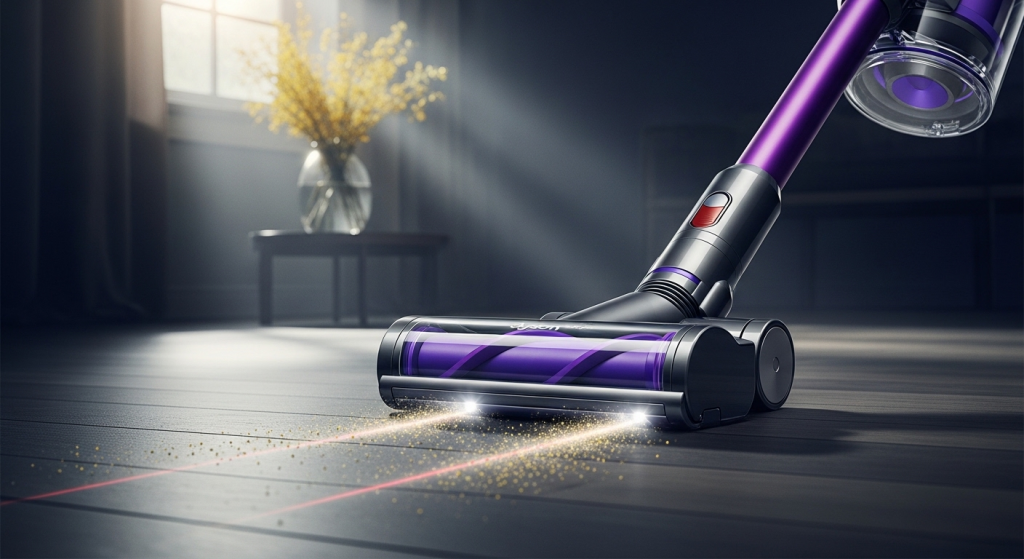
If you want the best balance of power, visibility, and everyday usability, the V15 remains the sweet spot. It is powerful enough for whole-home cleaning, smart enough to adjust suction automatically, and its laser-equipped hard-floor head helps you catch the fine dust you would otherwise miss. For many households, that combination is exactly what makes a vacuum feel effective during allergy season.
That said, the V15 is still bagless. The American Lung Association notes that bagless vacuums commonly release dust clouds when emptied, and it also stresses that a sealed system matters if you want better indoor air quality while cleaning. So this is an excellent cordless vacuum for allergy-conscious homes, but it is not automatically the best choice for people with the most severe sensitivities.
Dyson V15 Detect at a glance
| Feature | Why it matters |
|---|---|
| Up to 240 air watts | Stronger suction helps on carpet, embedded dirt, and pet hair |
| Up to 60 minutes runtime | Enough for many apartments and medium homes on lower modes |
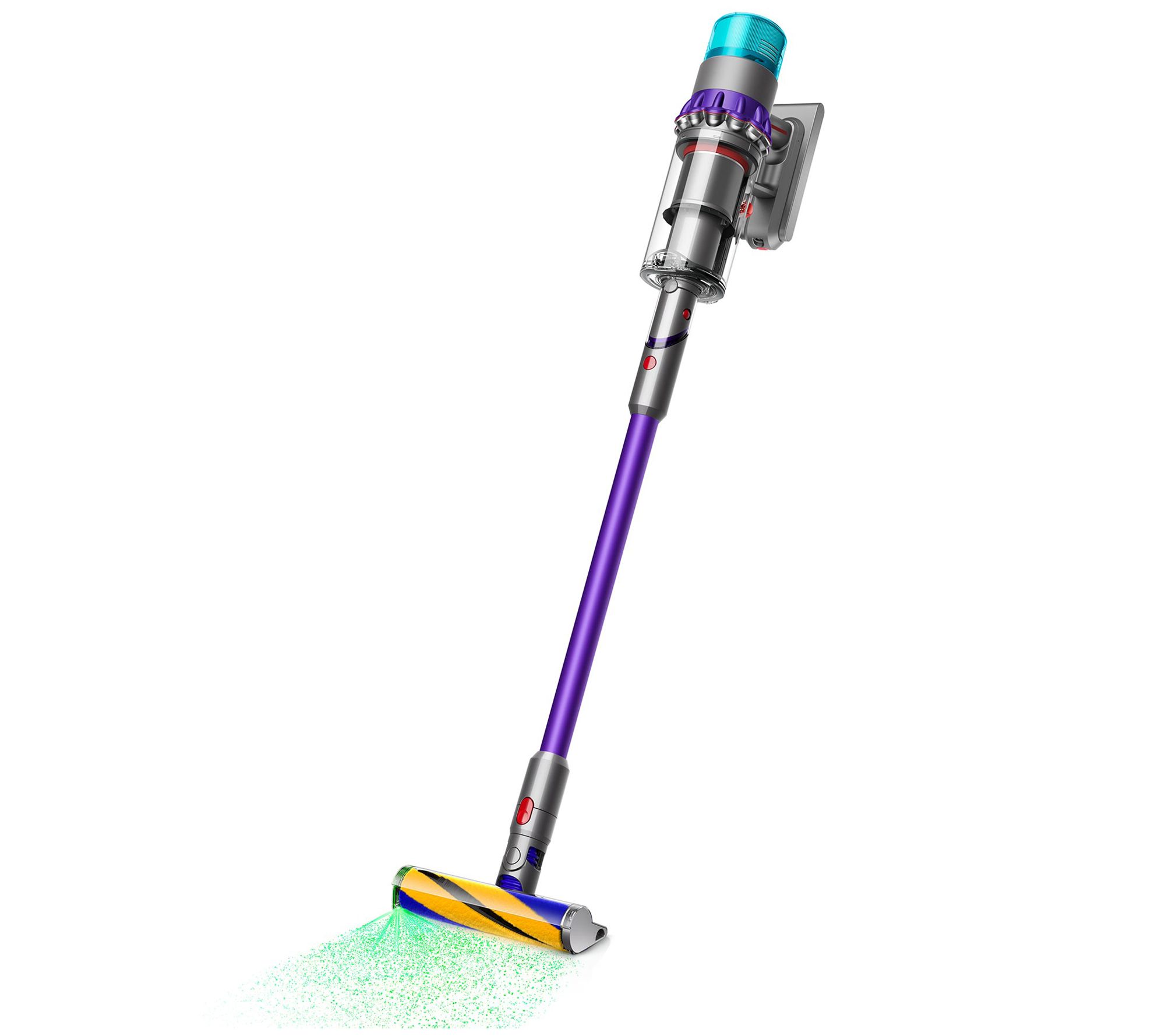
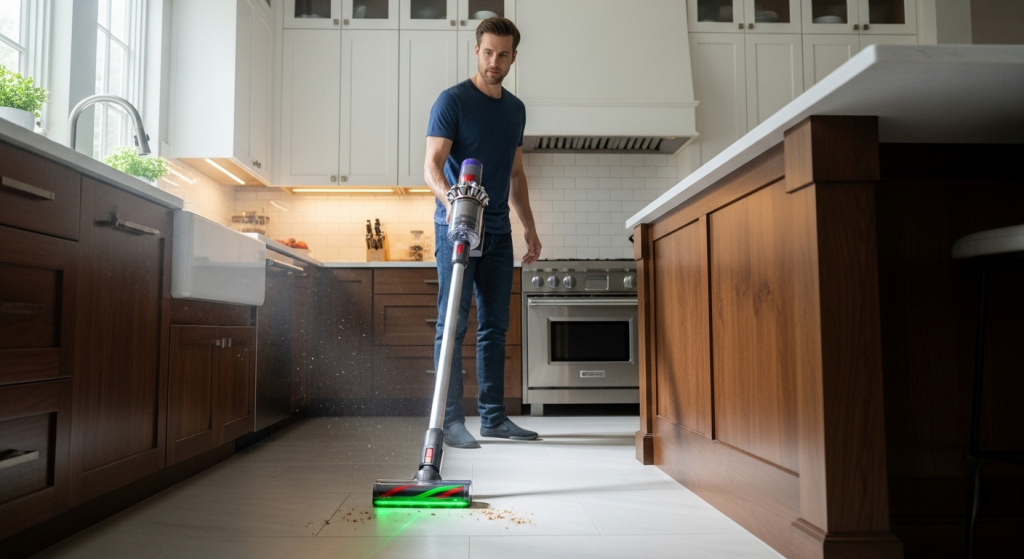
| Fluffy Optic cleaner head | Makes fine dust visible on hard floors |
| Piezo dust sensor | Counts particles and adjusts suction in real time |
| Whole-machine HEPA filtration | Helps trap dust and allergens instead of blowing them back out |
The table above is based on Dyson’s current V15 Detect official product information.
What makes the Dyson V15 Detect special
The biggest reason the V15 still stands out is that it solves a real cleaning problem: people routinely miss fine dust on hard floors because they simply cannot see it. Dyson says the Fluffy Optic cleaner head reveals microscopic dust and dirt on hard floors, while the piezo sensor counts particles up to 15,000 times per second and adapts suction when needed. That makes the V15 more than a basic cordless stick, it turns cleaning into a feedback loop.
In practical terms, laser dust detection is most useful when you vacuum wood, tile, laminate, or other hard floors in bright rooms where dust blends into the surface. It is less meaningful on carpet, because Dyson’s illumination system is designed for hard floors. So if your home is mostly carpet, the V15’s value comes more from suction and filtration than from the light itself.
That is also why the V15 works so well as a bridge between a standard cordless vacuum and a more intentional allergy-cleaning routine. If you have ever finished vacuuming and then noticed a thin dusty stripe near the baseboards, under a chair, or along a hallway edge, this is the kind of machine that makes those misses obvious. That is where a resource like how to reduce dust allergies at home would fit naturally as an internal link.
Is the Dyson V15 Detect good for allergies?
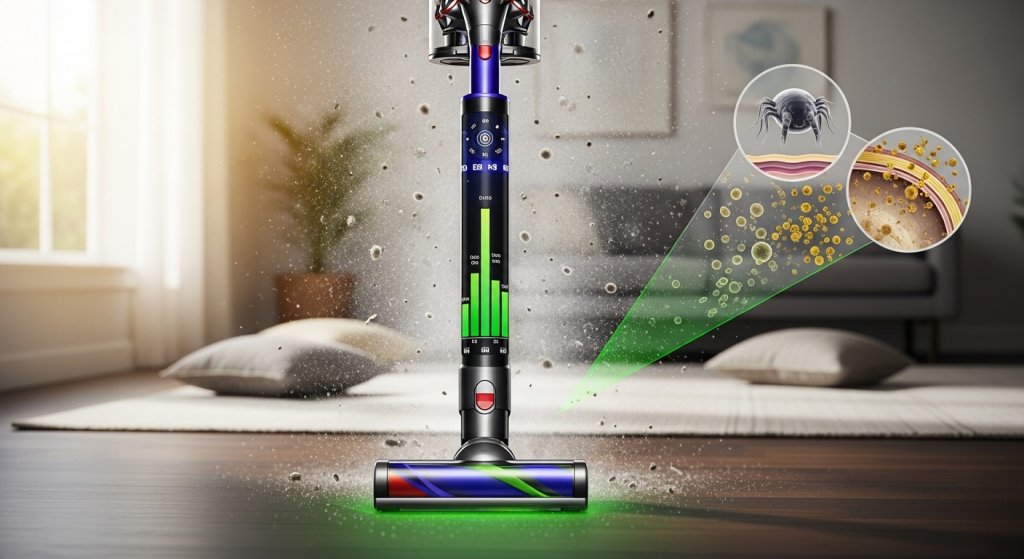
Yes, with an important caveat. A vacuum for allergies needs three things: strong pickup, sealed filtration, and low dust leakage while you use it. ACAAI recommends HEPA vacuums for reducing dust, pet dander, and other allergens. AAFA’s certification standards go further, requiring proven surface allergen removal, low airborne allergen release during vacuuming, filtration integrity, and low exposure when the bag or canister is changed or cleaned.
The V15 checks many of those boxes well. Dyson’s direct HEPA version says it captures 99.99% of microscopic particles and allergens down to 0.1 microns in a fully sealed, whole-machine HEPA system. That is a strong claim, and on paper it lines up with what allergy shoppers should want most: fine-particle capture plus a sealed exhaust path.
The caveat is emptying the bin. The American Lung Association notes that bagless vacuums commonly release dust clouds when emptied. So if someone in your home has very sensitive asthma or dust allergies, the V15 can still be a smart pick, but you should empty it carefully, ideally outdoors or directly into a trash bag, and consider pairing it with an air cleaner. This is where an internal link like air purifier vs vacuum for allergies makes sense.
What the V15 gets right
First, the cleaning system is smart without feeling complicated. The V15’s sensor measures what is being picked up, the suction adapts, and the LCD shows what the machine is detecting. That makes it easier to trust that you are actually removing fine debris instead of just making the floor look tidy.
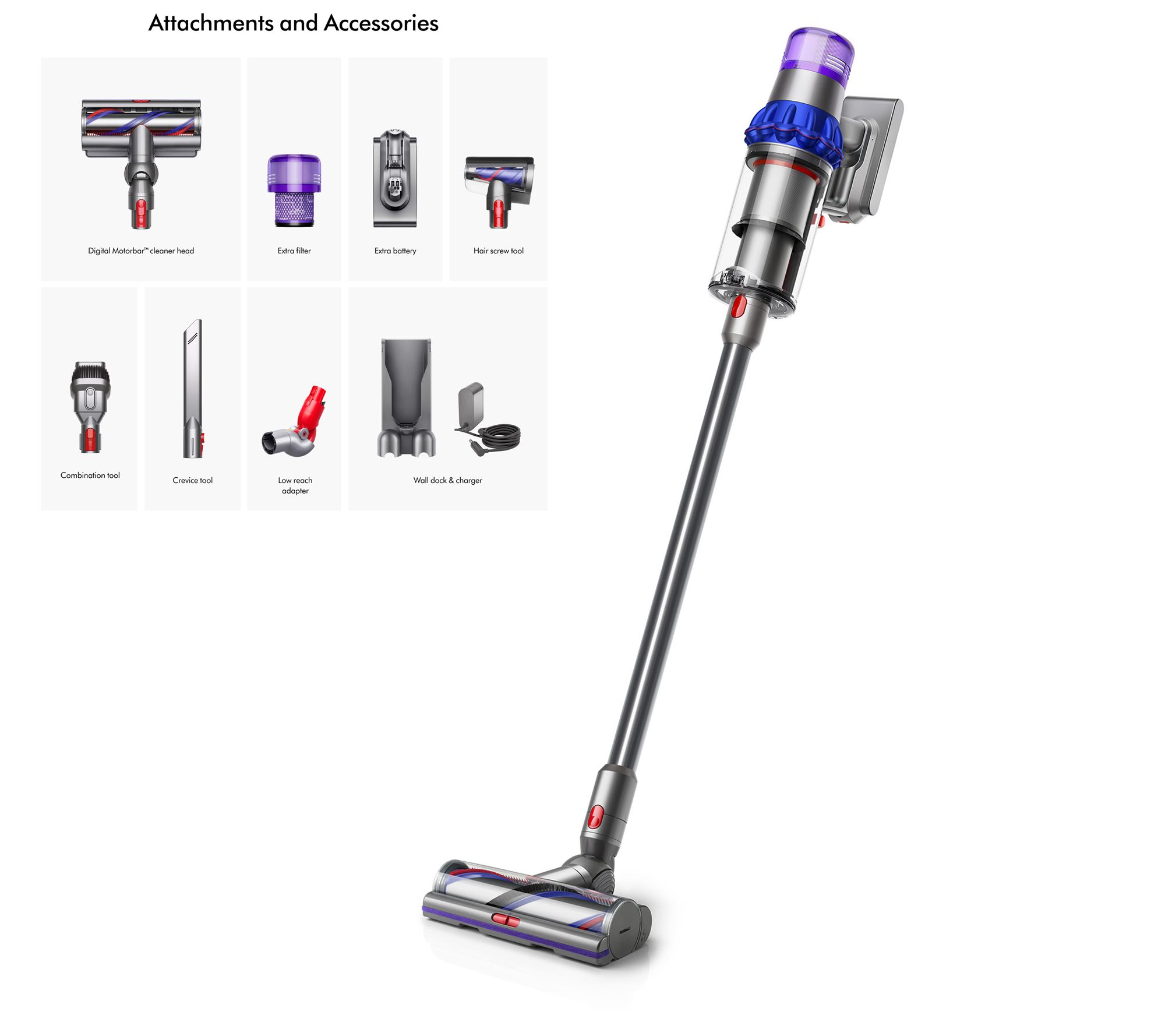
Second, it is versatile. Dyson includes both a hard-floor head and a Motorbar cleaner head, so the vacuum can move from hard floors to carpet without feeling like a single-purpose tool. The machine also converts to a handheld unit, which matters for upholstery, mattresses, and stairs, all places where allergens collect. That makes the V15 a strong candidate for readers also comparing best cordless vacuums for pet hair.
Third, it still hits a strong middle ground on size and weight. Dyson lists the V15 Detect at 6.8 pounds with a 0.2 gallon bin and up to 60 minutes of runtime. That is not ultra-light, but it is still manageable for most people, and the larger bin helps compared with slimmer cordless models.
Where the V15 falls short
The biggest downside is still price, especially if you move from “good cordless vacuum” territory into “premium Dyson ecosystem” territory. Dyson’s direct V15 Detect Absolute is listed at $849.99, which puts it close enough to newer premium models that some shoppers will wonder if they should just step up to a Gen5 instead.
Another issue is ergonomics over long cleaning sessions. At 6.8 pounds, the V15 is reasonable, but not especially light compared with the V12. If you do lots of spot cleaning, stairs, or above-floor vacuuming, the lighter model can feel noticeably easier to live with.
And again, it is bagless. Even a strong sealed system does not fully solve the mess that can happen during emptying. That matters less for routine households and more for homes where allergen control is the top priority.
3 similar QVC vacuums to compare
If you want to shop QVC specifically, these are the three closest Dyson options worth comparing right now.
| QVC model | QVC price | Runtime | Weight | Best for |
|---|---|---|---|---|
| Dyson V15 Detect Pro | $529.98 | Up to 60 min | 6.8 lbs | Best overall value |
| Dyson V12 Detect Slim | $729.99 | Up to 60 min | 5.22 lbs | Small homes and lighter handling |
| Dyson Gen5 Detect | $1,049.99 | Up to 70 min | 7.65 lbs | Maximum power and bigger homes |
Current QVC pricing and product bundle details are from QVC’s Dyson category and product pages. Runtime, weight, and family-level suction or filtration details are supported by current QVC and official Dyson pages.
Dyson V15 Detect Pro, best QVC value
The strongest value play on QVC is the V15 Detect Pro bundle. QVC lists it at $529.98 and includes an extra battery and extra filter, which immediately makes the package more appealing for buyers who want longer usable life and less downtime. It keeps the familiar V15 formula, automatic suction adjustment, particle tracking, handheld conversion, and a weight of about 6.8 pounds.
For most shoppers, this is the model I would choose first. It gives you the core Dyson V15 Detect review experience without forcing you into the highest price tier. If your home has mixed flooring, pets, and a normal amount of furniture, it feels like the most sensible buy.
Dyson V12 Detect Slim, best for lighter daily cleaning
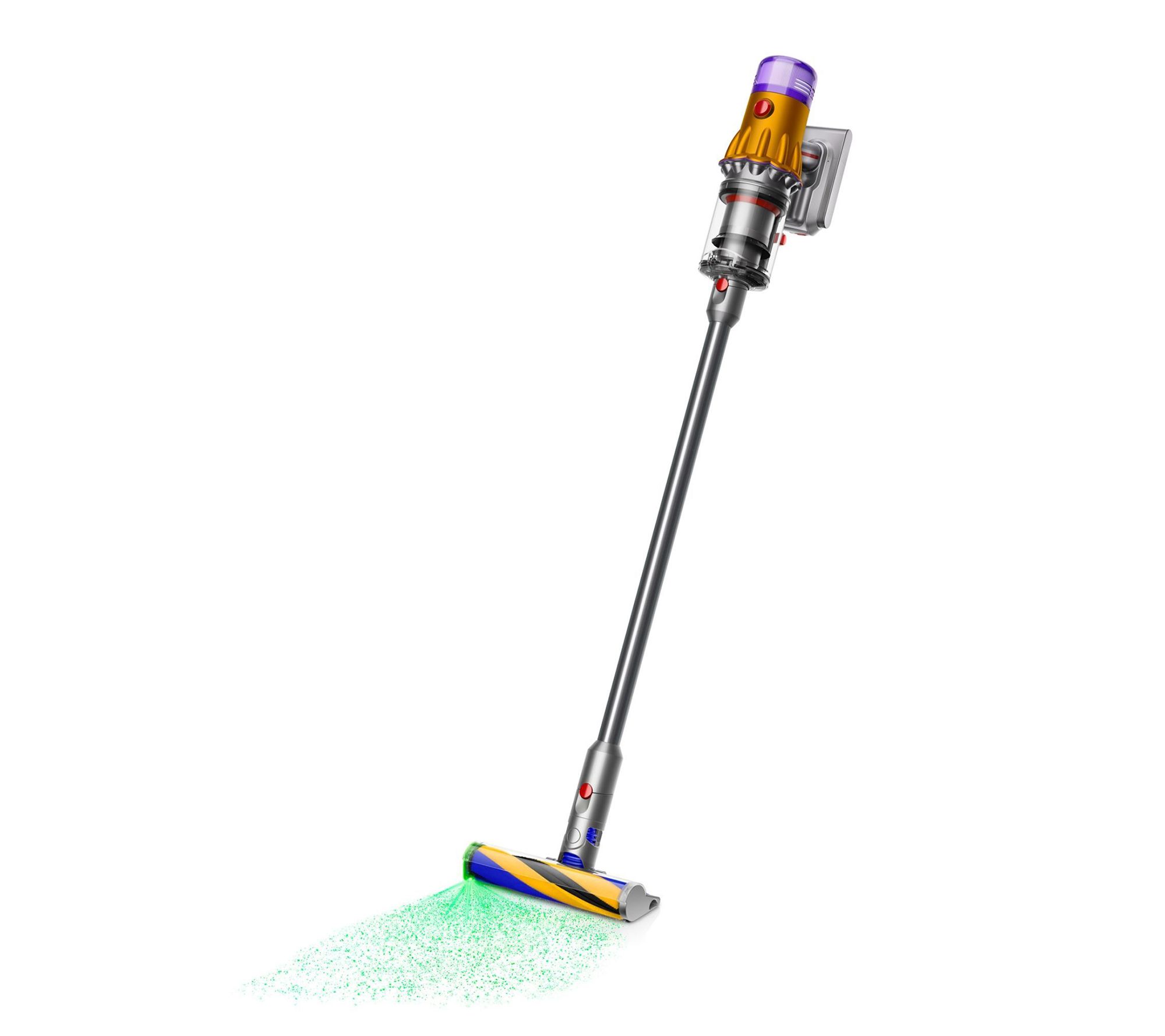
The V12 Detect Slim is the easier vacuum to pick up, carry, and use for quick cleanups. Dyson lists the family at 5.2 pounds and 150 air watts, while QVC’s bundle page lists the QVC version at 5.22 pounds with up to 60 minutes of runtime and sealed filtration. It still has the illuminated hard-floor head and particle tracking screen, but in a lighter body.
This is the best pick if your home is smaller, your floors are mostly hard surfaces, or you know you hate a heavier handheld vacuum. It is also a natural fit for an internal link like best lightweight cordless vacuum.
Dyson Gen5 Detect, best for bigger homes and heavier allergy seasons
The Gen5 Detect is the step-up option. Dyson’s official Gen5 page lists 280 air watts, up to 70 minutes of runtime, and HEPA filtration that captures 99.99% of microscopic particles down to 0.1 microns. QVC’s Gen5 bundle adds the expected cordless versatility, Fluffy Optic head, and a 7.65-pound body.
This is the model for people who want fewer compromises, more runtime, and more cleaning confidence in larger homes. The tradeoff is obvious: it costs much more and weighs more. If you vacuum often and deeply, it earns its place. If you mostly do fast daily passes, it may be more machine than you need.
So, which one should you buy?
Choose the Dyson V15 Detect Pro on QVC if you want the smartest balance of price, performance, and features. It is the model most readers looking for the best vacuum for allergies 2026 will probably find easiest to justify.
Choose the Dyson V12 Detect Slim if your priority is lighter handling, smaller rooms, and quick daily cleanup. It is the easiest one to live with, even if it is not the strongest.
Choose the Dyson Gen5 Detect if you want the biggest leap in power and the most premium filtration package, and you are comfortable paying for it.
Allergy-season cleaning tips that matter as much as the vacuum
Even the right vacuum works better with the right routine. The American Lung Association recommends vacuuming slowly forward and backward, then again at a right angle, because the two-direction method cleans carpet more thoroughly. It also suggests using an air cleaner with a HEPA filter for people with severe allergies, asthma, COPD, or other lung disease.
ACAAI also reminds readers that vacuuming can temporarily stir up dust that takes a couple of hours to settle. So if your symptoms are strong, vacuum earlier in the day, ventilate the room, and avoid hovering nearby right after cleaning.
Final verdict
This Dyson V15 Detect review ends in a positive place. The V15 is still one of the most compelling cordless vacuums for homes that want strong suction, better visibility on hard floors, and filtration that takes dust seriously. Its laser dust detection is not a gimmick, it is genuinely useful on hard floors, especially during allergy season.
But the smartest buy on QVC right now is not necessarily the exact same V15 listed on Dyson’s direct site. It is the Dyson V15 Detect Pro bundle, because it gives you the V15 experience, plus useful extras, at a lower current QVC price than the direct Dyson V15 Detect listing. If you want lighter handling, go V12. If you want more power and runtime, go Gen5. For most people, though, the V15 still hits the best middle ground.
The responses below are not provided, commissioned, reviewed, approved, or otherwise endorsed by any financial entity or advertiser. It is not the advertiser’s responsibility to ensure all posts and/or questions are answered.