

If beauty shopping feels harder in 2026, you are not imagining it. Words like clean, non-toxic, natural, and purity-driven still show up everywhere, but the smartest shoppers now know that those words are only a starting point. A better question is this: what can you actually verify from the label, the ingredient list, and the product’s intended use? In other words, clean beauty standards 2026 are less about pretty promises and more about proof you can check.

That matters even more if you are shopping for Laura Geller makeup for mature skin or looking for a non-toxic primer that helps makeup sit better on drier, thinner, or more textured skin. Mature skin often loses oil, elasticity, and plumpness over time, and sun exposure keeps adding to that visible change. That is why a good primer for older skin usually needs to do more than grip foundation. It should smooth, hydrate, reduce the look of fine lines, and ideally make the rest of your routine easier, not heavier.
Why clean beauty still needs a reality check in 2026
Here is the most important truth in this category: in the United States, “clean beauty” is not a single legal definition. At the same time, FDA does regulate cosmetics, but most cosmetic products and ingredients do not need FDA premarket approval before sale, except for color additives. That gap is one reason shoppers still see vague marketing language mixed with real safety language on the same package.
What has changed is the regulatory backdrop. Under MoCRA, FDA now has broader cosmetics authority than it had before, including mandatory serious adverse event reporting, facility registration, product listing, safety substantiation records, and work tied to fragrance allergen labeling, good manufacturing practices, and talc-related asbestos testing. For shoppers, that does not magically turn every “clean” product into a vetted product, but it does mean clean beauty standards 2026 are being shaped more by documentation and accountability than by marketing language alone.
The FTC has also made clear, for years now, that ingredient claims can be deceptive when they overpromise. In one well-known enforcement wave, the agency challenged four proposed settlements and one administrative complaint tied to “all natural” claims for personal care products that still contained synthetic ingredients. That matters because “natural,” “clean,” and “non-toxic” often get blurred together in shoppers’ minds, even though they are not the same thing.
So, if you search for a non-toxic primer, the safer mindset is not “Which one has the prettiest purity seal?” It is “Which one gives me transparent labeling, a sensible ingredient profile for my skin type, and claims that match what the formula is actually built to do?” That framing is far more useful than chasing fear-based buzzwords.
What mature skin usually needs from a primer
Skin changes with age in predictable ways. The National Institute on Aging says older skin becomes thinner, less elastic, and often drier because the skin produces less oil. The American Academy of Dermatology also recommends starting with moisturizer and sunscreen, choosing products made for your skin type, and looking for helpful label cues such as hypoallergenic and non-comedogenic.
That means a strong primer for mature skin usually checks at least three boxes. First, it should help with hydration or comfort. Second, it should soften the look of pores and fine lines without turning chalky. Third, if you are wearing it in the daytime, SPF can add value, especially broad-spectrum SPF 30 or higher. In fact, FDA notes that makeup and moisturizers with sun-protection claims can fall into both cosmetic and OTC drug territory, which makes SPF language more meaningful than a vague “clean” promise on its own.
Quick takeaway: If your skin is dry, textured, or easily irritated, a good primer should first make skin look calmer and smoother. Long wear is a bonus, not the whole goal.
Where Laura Geller fits in
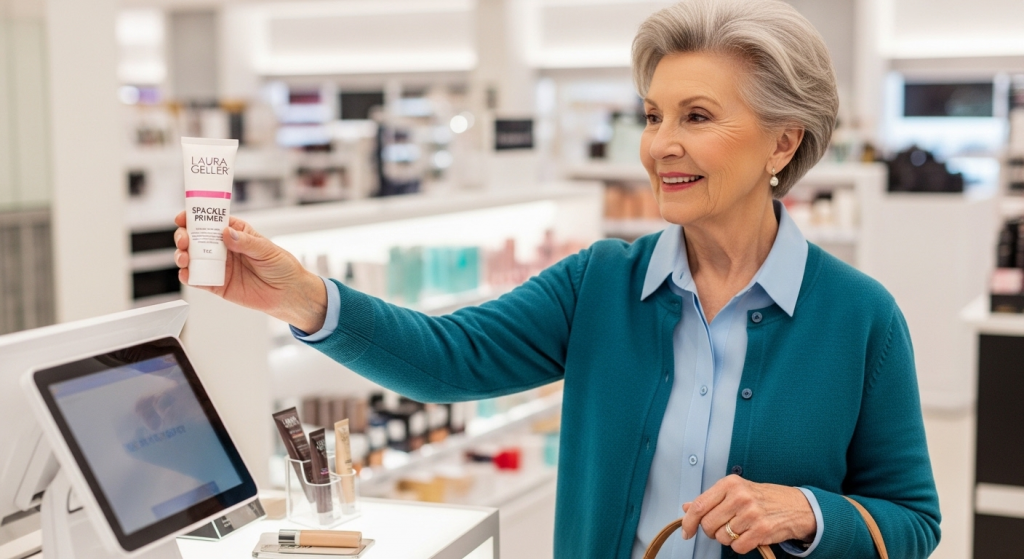
Laura Geller openly positions the brand around makeup for mature skin, and the brand’s Spackle primer lineup repeatedly emphasizes smoother texture, hydration, soft-focus blurring, and better wear under makeup. On the official site, several Spackle options are described as helping blur pores and fine lines, while QVC product pages highlight smoothing, tone-evening, and SPF features depending on the formula. That makes the line a useful case study for shoppers comparing Laura Geller makeup for mature skin through the lens of clean beauty standards 2026.
3 similar QVC primers to compare
The table below compares three current Laura Geller primers sold on QVC. Product descriptions are based on QVC pages and Laura Geller’s official primer details as accessed on April 17, 2026.
| Product | Best for | Why it works for mature skin |
|---|---|---|
| Laura Geller Spackle Primer, 1 oz | Everyday smoothing under makeup | QVC describes it as a lightweight cream-to-gel base that helps minimize the look of pores and fine lines. Good for shoppers who want a classic texture-smoothing primer first. |
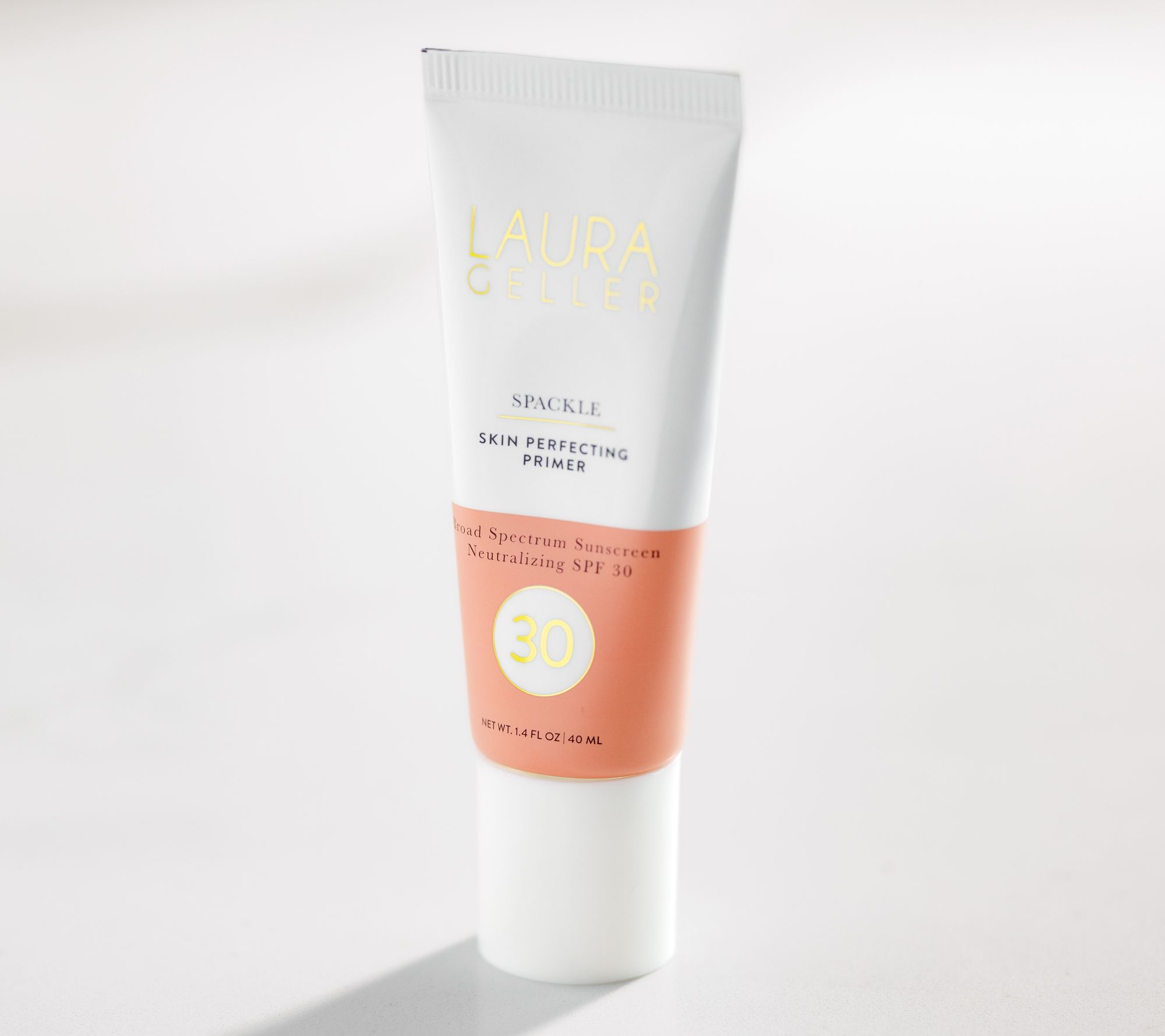
| Laura Geller Spackle Primer, Neutralizing SPF 30 | Redness, uneven tone, daytime wear | QVC says it is subtly tinted to help neutralize redness and discoloration, with blueberry, acai, green tea extracts, plus broad-spectrum SPF 30. |
| Laura Geller Spackle Primer Broad Spectrum Sunscreen SPF 30 | A soft glow plus sun protection | QVC describes it as a multi-tasking primer with a subtle pearl glow and broad-spectrum SPF 30, making it a strong fit for dull or tired-looking skin. |
If you want the safest all-around pick for daytime use, the two SPF versions are the strongest match for what many shoppers mean by a non-toxic primer, because they combine cosmetic payoff with more specific sunscreen labeling. If you mainly want smoother makeup application and already have a separate sunscreen you love, the 1 oz Spackle Primer is the simpler choice. If redness is your main issue, the Neutralizing SPF 30 formula is the most targeted. If dullness is the problem, the Broad Spectrum SPF 30 version looks more compelling.
How to judge a “non-toxic primer” without falling for hype
A smarter clean beauty checklist starts with the product label, not the front-of-box vibe. First, check whether the product is made for your skin type and concern. The AAD specifically recommends buying products formulated for your skin type and looking for label cues like hypoallergenic and non-comedogenic when relevant. That matters more than a broad “clean” label.
Second, pay attention to fragrance if your skin is reactive. FDA notes that it does not have the same authority to require fragrance allergen labeling for cosmetics as it does for food, and advises consumers with fragrance sensitivities to choose fragrance-free products and read the ingredient list carefully. If your skin stings easily, this step belongs near the top of your buying process.
Third, think about what kind of finish you want. On Laura Geller’s site, the Spackle family is broken down by finish and need. Original Clear focuses on smoothing and blurring. Some glow options highlight antioxidant-rich extracts such as ginkgo biloba leaf extract and calendula. The SPF version is described as best for smoother skin with added sun protection. In other words, even within one brand, the better choice is usually the formula that fits your skin behavior, not the formula with the most “clean” wording.
Fourth, do not ignore sunscreen logic. The AAD recommends broad-spectrum SPF 30 or higher as a core anti-aging step. If you wear makeup during the day, an SPF primer can help, although it should not automatically replace careful sunscreen use when you will be outdoors for extended time. Still, in a comparison between two otherwise similar products, the SPF option often offers more concrete value than a vague purity claim.
Fifth, keep talc concerns in perspective. Not every primer contains talc, and talc issues are more commonly discussed with powders, but the larger point still matters for clean beauty standards 2026. FDA continues to test talc-containing cosmetics for asbestos contamination and has published ongoing information about that work. The lesson is simple: ingredient awareness should focus on actual category-specific risks, not generic panic.
My practical recommendation for this keyword mix
Because the keyword mix here includes clean beauty standards 2026, Laura Geller makeup for mature skin, and non-toxic primer, the best editorial angle is not to pretend that one Laura Geller primer is formally “non-toxic” in a regulatory sense. It is to explain that shoppers now need a higher bar. That bar includes transparent ingredients, skin-type fit, sensible claim language, and useful functions like smoothing, hydration, tone correction, and SPF.
With that standard in mind, I would rank the QVC options this way for most readers:
- Spackle Primer, Neutralizing SPF 30 for mature skin with redness or uneven tone.
- Spackle Primer Broad Spectrum Sunscreen SPF 30 for mature skin that looks dull and benefits from a soft glow.
- Spackle Primer, 1 oz for readers who already have a separate sunscreen and only want smoothing support under foundation.
Frequently asked questions
Is clean beauty regulated in 2026?
Not as a single legal category in the way many shoppers assume. Cosmetics are regulated, and MoCRA expanded FDA authority in important ways, but “clean beauty” itself is still not one official U.S. certification standard.
Is Laura Geller makeup good for mature skin?
The brand clearly markets itself to mature skin, and its primer and complexion pages emphasize smoothing, blurring, hydration, and glow, which are all common needs for older skin. Whether it is the right fit still depends on your skin type and finish preference.
What should a non-toxic primer do for mature skin?
In practice, it should give you transparent labeling, a formula matched to your skin type, and useful performance such as hydration, blurring, and possibly SPF. “Non-toxic primer” is a shopping phrase, not a formal federal product class.
Can primer replace moisturizer or sunscreen?
Usually no. Mature skin often still benefits from daily moisturizer, and sunscreen remains a core step. A primer with SPF can help, but it works best as part of a fuller daytime routine.
Conclusion
The biggest shift in clean beauty standards 2026 is not a prettier seal or a trendier ingredient blacklist. It is the move toward smarter verification. For a reader shopping Laura Geller makeup for mature skin, that means choosing a primer based on skin needs you can name and features you can confirm: hydration, blur, tone correction, fragrance awareness, and SPF where it makes sense. That is a far more useful way to shop than chasing a vague promise of a “non-toxic primer.”
If you want one actionable next step, start with your biggest concern. Pick Neutralizing SPF 30 if redness bothers you, Broad Spectrum SPF 30 if dullness is the issue, and the classic 1 oz Spackle if you already love your sunscreen and only want smoother makeup. That decision tree is simple, realistic, and much closer to how smart beauty shopping should work in 2026.
The responses below are not provided, commissioned, reviewed, approved, or otherwise endorsed by any financial entity or advertiser. It is not the advertiser’s responsibility to ensure all posts and/or questions are answered.