

You want a diamond that looks incredible, fits your budget, and still feels like a “forever” piece. That is exactly where Fire Light Lab-Grown Diamonds: Get More Sparkle for Your Budget comes in, especially if you are shopping on QVC and want that bigger, brighter look without jumping to the highest mined-diamond price tags.

This guide breaks down what lab-grown diamonds are, how to shop them like a pro, and how to pick the right Fire Light piece for your style and spend.
Quick snapshot: lab-grown vs mined vs diamond look stones
Lab-grown diamonds are diamonds, not “fake diamonds.” They are made in a lab, but they share the same essential properties as natural diamonds when produced correctly, which is why respected standards define them using the same core characteristics.
Here is the simplest way to compare your options:
| Option | What it is | What you get | Best for |
|---|---|---|---|
| Lab-grown diamond | Diamond grown in a controlled facility, with the same key properties as diamond | Big sparkle per dollar, modern sourcing | Size-first shoppers, value-focused gifts |
| Natural (mined) diamond | Diamond formed in nature | Rarity story, traditional market | Heirloom tradition, resale-sensitive buyers |
| Simulant (ex: moissanite, CZ) | Not a diamond, just looks similar | Strong sparkle at low cost, different “fire” | Fashion pieces, frequent style changes |
Callout: ISO terminology guidance highlights that “diamond” (by itself) implies natural diamond, and that lab-grown stones should be disclosed clearly as laboratory-grown or synthetic diamond.
Extra buyer protection: The FTC’s Jewelry Guides exist to reduce deceptive marketing in gemstone descriptions, including guidance around laboratory-created stones.
What Fire Light lab-grown diamonds are, and why they can look bigger for less
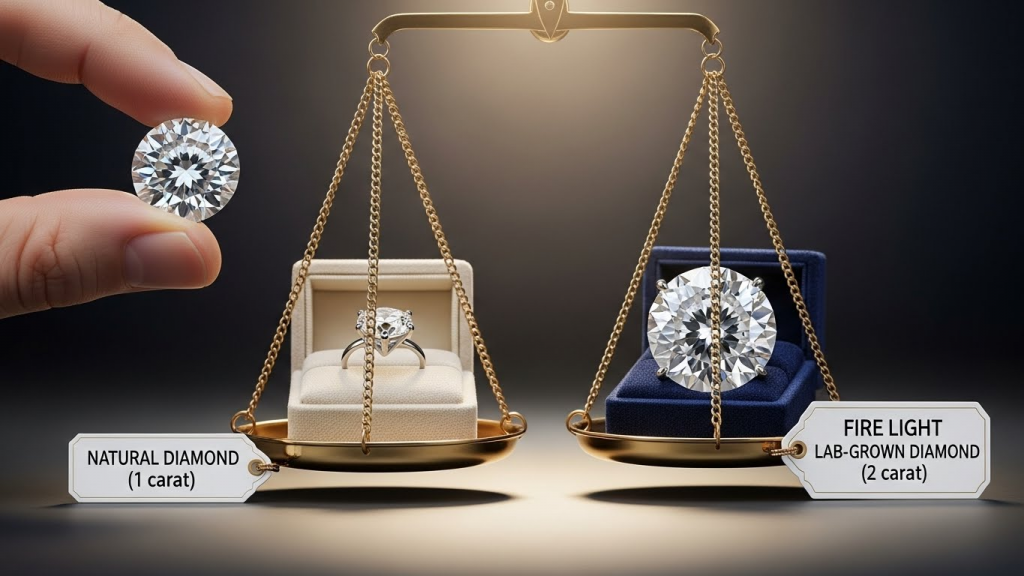
Fire Light Lab-Grown Diamonds: Get More Sparkle for Your Budget is really about one thing, getting more visual impact at the same spend.
What lab-grown diamond means
A lab-grown diamond is a diamond grown using technology instead of geology. Standards define it as an artificial product with essentially the same chemical composition, crystal structure, and physical properties (including optical properties) as a diamond.
So why are prices often lower?
Because supply is more scalable. A lab can grow more stones without waiting millions of years, which usually reduces the “rarity premium” baked into mined diamonds.
How lab-grown diamonds are made: HPHT and CVD
The two main growth methods are:
- HPHT (High Pressure High Temperature): Uses extreme heat and pressure meant to replicate natural formation conditions.
- CVD (Chemical Vapor Deposition): Uses a carbon-rich gas and grows diamond layer by layer on a seed crystal.
You do not need to memorize this to shop well. You just need to know that lab-grown diamonds should still be graded and disclosed properly.
What QVC says about Fire Light quality targets
On QVC product pages for Fire Light Lab Grown Diamond Jewelry, the brand notes lab-grown diamonds meeting “standard GIA requirements” with Very Slightly Included clarity and Near Colorless color on specific items. That is a helpful baseline when you are value shopping.
The 4Cs, simplified, how to buy more sparkle per dollar
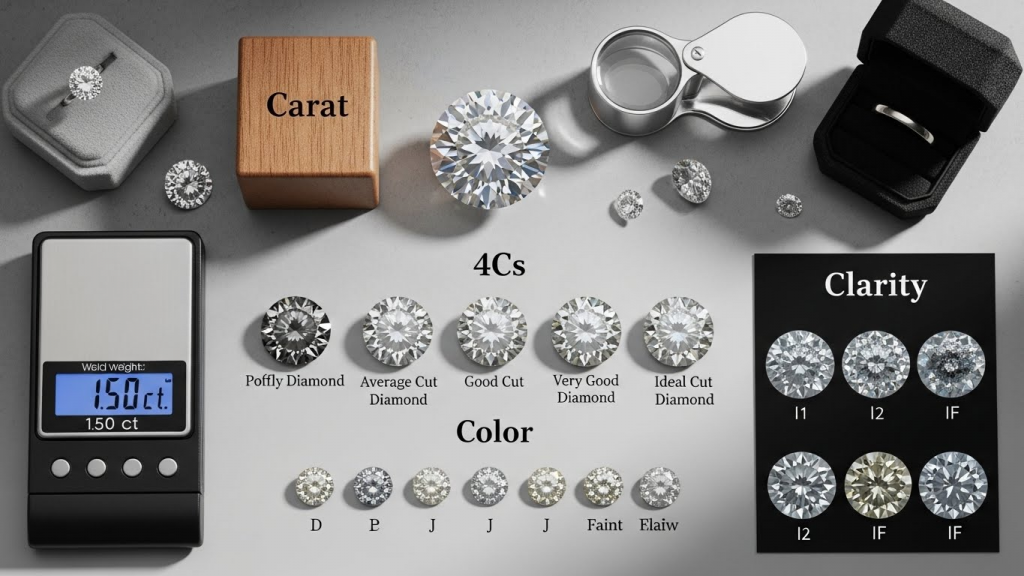
If you want more size without sacrificing beauty, the 4Cs are where you win.
Cut: the sparkle engine
Cut has the biggest impact on sparkle. A well-cut stone returns light to your eyes. A poorly cut stone can look dull even at higher carat weights.
Sparkle tip: If you are choosing between “bigger” and “brighter,” choose brighter. For internal linking later: (diamond cut guide).
Color: near-colorless is the sweet spot
Near-colorless (often in the G-H-I range on many grading scales) tends to look white in most settings, especially in yellow gold. If you are maximizing budget, stay in near-colorless unless you love warm tones.
Clarity: eye-clean beats flawless for value
Many inclusions are invisible without magnification. That is why VS (Very Slightly Included) grades can be a strong value choice for everyday jewelry, especially in halo designs that add extra sparkle.
Carat: size matters, but spread matters too
Carat is weight, not face-up size. Two stones can have the same carat weight but look different in size depending on cut proportions.
Design hack: A halo, pavé, or multi-stone layout can make a piece look larger than a single-stone design at the same total carat weight.
How to shop smart, avoid marketing traps, and stretch your budget
Ask for clear disclosure (and avoid vague wording)
In standards language, abbreviations like “lab grown” can be discouraged in certain contexts, while clear terms like “laboratory-grown diamond” or “synthetic diamond” are used as standard descriptors.
In the US, the FTC’s Jewelry Guides are designed to help prevent deceptive claims about gemstones and lab-created stones.
Red-flag phrases to question: “Real diamond” without specifying mined vs lab-grown, or “diamond” used alone when the product is not a natural diamond.
Think about your “why” before you pick a piece
Use this quick checklist:
- Everyday wear? Choose secure settings, practical profiles, and comfortable clasps.
- Big visual impact? Favor tennis bracelets, studs, halos, and multi-stone rings.
- Gift? Stick to classic shapes and metals, and confirm size or return options.
Budget strategy: where to spend, where to save
Here is a simple “spend map” that works for most lab-grown diamond shoppers:
| If you want… | Spend more on… | Spend less on… |
|---|---|---|
| Maximum sparkle | Cut quality, bright design (halo, tennis) | Ultra-high clarity grades |
| Bigger look | Total carat weight, multi-stone styles | Perfect color unless in white gold/platinum |
| Everyday durability | Setting quality, clasp security, metal choice | Trendy shapes you may tire of |
A reality check on long-term value
Lab-grown diamond pricing has been volatile in recent years, and resale values can be lower than many buyers expect. Some reporting has highlighted large price gaps between lab-grown and natural stones of similar size.
If your main goal is beauty on your wrist or hand (not resale), lab-grown can be a strong “enjoy it now” buy.
Compare 3 Fire Light lab-grown diamond picks on QVC
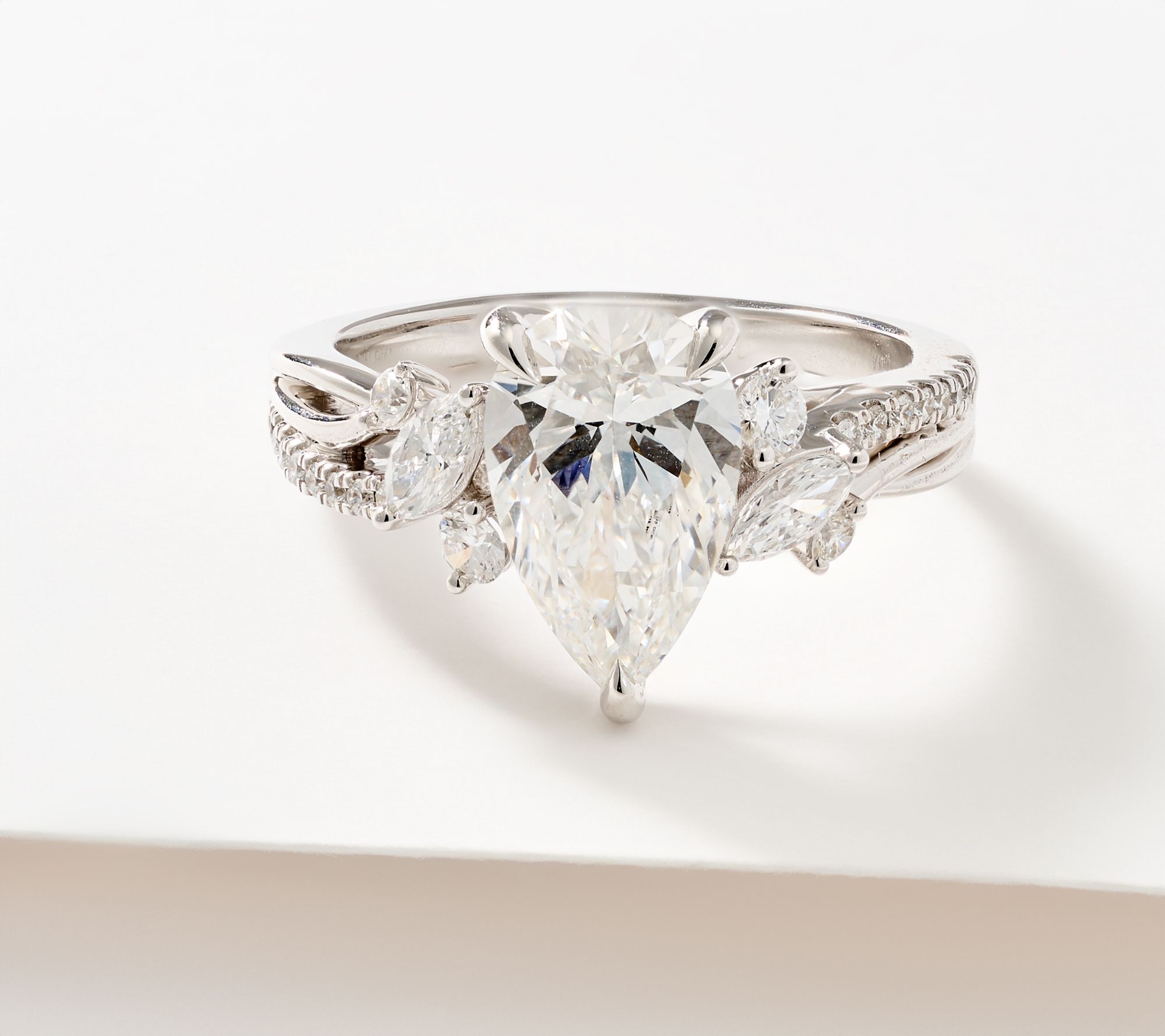
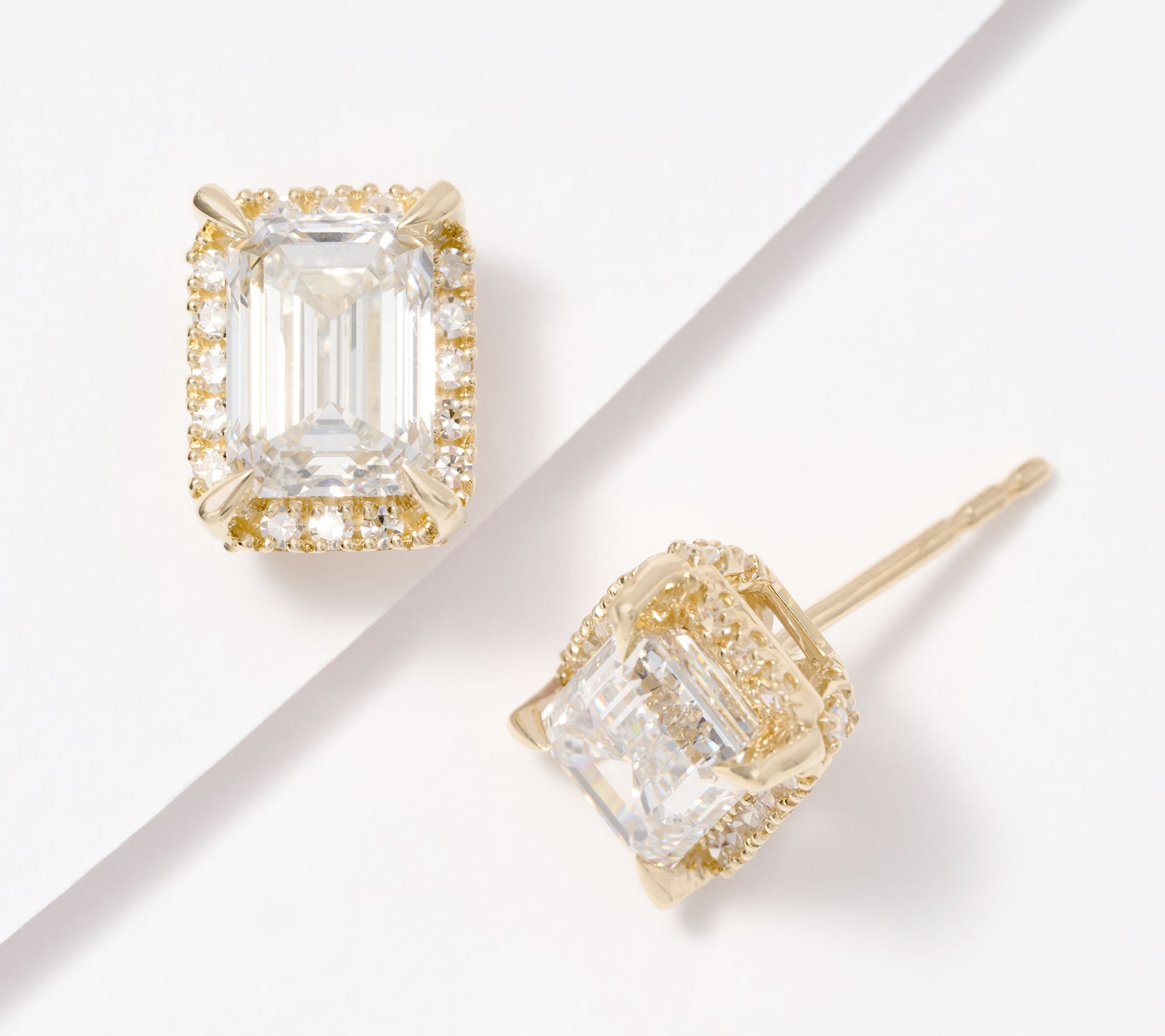
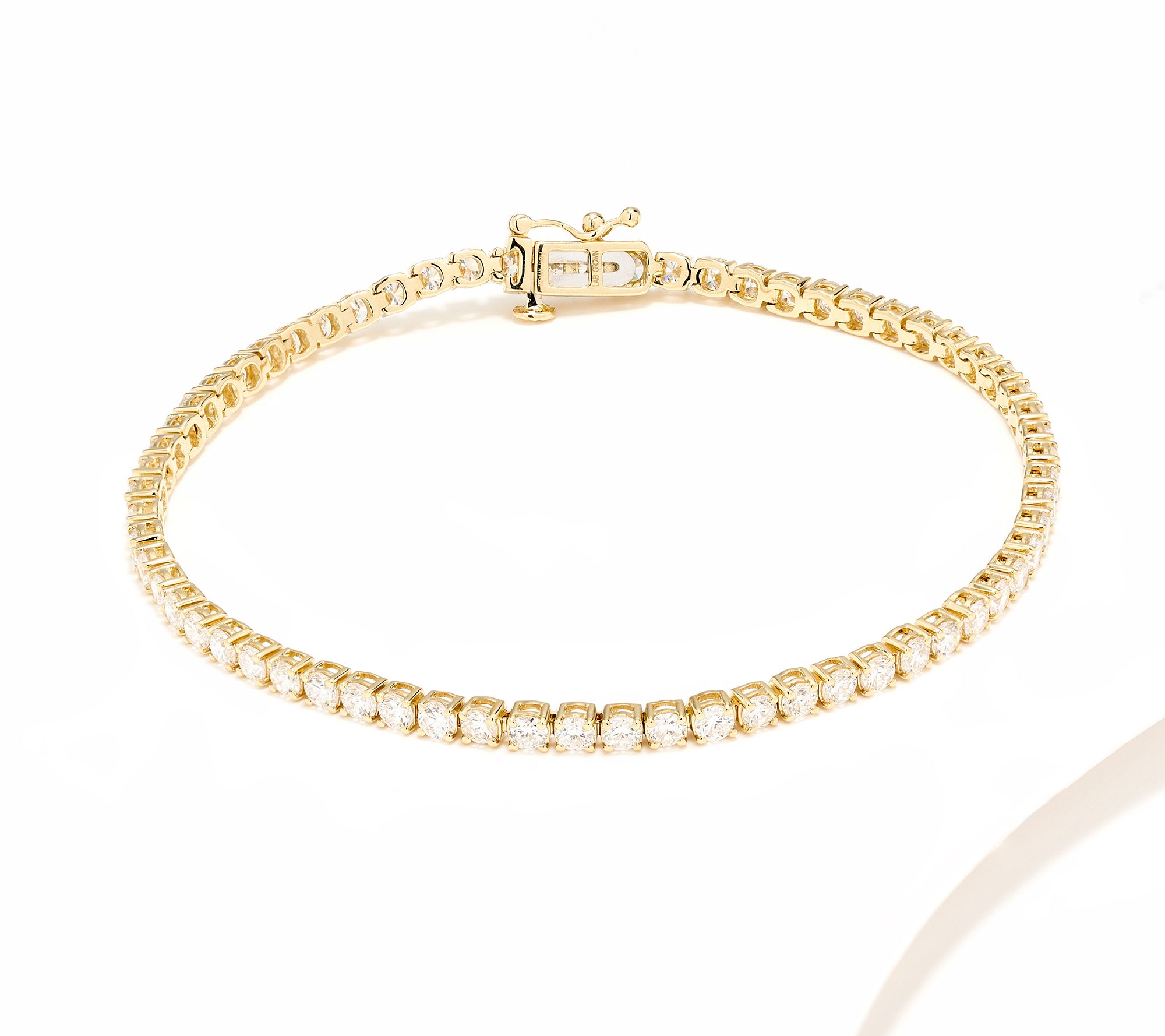
Below are three Fire Light pieces that cover three common goals: statement ring, standout studs, and classic tennis sparkle.
Which one should you buy?
Choose the ring if: you want the most “wow” per glance. A pear shape reads large, and the multi-stone layout adds flash.
Choose the studs if: you want maximum sparkle per wear. Earrings catch light constantly, and the halo design increases the visual footprint.
Choose the tennis bracelet if: you want timeless, giftable, always-in-style shine. Also, pay attention to clasp type and wrist fit for comfort.
Practical care tips to keep the sparkle strong
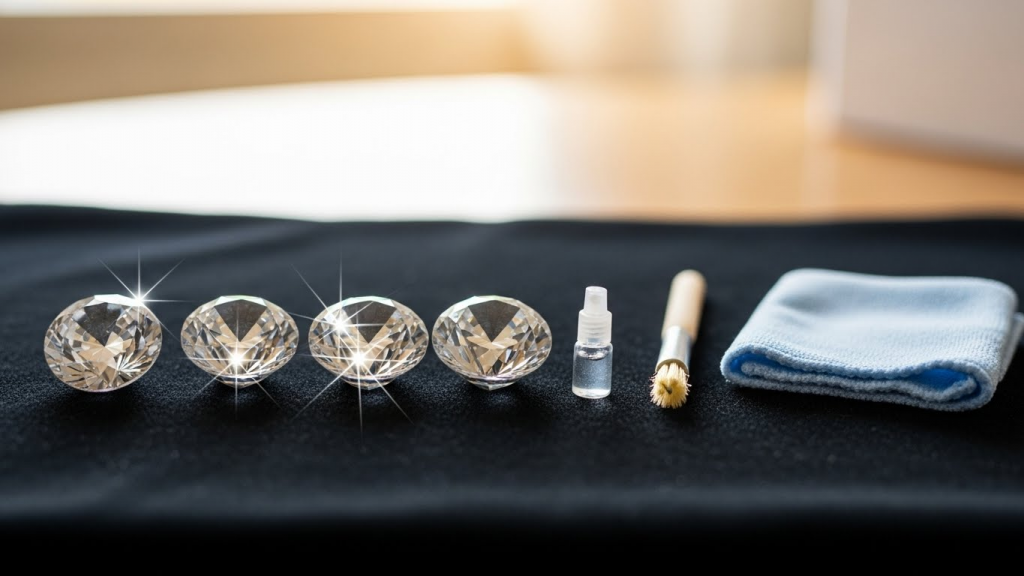
Diamonds are hard, but jewelry still needs care.
- Clean oils off regularly with gentle soap and a soft brush.
- Store pieces separately to reduce scratching on metal and settings.
- Check prongs and clasps if you wear the piece often.
People Also Ask: lab-grown diamond questions, answered

Are lab-grown diamonds “real” diamonds?
Yes, when properly made and disclosed, lab-grown diamonds have the core characteristics of diamond and are defined that way in standards terminology.
Can a jeweler tell lab-grown from mined by looking?
Not reliably by the naked eye. Identification typically requires gemological testing and equipment, especially for certain growth features tied to HPHT or CVD.
Do lab-grown diamonds need different care?
No. Daily care is essentially the same because the material is diamond.
Are lab-grown diamonds always cheaper?
Often yes, but not always. Price depends on size, cut, and brand. Market pricing has also shifted quickly in recent years.
What does proper labeling look like?
Clear disclosure matters. Standards and regulators emphasize using accurate terms for laboratory-grown stones rather than implying a mined origin.
Conclusion: how to get more sparkle for your budget, without regrets
If your goal is pure beauty and maximum shine per dollar, Fire Light Lab-Grown Diamonds: Get More Sparkle for Your Budget is a smart lane.
Use cut and design to drive sparkle, stay in near-colorless and eye-clean ranges for value, and pick the piece that fits your lifestyle: ring for statement, studs for constant flash, tennis bracelet for timeless luxury.
Your next step: pick one of the three QVC styles above, then double-check metal color, sizing, and clasp or setting details so the piece looks amazing the day it arrives and years from now.
The responses below are not provided, commissioned, reviewed, approved, or otherwise endorsed by any financial entity or advertiser. It is not the advertiser’s responsibility to ensure all posts and/or questions are answered.