
Cycling is supposed to feel simple. Then a tire goes flat, a light dies, your chain starts skipping, or you realize your lock is basically a suggestion.

That is why having the right accessories and a few key spare parts matters. It is not about buying everything. It is about buying the right things once, so your rides stay fun and your bike stays reliable.
In this guide, you will learn what to buy first, what to keep as spares, how to avoid common compatibility mistakes, and how three major online shops compare: bike-components, BIKE24, and Bike-Discount. We will keep it practical, beginner-friendly, and focused on real-world decisions.



Quick reality check: safety is part of your “accessories” budget
A helmet is not just comfort gear. It is risk management. A CDC report reviewing a case-control study found helmet use reduced the risk of bicycle-related head injury by 74% to 85%. NHTSA reported 1,166 pedalcyclist fatalities in 2023, and an estimated 49,989 injured in U.S. traffic crashes.
That does not mean “do not ride.” It means: build a basic safety kit early, and keep it maintained.
If you are aiming for the top in bicycle accessories and spare parts for your bike, start with the items that protect your body and prevent you from getting stranded.
Build your “never get stranded” essentials kit
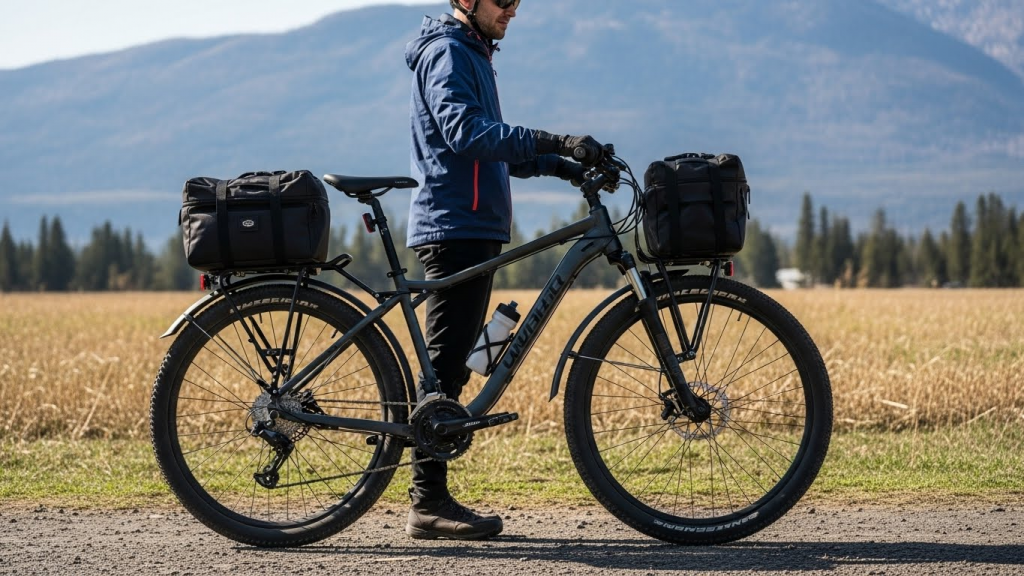
This is the core kit most riders should own. It covers flats, minor adjustments, and basic safety.
The essentials checklist (most riders)
Safety
- Helmet that fits correctly
- Front white light, rear red light (even in daytime for visibility)
- Bell or audible warning device (useful in shared paths)
Flat protection
- Spare tube (correct valve type and size)
- Tire levers
- Mini pump or CO2 inflator (pump is simpler long term)
- Patch kit (backup)
Basic fixes
- Multitool with hex keys (and Torx if your bike uses it)
- Quick link that matches your chain speed (8, 9, 10, 11, 12, 13-speed)
Security
- Lock matched to risk level (more below)
Nice-to-have comfort
- Water bottle cage
- Small saddle bag to carry the kit
A simple “what should I buy first?” table
| Priority | Buy first if you mostly… | Top items |
|---|---|---|
| 1 | Commute or ride in traffic | Helmet, lights, lock |
| 2 | Ride longer than 30 minutes | Flat kit, pump, multitool |
| 3 | Ride in wet or cold weather | Fenders, warmer gloves, chain lube |
| 4 | Ride at night often | Brighter lights, reflective gear |
Spare parts that actually save you money
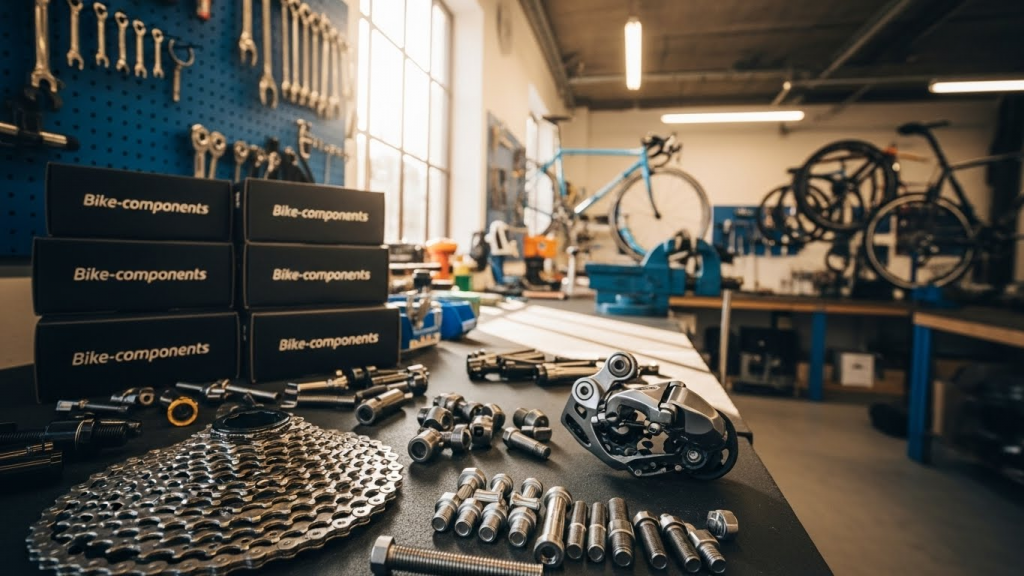
Accessories make riding easier. Spare parts keep your bike running, and they often prevent bigger repairs.
Here are the spares that pay off for most riders.
High-value spare parts to keep on hand
1) Tubes and tire basics
- 1 to 2 spare tubes
- Valve cores (tiny, cheap, easy to lose)
- A few patches
2) Brake wear items
- Brake pads (disc pads or rim pads, depending on your bike)
- If you have hydraulic disc brakes, a pad swap is one of the most common “maintenance wins”
3) Drivetrain wear items
- Chain (the big one)
- Quick links (matching your chain brand and speed)
Why chain replacement matters: SRAM’s chain user manual advises replacing a chain at 0.8% elongation to maintain performance and limit wear to the cassette and chainring.
Campagnolo’s technical manual gives a clear measurement rule: if a caliper measurement is longer than 132.60 mm, the chain must be replaced.
You do not need to memorize those numbers today. The takeaway is simple: chains are meant to be replaced. Letting a chain go too long can grind down the expensive parts.
Avoid the biggest compatibility mistakes (quick checks)
Buying the wrong part is the fastest way to waste time and money. These checks prevent most mistakes.
1) Tires and tubes
Check the sidewall on your tire for:
- Wheel size (common: 700c, 29, 27.5, 26)
- Tire width (example: 700x32c)
Match your tube to both size and width range.
2) Brake pads
You need the exact pad shape for your brake caliper. “Disc pads” is not specific enough.
Tip: search by your brake model name (for example, Shimano Deore, SRAM Level) before you add to cart.
3) Chain and cassette
Two key checks:
- Speed: 8/9/10/11/12/13-speed
- Type: road vs MTB can matter, plus brand-specific quick links
4) Seatpost and handlebar
Measure diameter (in mm). “Looks the same” is a trap.
A smarter way to shop online: compare Bike-Components vs BIKE24 vs Bike-Discount
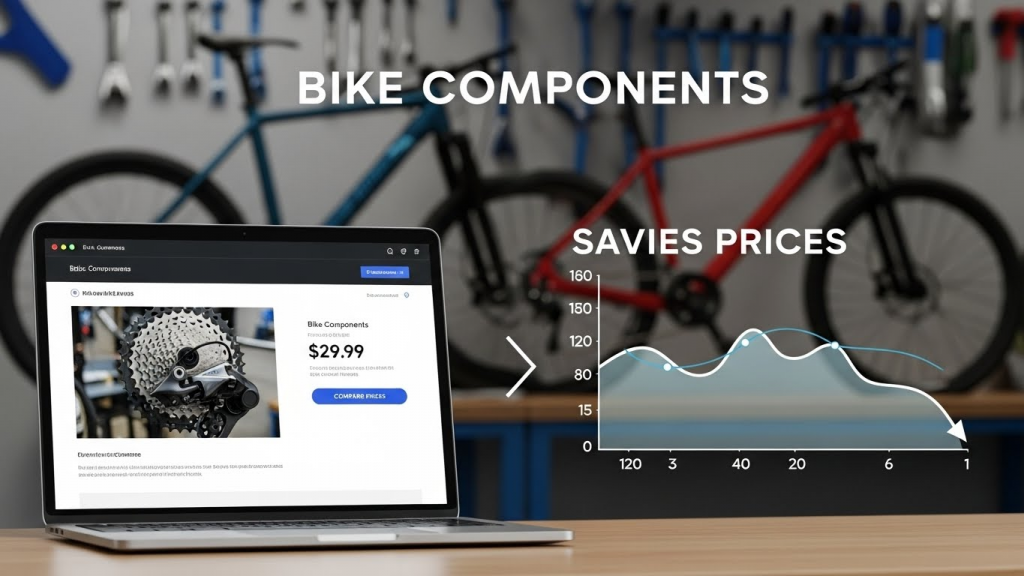
If you are building the top in bicycle accessories and spare parts for your bike, your shop choice matters for returns, shipping, and how easily you can find compatible parts.
Below is a practical comparison based on each site’s published policies and product category info.
Brand comparison table (policy highlights)
| Shop | Best for | Return window (high level) | Shipping note (high level) |
|---|---|---|---|
| bike-components | Big selection, long return window for unused items | “Up to 100 days after purchase” for returns (unused, original packaging), plus 14-day withdrawal right | Publishes country-by-country shipping costs, and notes USA delivery is not possible at this time |
| BIKE24 | Simple policies, price check tools, broad categories | Terms state a 30-day revocation period, and the site promotes a free 30-day return policy | Shipping costs vary by order value, item type, destination, carrier |
| Bike-Discount | Huge inventory count, value-focused shopping | Terms describe a 14-day withdrawal return deadline | Parts page highlights “more than 10,000 items” |
Key details:
- bike-components returns: “Up to 100 days after purchase” is a real advantage when you are unsure between two sizes (as long as items are unused and complete).
- bike-components shipping: their shipping table states USA delivery is not possible at this time, which matters if you are ordering from the U.S.
- BIKE24 returns: their terms describe 30 days to revoke a contract, and the site emphasizes a free 30-day return policy.
- Bike-Discount returns: their terms state you must return goods within fourteen days from notifying withdrawal.
So which one should you pick?
Use this simple rule:
Pick bike-components if
- You want extra time to return unused items (100 days is generous)
- Your delivery country is supported (check the shipping table first, especially if you are outside Europe)
Pick BIKE24 if
- You want a clear 30-day window and a straightforward return flow
- You like order-value based shipping tables and structured categories
Pick Bike-Discount if
- You are value hunting and want a very large parts catalog (they cite 10,000+ items)
- You are confident about compatibility, since the withdrawal window is tighter
Lock buying made simple (use a real rating system)
A lock is only as good as the attacks it can resist.
Sold Secure is an independent testing and certification body. On its site, Sold Secure describes bicycle security grades from Bronze to Diamond, where Diamond is the highest security level and Gold is high resistance against a dedicated thief.
Quick lock guidance
- Low risk, short stops: lighter lock may be enough
- Medium risk commute: aim for Gold or better
- High risk city parking: consider Diamond rated products and better locking habits
A “buy once” accessories list by rider type
This helps you avoid random shopping.
Commuter
- Lights (strong priority)
- Lock (Sold Secure rating helps)
- Fenders for wet streets
- Flat kit + pump
- Reflective details
Road rider
- Flat kit optimized for speed (tube, levers, mini pump)
- Saddle bag
- Chain quick link
- Compact multitool
Mountain rider
- Tubeless plug kit (if tubeless)
- Tire sealant (spare)
- Derailleur hanger (if your bike uses a replaceable hanger)
- Stronger gloves, eye protection
E-bike rider
- Heavier-duty lock decisions
- Extra visibility lighting
- Check tire and brake wear more often (more speed, more mass)
FAQs people ask before buying bike accessories and spare parts
What are the most essential bike accessories?
Helmet, lights, a flat kit, and a lock. Those four cover safety, visibility, and being able to get home.
CDC evidence shows helmets can sharply reduce head injury risk.
What spare parts should I keep at home?
At minimum: tubes, brake pads, chain quick links, and a chain. Those are common wear or failure points.
How do I know when my chain needs replacement?
Use a chain checker or measurement method. Manufacturer guidance varies by drivetrain.
Examples:
- SRAM advises replacing a chain at 0.8% elongation.
- Campagnolo instructs replacing if a measurement exceeds 132.60 mm using a precision caliper method.
Do I really need bike lights in the daytime?
If you ride near cars, daytime visibility helps. Many riders use a daytime running mode for this reason. Also, if a ride runs late, you are covered.
A simple “smart cart” for the top in bicycle accessories and spare parts for your bike
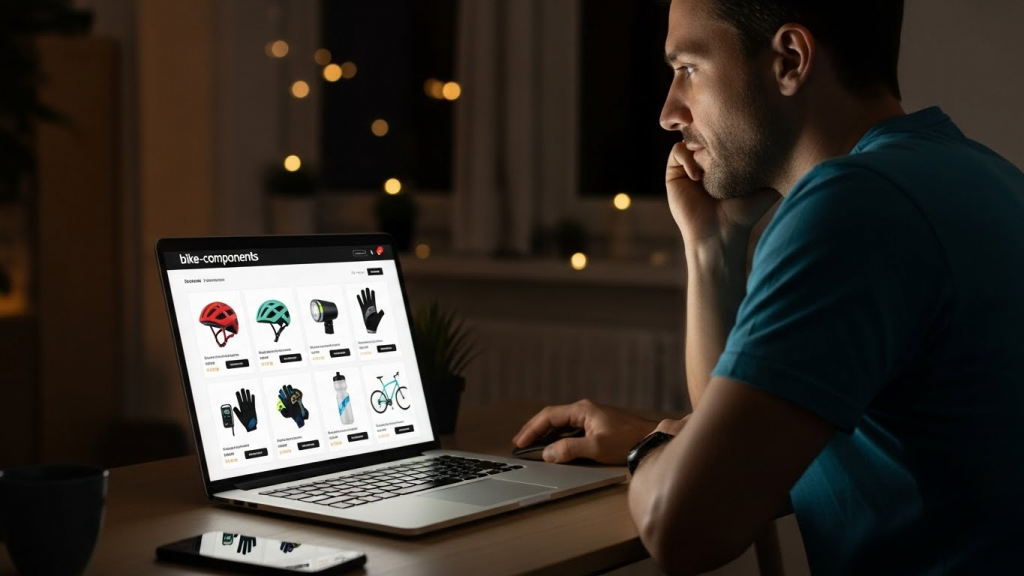
If you want a short shopping list that works for most riders:
Must-buy (start here)
- Helmet
- Front and rear lights
- Flat kit (tube, levers, pump)
- Multitool
- Lock with a recognized rating system
Next upgrades
- Better saddle bag
- Better floor pump for home
- Extra tubes
- Brake pads
- Chain quick links
Maintenance habit that keeps costs down
Replace wear parts before they destroy expensive parts. Chain wear is the classic example.
Conclusion: Build a kit that keeps you riding
The best bike setup is not the one with the most gear. It is the one that fits your rides and prevents the common problems.
To recap:
- Start with safety: helmet and lights, backed by real safety evidence.
- Build a flat kit and basic tools so you do not get stranded.
- Keep a few high-value spares (tubes, pads, chain, quick links).
- Choose a shop based on return window and shipping reality, not just prices.
If your goal is the top in bicycle accessories and spare parts for your bike, your next step is simple: pick your rider type, build the essentials kit, then buy spares for the parts that wear out first.
The responses below are not provided, commissioned, reviewed, approved, or otherwise endorsed by any financial entity or advertiser. It is not the advertiser’s responsibility to ensure all posts and/or questions are answered.