

If you already own a 3D printer, you know a painful truth. Amazing machine, bad supplies, terrible results.

That is why a careful COMPARISON OF THE 3 BEST BRANDS OF 3D Printer Supplies, High-Quality, Industrial-Grade 3D Printer Filaments and UV Resin matters so much. The right filament or UV resin can be the difference between brittle, warped parts and strong, clean prints that look professional.
In this guide, we compare three of the most popular brands for 3D printer supplies, especially for serious makers and small businesses:


You will see how they perform with industrial grade filaments and UV resin, when each brand makes sense, and how to choose the best option for your projects and budgetWhy your 3D printer supplies matter more than you think
The shift from hobby prints to industrial parts
3D printing is no longer only a hobby. The global 3D printing materials market is already worth around 2.8 to 3.0 billion US dollars and is forecast to reach between 8 and nearly 13 billion by 2030, with annual growth rates above 20 percent.
That growth is driven by industries like aerospace, automotive and healthcare that demand reliable, repeatable results from filaments and resins, not only from printers.
So even if you print at home, the same idea applies. Supplies must be consistent, strong and predictable.
What “industrial grade” really means
When people say industrial grade 3D printer filaments and UV resin, they usually mean materials that deliver:
- Stable mechanical properties like tensile strength, impact resistance and flexural strength
- Low shrinkage and warping, so dimensions are accurate
- Consistent batches with tight diameter or viscosity control
- Reliable curing or extrusion windows that match common machines
For example, Anycubic Standard Resin V2 lists tensile strength around 35–45 MPa, flexural strength 40–50 MPa, heat deflection temperature about 60–65 °C and a UV range of 365–405 nm, values that are typical for serious functional resin parts.
These are the kinds of details you want to look at when comparing brands.
Meet the 3 brands we compare
This article focuses on a COMPARISON OF THE 3 BEST BRANDS OF 3D Printer Supplies, High-Quality, Industrial-Grade 3D Printer Filaments and UV Resin for most users: Anycubic, Elegoo and Creality.
Anycubic: strong in resin, growing in pro features
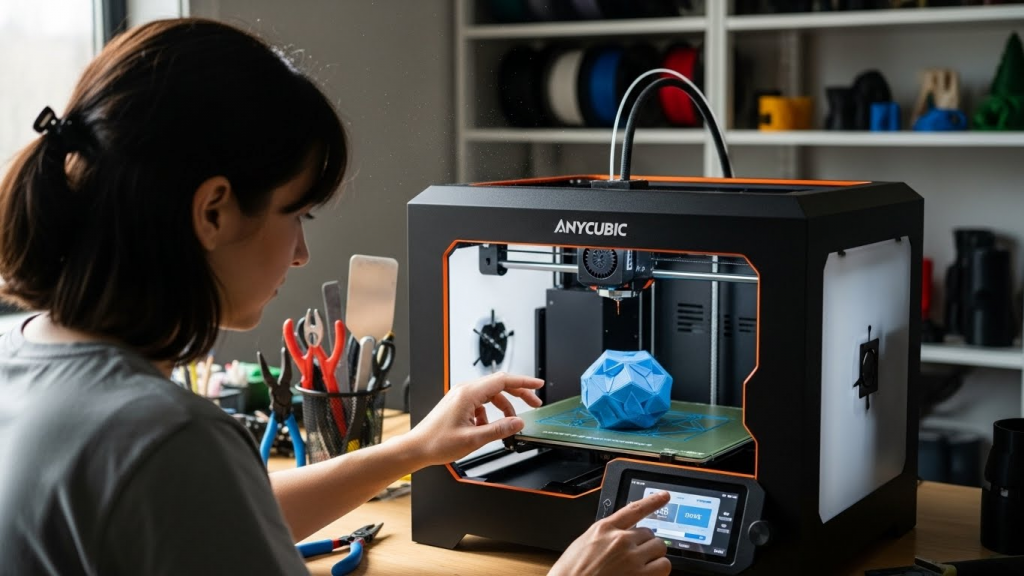
Anycubic is well known for its Photon series of resin printers and compatible UV resins. On its official store, Anycubic lists several resin lines, including Standard Resin, Water-Wash Resin, Plant-Based Resin and functional resins such as Tough Resin.
A few highlights:
- UV wavelength range: 365–405 nm, compatible with most LCD and MSLA printers
- Elongation at break (Standard V2): around 25–30 percent, which helps reduce brittleness
- Moderate shrinkage and controlled viscosity for predictable dimensions.
Anycubic resins are often chosen by users who want a balance between detail and toughness, for example for prototypes, miniatures and functional clips.
Elegoo: fast curing and high precision resins
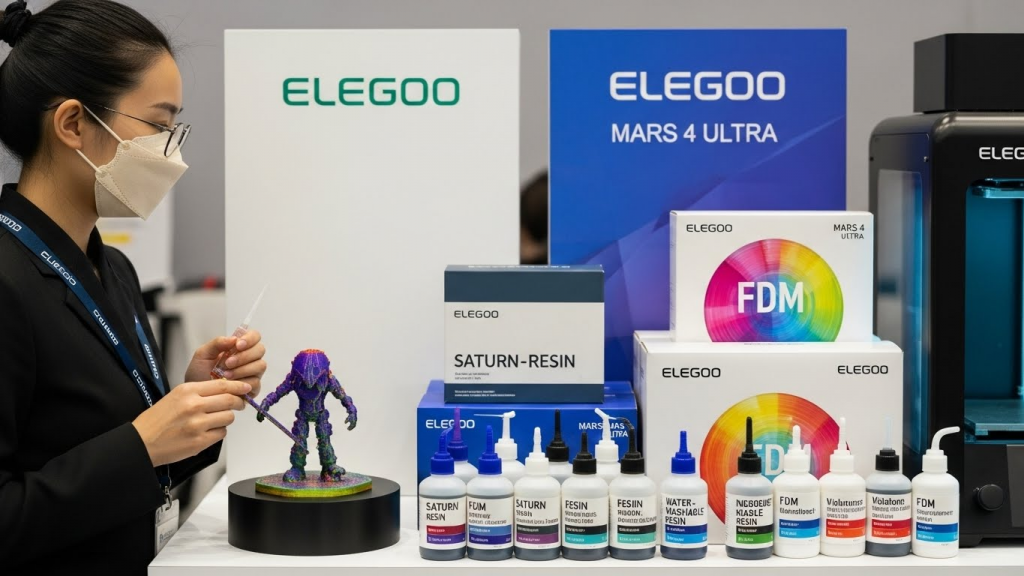
Elegoo is another giant in resin printing. Its Standard Photopolymer Resin is designed to reduce volume shrinkage during photocuring, which helps achieve high precision and smooth surfaces.
Key points from Elegoo’s own descriptions:
- Focus on low shrinkage and high accuracy in dimensions.
- Fast curing with 405 nm rapid resin formulas to reduce print times.
- Multiple resin families, including ABS-like resin that mimics the toughness and impact resistance of ABS plastic, suitable for functional parts and prototypes.
Elegoo is very popular among makers who print detailed miniatures and those who want fast, reliable resin prints without a lot of tuning.
Creality: filament powerhouse with industrial flavor
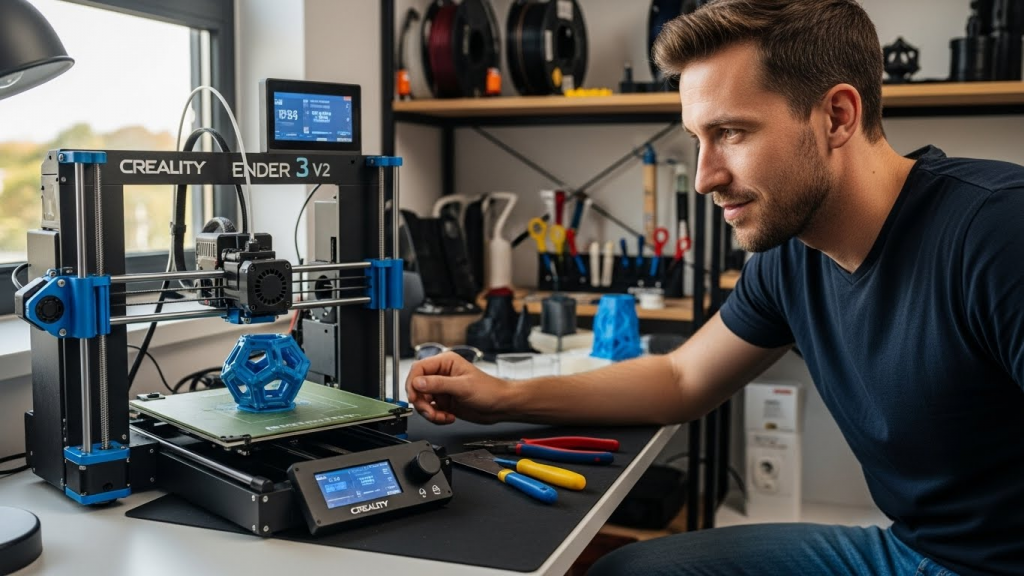
Creality is probably best known for the Ender and K series printers, but it also sells a wide range of filaments. For example, Creality’s 1.75 mm PLA filament is sold on its official store with a dimensional tolerance of ±0.02 mm and recommended nozzle temperatures between 180 and 215 °C.
From Creality’s filament parameter guide:
- PLA and specialty PLA types typically print between 190 and 230 °C.
- Creality offers PETG, ABS, carbon fiber reinforced PLA and more, each with defined temperature windows and use cases.
This makes Creality a strong choice if you print mostly FDM parts, from aesthetic models to mechanical components.
Side by side comparison of filaments and UV resin
Quick comparison table of the 3 brands
Below is a simplified comparison of the three brands for high quality, industrial grade filaments and UV resin based on manufacturer data and typical user use cases.
| Brand | Main strength | Typical products for supplies | Key technical details (examples) | Best for |
|---|---|---|---|---|
| Anycubic | UV resin for MSLA printers | Standard Resin, Plant-Based Resin, Tough Resin | UV 365–405 nm, tensile strength about 35–45 MPa, heat deflection 60–65 °C, moderate shrinkage | Detailed models, strong prototypes, transparent parts, jewelry-like items |
| Elegoo | Fast, precise UV resin | Standard Resin, ABS-like Resin, specialty resins | Low shrinkage design, fast curing, ABS-like resin with enhanced toughness and impact resistance | Miniatures, figures, parts that need fine detail and better impact strength |
| Creality | Filaments for FDM printers | PLA, PETG, ABS, carbon fiber PLA and other filaments | 1.75 mm diameter, ±0.02 mm tolerance on PLA, temps around 190–230 °C depending on filament | Functional FDM parts, jigs and fixtures, enclosures, large prints |
This table gives a fast overview of where each brand shines in the COMPARISON OF THE 3 BEST BRANDS OF 3D Printer Supplies, High-Quality, Industrial-Grade 3D Printer Filaments and UV Resin.
Deep dive: UV resin quality
Anycubic UV resins
Anycubic’s resin lineup emphasizes clarity, surface finish and mechanical balance. Its Standard Resin V2 provides tensile strength in the 35–45 MPa range, flexural strength 40–50 MPa and elongation at break around 25–30 percent, which reduces the risk of parts snapping when flexed lightly.
Advantages:
- Good combination of stiffness and slight flexibility
- Compatible with many printers that use 365–405 nm light
- Specialized options such as High Clear Resin for transparent parts and functional resins for tougher applications.
Best use cases:
- Visual prototypes where surface finish is important
- Semi functional clips and brackets that face light load
- Clear or translucent parts like lenses and decorative components
Elegoo UV resins
Elegoo’s Standard and ABS-like resins are tuned for fast curing and low shrinkage. The company states that its Rapid Resin reduces volume shrinkage to maintain accurate dimensions and smooth surfaces, and its ABS-like resin is designed to mimic ABS plastic with enhanced toughness and impact resistance.
Advantages:
- Fast print times thanks to high reactivity at 405 nm
- Good dimensional stability, helpful for parts that must fit together
- ABS-like options ideal for functional hinges, brackets and small mechanical parts
Best use cases:
- Game miniatures and figurines
- Detailed display models that still need some toughness
- Functional prototypes that need improved impact resistance compared to standard resin
Deep dive: filament performance
Creality filaments
Creality’s PLA filament is advertised with a 1.75 mm diameter and tight ±0.02 mm tolerance, which supports stable extrusion and smooth surfaces. Its filament parameter guide details recommended temperature windows for PLA, PETG, ABS and other lines, so users can quickly match profiles to materials.
Advantages:
- Wide variety of materials, including standard PLA, matte PLA, PETG and carbon fiber blends
- Clear temperature guidance straight from the manufacturer
- Filaments compatible with most open FDM printers, not only Creality machines
Best use cases:
- Functional parts that do not need resin level detail
- Large structural prints and enclosures
- Jigs and fixtures in workshops or small production setups
How do resins vs filaments compare for “industrial grade” work
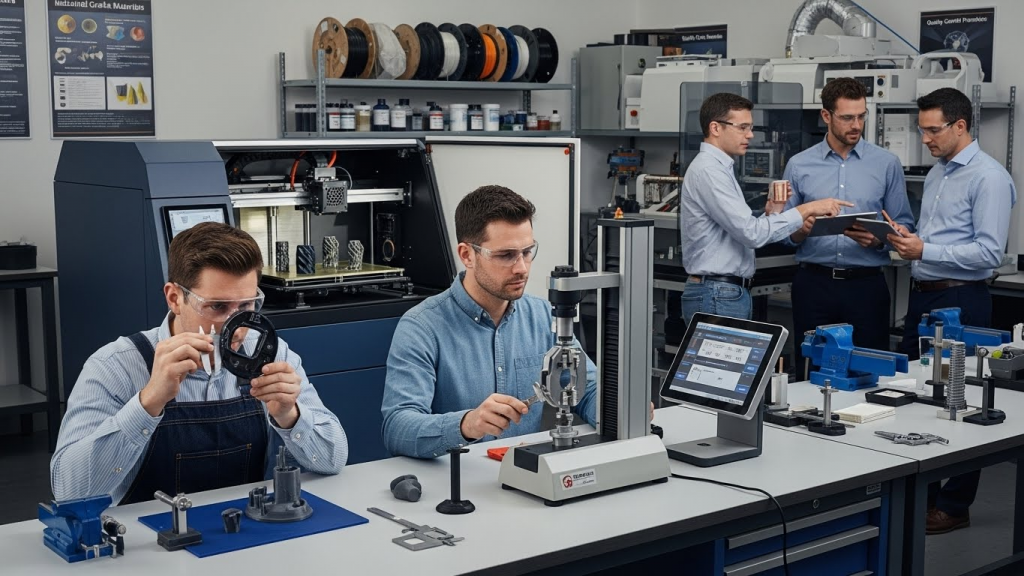
For industrial style applications:
- Resins from Anycubic and Elegoo excel at detail, smooth surfaces and complex shapes.
- Filaments from Creality are better for larger parts, higher toughness in some materials and easier processing for production environments.
If your site includes content like a guide to FDM vs resin 3D printers, that is a perfect place to link from this section using anchor text such as “compare FDM vs resin 3D printing for beginners”.
What to look for in industrial grade filaments and UV resin
When you look at a COMPARISON OF THE 3 BEST BRANDS OF 3D Printer Supplies, High-Quality, Industrial-Grade 3D Printer Filaments and UV Resin, focus on these technical and practical factors.
1. Mechanical properties
Check for:
- Tensile strength for load bearing parts
- Elongation at break for parts that must flex
- Impact resistance for snap fits and functional prototypes
For example, Anycubic lists tensile strength around 35–45 MPa and flexural strength up to 50–60 MPa for its standard resin, which puts it in a good range for many engineering style prints.
Elegoo’s ABS-like resin focuses on toughness and crack resistance, even if exact numbers are not always listed in consumer facing pages.
2. Dimensional accuracy and shrinkage
Low shrinkage is vital when prints must fit together.
Elegoo specifically highlights reduced volume shrinkage for its Standard Resin, which helps maintain accuracy.
Filament dimensional tolerance also matters.
Creality’s ±0.02 mm tolerance on its PLA filament helps ensure consistent extrusion, which stabilizes part dimensions.
3. Process window and ease of use
You want materials with:
- Clear recommended temperatures or exposure times
- Compatibility with typical 3D printers
- Predictable behavior from one spool or bottle to the next
Anycubic publishes recommended exposure times for its resins on different Photon printers and confirms compatibility with 365–405 nm light sources.
Creality provides a filament parameter guide that lists standard temperatures for each material family, which makes tuning easier.
4. Safety, storage and documentation
For industrial or professional environments, documentation is important.
Look for:
- Safety data sheets and usage manuals
- Storage guidance and shelf life
- Clear labeling on bottles or spools
Anycubic, for example, provides resin user manuals and MSDS information on its website.
If you run a workshop or small factory, you can link here to an internal resource like resin safety checklist for small labs to support compliance and training.
Which brand is best for you
Now that you understand the technical side of this COMPARISON OF THE 3 BEST BRANDS OF 3D Printer Supplies, High-Quality, Industrial-Grade 3D Printer Filaments and UV Resin, let us map each brand to real world situations.
Scenario 1: Detailed miniatures and artistic models
You print figurines, tabletop miniatures or very detailed display items.
- Best match: Elegoo
- Why: Low shrinkage and high precision resins deliver sharp details and smooth surfaces, with rapid curing that saves time on large batches.
- Alternative: Anycubic High Clear or Standard Resin if you want transparent parts or a slightly tougher feel.
Good internal link opportunity: anchor a phrase like best resin for tabletop miniatures to a dedicated guide.
Scenario 2: Functional prototypes and small mechanical parts
You build brackets, snap fits and functional prototypes that must survive handling.
- Best match: Anycubic or Elegoo ABS-like resin
- Why: Anycubic offers functional resins with improved toughness, and Elegoo’s ABS-like resin is tuned to mimic ABS with better impact resistance.
- Tip: Look at tensile strength, flexural strength and elongation values to pick the resin that best balances stiffness and flexibility for your part.
Here you can link to a resource like how to design stronger 3D printed parts to help readers improve designs as well as material choices.
Scenario 3: Large, robust FDM parts for workshops
You print jigs, fixtures, enclosures and larger components on FDM printers.
- Best match: Creality filaments
- Why: Wide selection of PLA, PETG, ABS and carbon fiber blends, with clear temp ranges and good dimensional control, works well for production style environments.
- Bonus: Creality filaments are compatible with many non Creality printers that use 1.75 mm filament.
A natural internal link here would be something like best PLA settings for Ender style printers.
Scenario 4: Mixed use home lab or small business
You do a bit of everything: miniatures, functional parts and one off prototypes.
-
Best match: Combine brands
- Use Elegoo resin for detail heavy parts.
- Use Anycubic functional resin for tougher prototypes.
- Use Creality filament for large and structural prints.
This mix leverages the strengths of each brand while keeping materials easy to source from reliable, well documented manufacturers.
FAQs about 3D printer filaments and UV resin

Is expensive resin or filament always better
Not always. For many users, mid priced materials from Anycubic, Elegoo and Creality offer performance that is more than enough for serious work, especially when printers are well tuned.
Premium specialty materials can help in cases like very high temperature use or extreme mechanical loads, but they are not required for every project.
Which brand is best for beginners
If you are new to resin printing, Elegoo Standard Resin is often praised for being forgiving and consistent, as long as you follow exposure recommendations.
For FDM beginners, Creality PLA is a safe starting point, since the company provides clear temp guidelines and PLA itself is easy to print.
You might link this answer to a page like beginner friendly 3D printing materials.
Are these supplies really “industrial grade”
For true heavy industrial use, companies may use certified engineering resins and filaments with detailed test data and standards. However, the materials from Anycubic, Elegoo and Creality occupy a strong middle ground: they often deliver the consistency, mechanical properties and documentation that small businesses and advanced hobbyists need.
Thanks to the rapid growth of the materials market and rising expectations from professional users, even consumer level supplies are steadily improving in quality each year.
Conclusion: putting this comparison into action
Let us recap the core insights from this COMPARISON OF THE 3 BEST BRANDS OF 3D Printer Supplies, High-Quality, Industrial-Grade 3D Printer Filaments and UV Resin.
- Anycubic shines in versatile, well documented resins with good mechanical balance and special options like High Clear.
- Elegoo focuses on low shrinkage, high precision and fast curing, ideal for miniatures and ABS-like functional parts.
- Creality offers a large ecosystem of filaments with tight tolerances and clear temperature guidance, perfect for FDM parts and workshop use.
If you want a simple next step:
-
Define your main use case
Detail and aesthetics, functional strength or large structural parts. -
Match the brand to that use case
- Detail: Elegoo
- Tough functional resin: Anycubic or Elegoo ABS-like
- Large FDM parts: Creality
-
Create or update internal links from this comparison to targeted resources
For example, link phrases such as resin safety checklist, FDM vs resin 3D printers, or strongest 3D printing materials to deeper guides on your site.
By doing that, you not only help readers choose better materials, you also improve topical authority and user experience, which in turn helps this page rank for your primary keyword and its variations over time.
The responses below are not provided, commissioned, reviewed, approved, or otherwise endorsed by any financial entity or advertiser. It is not the advertiser’s responsibility to ensure all posts and/or questions are answered.