

Walking into the health and beauty aisle can feel like trying to solve a puzzle with 200 pieces missing. A cleanser claims “glow,” a serum promises “tightening,” and a supplement says it “supports immunity,” all in the same five minutes.

This guide is built to help you shop our extensive range of health and beauty products from leading brands without wasting money, time, or patience. You will learn how to read labels, pick products based on your goal and skin type, avoid common marketing traps, and a Boots vs Superdrug vs Walgreens comparison, and choose the best retailer for your needs.



Start with your goal, not the trend
A “good” product is the one that fits your goal, your budget, and your body. Before you buy anything, pick one primary goal for the next 4 to 6 weeks.
Common goals:
- Clear breakouts
- Reduce dryness or sensitivity
- Build a simple anti-aging routine
- Improve sun protection habits
- Upgrade hair care basics
- Restock personal care essentials
- Choose a safe, minimal supplement plan
A quick decision table (print this mentally)
| Your goal | What to buy first | What to look for on the label | What to skip (for now) |
|---|---|---|---|
| Fewer breakouts | Gentle cleanser + acne treatment | “Benzoyl peroxide” or “salicylic acid” as active ingredients (OTC acne drugs) | 6-step routines, harsh scrubs |
| Less dryness | Fragrance-free moisturizer | “Fragrance-free,” “dry skin,” and a texture you will actually use | Strong acids + strong retinoids together |
| Fewer dark spots | Sunscreen + one targeted treatment | Broad spectrum SPF, then add a single active | Buying 3 brightening serums at once |
| Anti-aging basics | Sunscreen + retinoid/retinol product | Start lower strength, build slowly | “Instant lift” claims |
| Health support | Food-first plan + one supplement max | Clear dosage, third-party testing info (if provided), realistic claims | Mega-stacks of 6 pills |
If you only do one thing this week, do this: pick a sunscreen you like enough to use daily. UV exposure is a major, preventable risk for skin damage, and skin cancer is the most common cancer in the United States.
Learn the label basics so you can buy with confidence
Cosmetic vs drug, why it matters
A product’s category depends on its intended use. If it claims to treat or prevent disease, or affect the structure or function of the body, it can fall under drug rules, even if it looks like “just skincare.” That is why acne treatments and sunscreens have different labeling rules than many moisturizers.
Expiration dates, shelf life, and the “sniff test”
In the US, there are no laws requiring cosmetics to have an expiration date, but manufacturers are responsible for safety and shelf life.
Practical rule:
- Toss products if the color or smell changes, or if the texture separates and will not mix back.
- Keep lids tight, avoid sharing makeup, wash hands before use, and store products away from heat, these are FDA consumer safety tips.
Sunscreen labels, what “SPF” and “broad spectrum” really mean
SPF measures protection against sunburn primarily linked to UVB exposure, and “broad spectrum” indicates UVA and UVB coverage. The FDA explains how SPF is tested and labeled.
The American Academy of Dermatology recommends SPF 30 or higher, and notes that SPF 30 blocks about 97% of UVB rays.
Also, only broad spectrum sunscreens with SPF 15 or higher can claim reduced risk of skin cancer and early skin aging when used as directed with other sun protection measures.
Build a simple routine that you can actually stick with
The best routine is boring, consistent, and gentle.
Morning routine (3 steps)
- Cleanser
- Moisturizer (or skip if sunscreen is hydrating enough)
- Sunscreen
If you are shopping today, shop our extensive range of health and beauty products from leading brands with this rule: buy the sunscreen you will not hate wearing.
Night routine (2 to 3 steps)
- Cleanser
- Treatment (optional)
- Moisturizer
Retinoid vs retinol, the “start low, go slow” plan
AAD explains that retinoids can help with mild acne, mild pigmentation irregularities, and mild fine lines, and recommends starting with the least intense option you can tolerate, then building use gradually.
Beginner-friendly approach:
- Use 2 to 3 nights per week at first
- Pair with moisturizer
- Wear sunscreen daily (non-negotiable)
Ingredient cheat sheet (evidence-based, not hype-based)
| Ingredient | What it is often used for | What to expect | Notes |
|---|---|---|---|
| Benzoyl peroxide | Acne, reduces bacteria | Can dry or irritate | NHS describes it as an antiseptic acne treatment, often a first choice for mild to moderate acne. |
| Topical retinoid/retinol | Acne, discoloration, fine lines | Results in weeks, not days | AAD: retinoids can help acne and pigmentation, start gently. |
| Sunscreen (SPF 30+) | Sunburn prevention, lowers UV damage risk | Protection only if applied and reapplied | FDA explains SPF meaning and testing. |
Supplements: buy fewer, choose better
Supplements are everywhere, and many people take them. In 2017 to 2018, 57.6% of US adults reported using a dietary supplement in the past 30 days, with higher use among women and older adults.
That stat alone explains why supplement shelves feel endless.
A safer shopping mindset
- Start with food and sleep basics first
- Add one supplement only if you have a clear reason
- If you take medications, check interactions with a clinician or pharmacist
If you want a content-friendly callout box, use:
“One goal, one supplement, one month.”
Boots vs Superdrug vs Walgreens, which is best for health and beauty shopping?
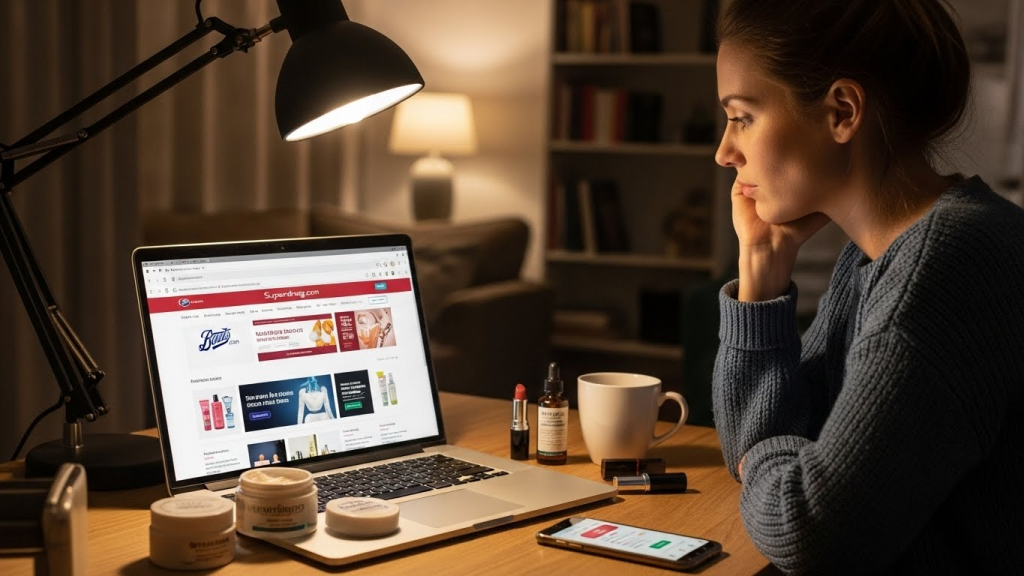
This is not about “best overall,” it is about “best for you.”
Below is a practical comparison of Boots plus two similar retailers, Superdrug and Walgreens, focusing on what shoppers usually care about: rewards, convenience, and range.
Side-by-side comparison table
| Feature | Boots | Superdrug | Walgreens |
|---|---|---|---|
| Core strength | Health + beauty, strong pharmacy presence | Beauty + personal care, frequent promos | Convenience health + beauty with pharmacy focus |
| Loyalty basics | Advantage Card: 3 points per £1 spent (when card is used or linked online) | Health & Beautycard: 1 point per £1, and 100 points = £1 | myWalgreens: earns Walgreens Cash rewards, example: 1% on out-of-pocket spend (including prescriptions) |
| Best for | Stock-ups, everyday essentials, earning points steadily | Deal-hunters who like frequent offers and simple redemption | US shoppers who want one-stop convenience |
| Shopping tip | Watch for targeted points offers, stack with essentials | Use points in £1 increments (100 points) | Combine rewards with weekly promos and pickup options |
If your goal is to shop our extensive range of health and beauty products from leading brands while getting rewards back, start by choosing the retailer whose loyalty rules feel easiest to use every week, not the one that looks best on paper.
Quick picks (based on shopper type)
- You want UK pharmacy plus beauty in one place: Boots
- You chase promos and quick point redemption in the UK: Superdrug
- You are US-based and want convenience plus pharmacy: Walgreens
Common questions people ask before buying (FAQ style)
What is the best way to start a skincare routine?
Start with cleanser, moisturizer, and sunscreen. Add one treatment only after that feels easy for 2 to 4 weeks.
Do I need expensive products for results?
Not usually. Consistency beats luxury pricing. Sunscreen and a gentle routine do more than random “miracle” serums.
How do I pick a moisturizer for my skin type?
AAD recommends choosing based on your skin type and notes that dry skin often improves with the right moisturizing routine.
What SPF should I use every day?
AAD recommends SPF 30 or higher.
What does “broad spectrum” mean?
It means UVA and UVB coverage. FDA explains how sunscreens are tested and labeled, including SPF.
How can I use cosmetics more safely?
FDA advises: read the label, wash hands, do not share makeup, keep containers closed, and throw products away if smell or color changes.
Do cosmetics have to show expiration dates in the US?
Not always. FDA states there are no US laws requiring cosmetic shelf lives or expiration dates on labels.
How big is the sunscreen issue, really?
Skin cancer is the most common cancer in the US, and the CDC estimates about 6.1 million people are treated for skin cancer each year.
A simple shopping checklist (use this every time)
Before checkout, ask:
- What is my goal for the next month?
- Does this product clearly match that goal?
- Do I understand how to use it safely? (label, warnings, storage)
- Am I buying duplicates because I am bored, or because I need a refill?
- If it is skincare, did I prioritize sunscreen first?
This is how you shop our extensive range of health and beauty products from leading brands without turning your bathroom into a graveyard of half-used bottles.
Conclusion: Buy less, choose smarter, get better results

Health and beauty shopping is easier when you build around basics:
- Sunscreen daily (SPF 30+, broad spectrum)
- A simple cleanser and moisturizer you like
- One targeted treatment at a time
- Safer habits with storage and product hygiene
- Supplements only when you have a clear reason, not because the label sounds confident
Then pick your retailer based on how you shop:
- Boots for steady points and UK pharmacy plus beauty convenience
- Superdrug for straightforward point value and frequent deal energy
- Walgreens for US convenience and pharmacy-linked shopping
If you want a next step, do this today: choose one sunscreen and one moisturizer you will use daily, and stop there. Next week, if needed, add one treatment.
The responses below are not provided, commissioned, reviewed, approved, or otherwise endorsed by any financial entity or advertiser. It is not the advertiser’s responsibility to ensure all posts and/or questions are answered.