

Explore the QVC 40th anniversary through the history of live shopping, the best-selling QVC brands, and three current QVC products worth comparing.
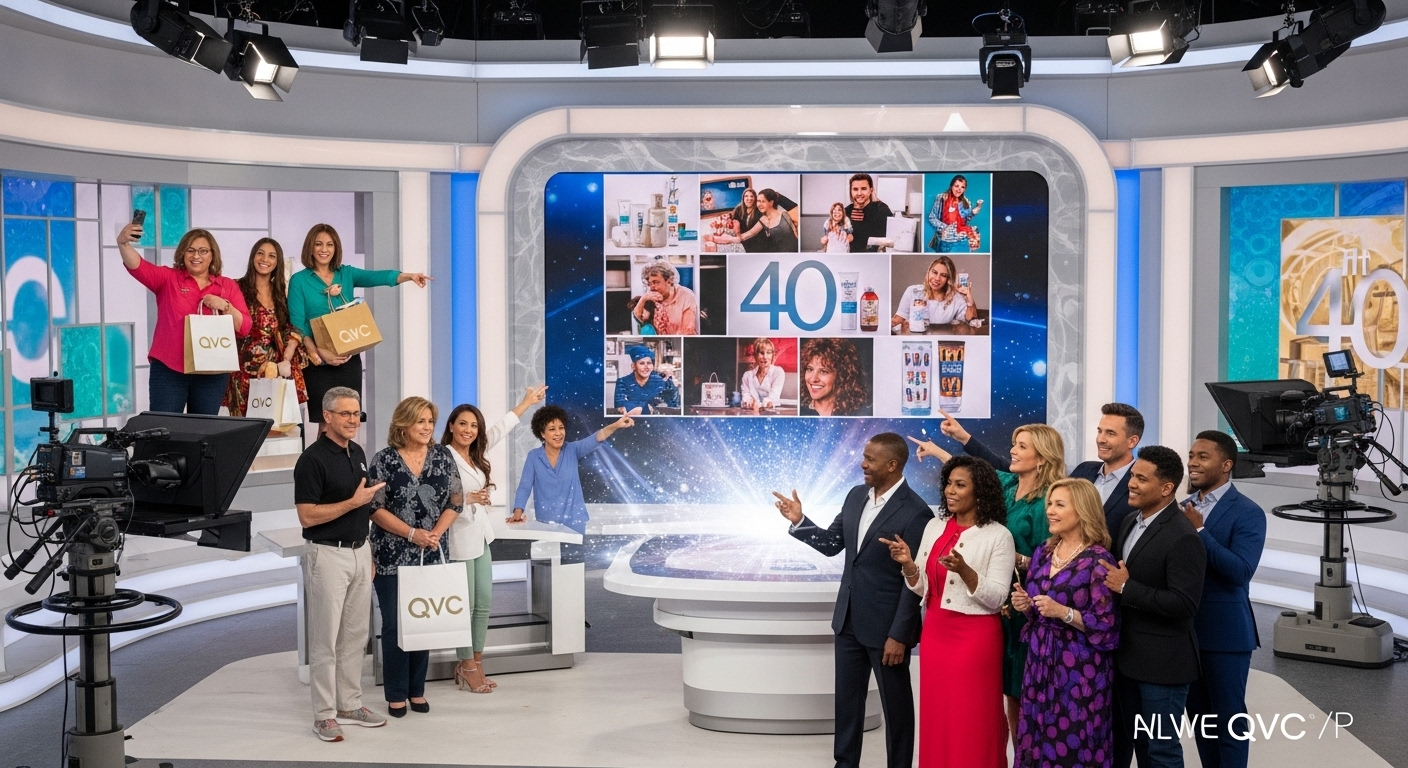
In 2026, the QVC 40th anniversary feels bigger than a birthday. It feels like a checkpoint for an entire retail format. QVC’s official anniversary hub frames the year as a milestone celebration of the “Q fam,” while Britannica traces the company back to 1986, when Joe Segel launched it as an alternative to the Home Shopping Network.
That matters because QVC did more than sell products on television. It helped turn shopping into content. Hosts demonstrated, explained, reassured, compared, and told stories. The result was a format that made viewers feel like they were not just watching a pitch, they were learning how and why a product fit real life. Britannica notes that QVC stood apart by favoring product knowledge and relatable storytelling over high-pressure selling.
The QVC 40th anniversary also arrives at a moment when live shopping is changing screens, not disappearing. QVC Group rebranded around a “live social shopping” strategy in 2025, and its TikTok Shop push has already put QVC products into creator-led videos and livestreams across the platform.
A quick look at 40 years in motion
| Year | Milestone | Why it matters |
|---|---|---|
| 1977 | Home shopping takes off on radio with the can-opener story that led to HSN | It proved people would buy from live demonstrations at home |
| 1986 | QVC is founded as an alternative to HSN | It gave the category a more polished, product-first competitor |
| 1986 | The first item sold on QVC is an $11.49 shower radio | A small, practical product became part of retail history |
| 2025 | QVC Group formally leans into live social shopping | The company signals that the format must evolve beyond cable |
| 2026 | QVC celebrates its 40th anniversary year | The legacy brand connects TV-era trust with modern creator commerce |
The roots of televised commerce go back to the late 1970s. Encyclopedia.com and the Museum of Broadcast Communications both describe how the home-shopping concept grew out of a radio station in Clearwater, Florida, after can openers taken in lieu of payment sold out on-air. Less than a decade later, QVC launched into that environment with a fresher, more story-driven approach. Britannica says the first item sold on QVC when it went live in November 1986 was an $11.49 shower radio.
How QVC changed the history of live shopping
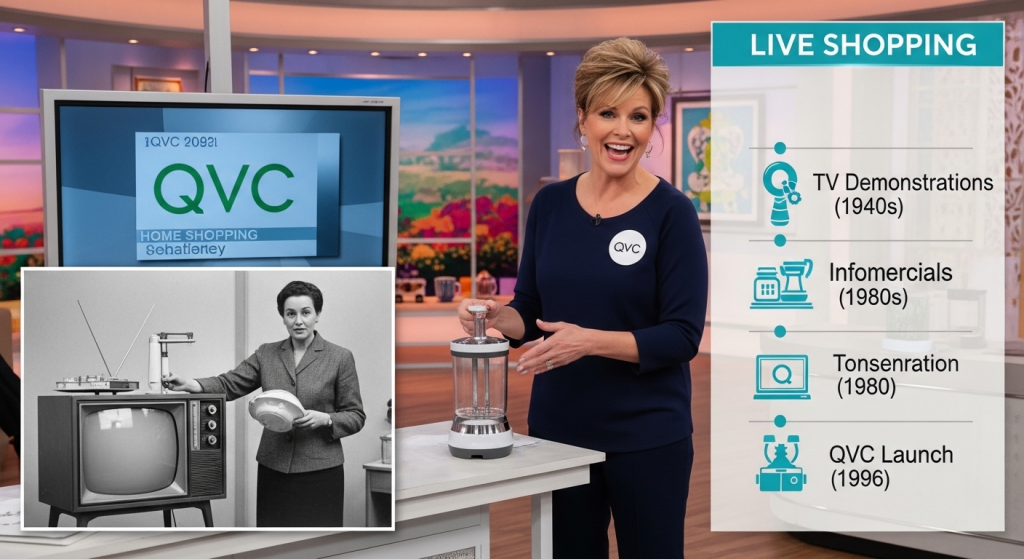
To understand the history of live shopping, it helps to see QVC as both a retailer and a media company. QVC did not invent selling at home, but it refined the formula into something more durable. The host was part demonstrator, part editor, part trusted friend. That mix made ordinary categories, cookware, knitwear, beauty, storage, and home décor, feel entertaining enough to watch and practical enough to buy. Britannica’s account of QVC’s early strategy is especially useful here, because it highlights the company’s softer sell and stronger product storytelling.
That storytelling model still matters. A 2024 academic review found that livestream shopping is conceptually distinct from traditional TV home shopping, but it still depends on social and relational dynamics, the same broad forces that helped TV retail succeed in the first place. In other words, the screen changed, but the psychology did not. People still respond to demonstrations, interaction, trust, and the feeling that someone knowledgeable is walking them through a choice.
The numbers help explain why the model keeps evolving. One 2025 SAGE paper, citing eMarketer 2024 data, says U.S. livestream shopping volume was estimated at $50 billion by 2023. QVC Group, for its part, says that after launching on TikTok Shop in August 2024, more than 74,000 creators had already featured QVC items through shoppable videos and livestreams. That is a clear sign that the DNA of QVC has not vanished, it has spread into social commerce.
What makes QVC’s version of live shopping memorable is that it built habits around categories that benefit from showing, not just telling. A serum looks different when applied. A mixer matters more when you see the bowl size and attachments. A throw blanket or cardigan becomes more persuasive when the host talks about texture, fit, washing, and daily use. QVC turned product education into a repeatable entertainment format, and modern livestream retail still borrows that playbook.
The best-selling QVC brands that became household names
When people search for the best-selling QVC brands, they are usually asking a bigger question: which brands are most closely tied to the QVC way of selling? QVC’s own site points to recurring “top brands” in fashion, home, kitchen, and beauty, while its best-sellers pages show the same pattern, comfort, convenience, giftability, and products that are easy to demonstrate live.
In fashion, names like Susan Graver, Denim & Co., and Barefoot Dreams fit the format almost perfectly. QVC highlights Susan Graver and Barefoot Dreams among its featured brands, and those lines work because hosts can show movement, drape, softness, layering, and outfit versatility in real time. That is much harder to communicate in a static product card than in a live segment.
In kitchen and home, Temp-tations, KitchenAid, and Ninja represent another classic QVC strength. Temp-tations is especially notable because QVC describes it as “created especially for QVC,” which makes it feel less like a third-party listing and more like a native QVC success story. KitchenAid brings category authority, with QVC highlighting it as the “#1 Selling Mixers Brand in the U.S.” on its KitchenAid page, while Ninja consistently appears in QVC’s appliance best-sellers. These brands thrive because live shopping rewards usefulness you can see in seconds.
Beauty has its own version of that formula. Laura Geller remains a strong example because QVC’s Laura Geller pages prominently feature multiple “Best Seller” items, especially complexion products and easy-to-use sets. Beauty performs well in live commerce because the host can show color payoff, finish, technique, and before-and-after results, all of which reduce hesitation.
So what do the best-selling QVC brands have in common? They are easy to demo, easy to explain, and easy to imagine in everyday life. That is why so many long-running QVC success stories come from apparel, kitchen gear, cosmetics, storage, and comfort-focused home products. These categories invite conversation, not just checkout.
Three current QVC products worth comparing
One of the smartest ways to celebrate the QVC 40th anniversary is to look at the kind of product the platform still sells best: practical, demonstrable kitchen gear. Stand mixers are a strong example because they are visual, aspirational, and genuinely useful.
| Product | Best for | Key specs | Why it fits the QVC style |
|---|---|---|---|
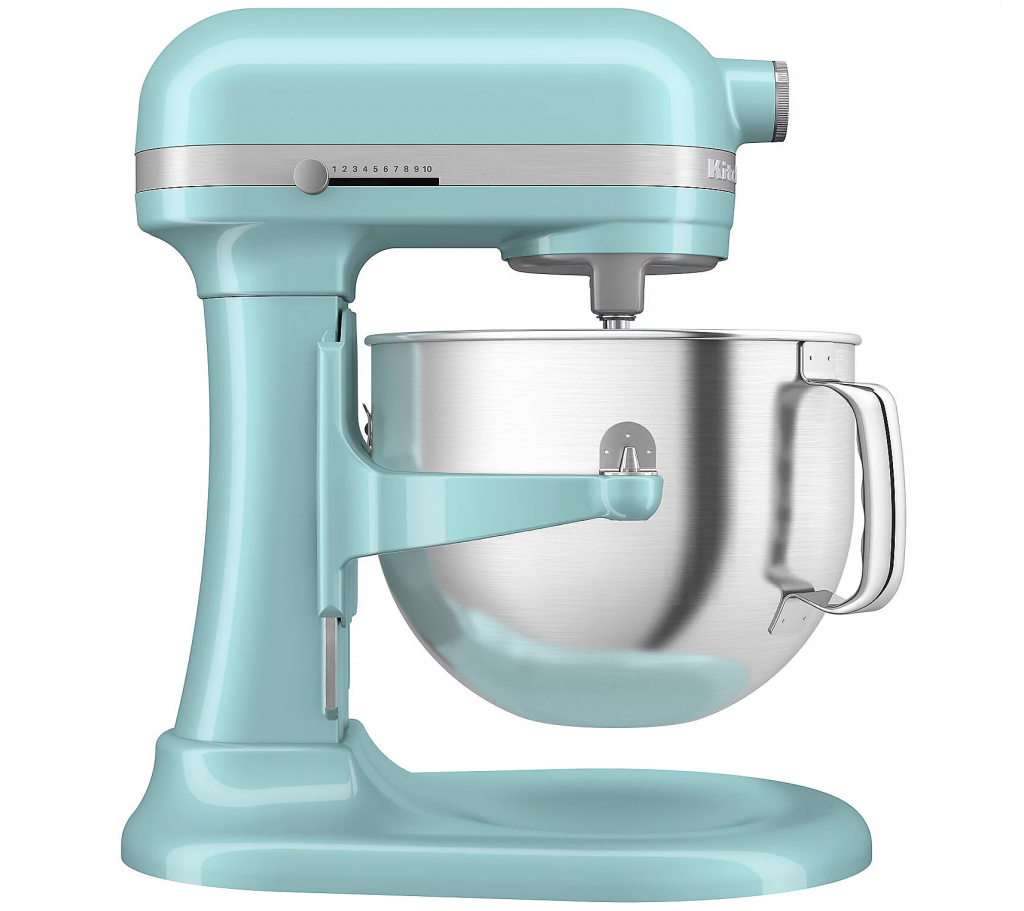
| KitchenAid 7 Quart Bowl-Lift Stand Mixer | Serious bakers and batch cooking | 7-quart bowl, 11 speeds, bowl-lift design | Premium demo product, high capacity, easy to show in action |
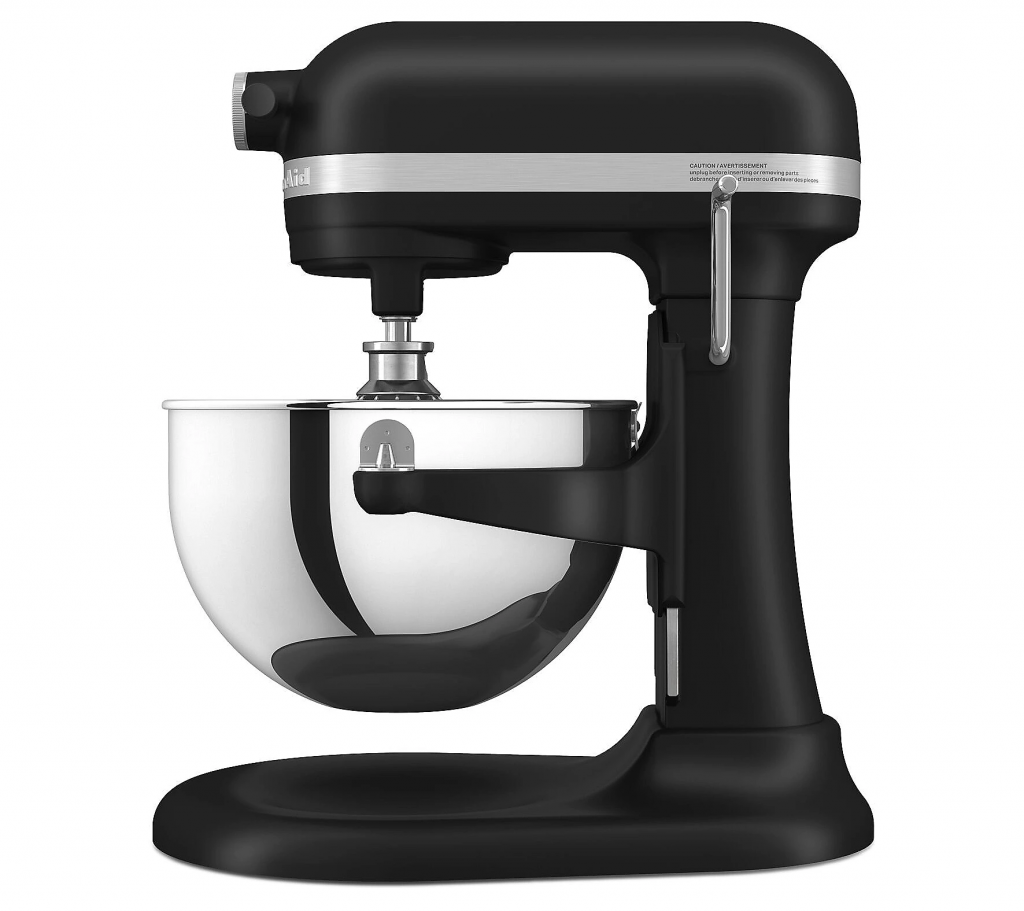
| KitchenAid 5.5 Quart Bowl-Lift Stand Mixer | Everyday bakers who still want power | 5.5-quart bowl, 11 speeds, bowl-lift system | Feels like a practical step-down from the 7-quart |
| Cuisinart Precision Master 5.5-qt 12-Speed Stand Mixer | Shoppers who want value and flexibility | 5.5-quart bowl, 12 speeds, tilt-head design | Strong “feature for price” story, perfect for live comparison |
The 7-quart KitchenAid includes 11 distinct speeds and a stainless-steel bowl
The 5.5-quart version also offers 11 speeds and a bowl-lift design
The Cuisinart Precision Master offers a 5.5-quart capacity with 12 speeds and a tilt-head format
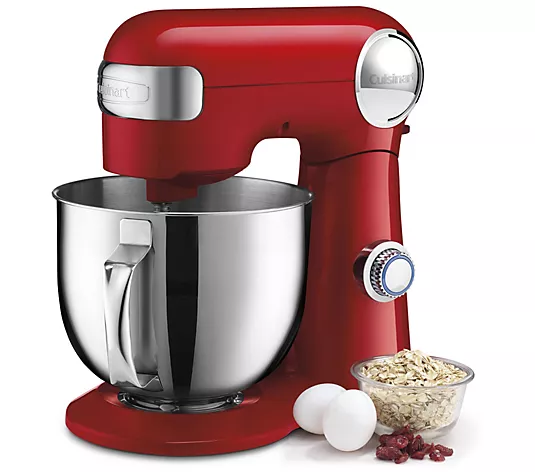
Here is the practical takeaway. If you want the most capacity and expect to mix bread dough, holiday batches, or heavier recipes, the 7-quart KitchenAid is the premium pick. If you want a KitchenAid but do not need the larger footprint, the 5.5-quart model is the safer middle ground. If value matters most, the Cuisinart stands out because the live-shopping story is simple: plenty of speed options, enough capacity for most households, and a lower barrier to entry. That kind of clear differentiation is exactly why mixers perform so well on QVC.
Why the QVC 40th anniversary still matters in 2026
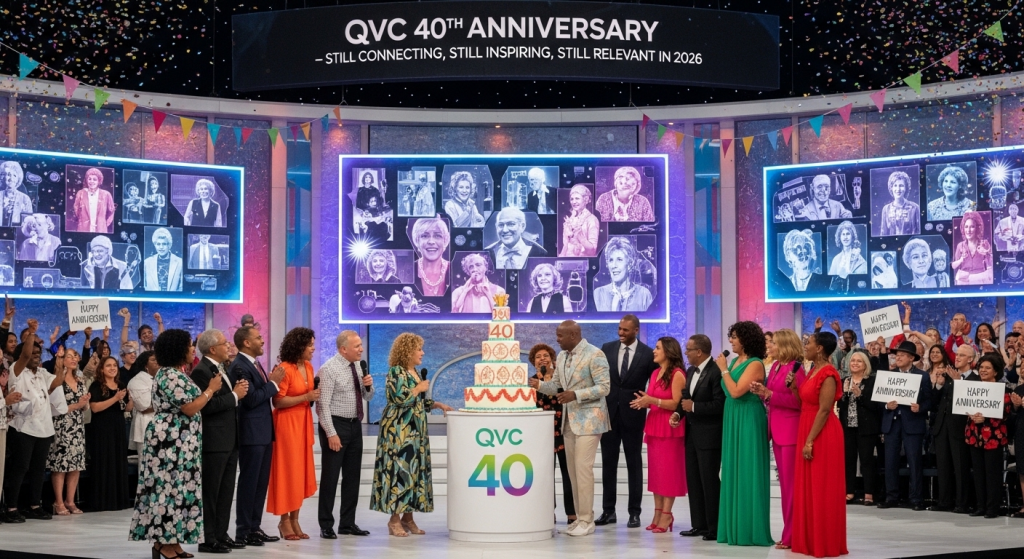
The QVC 40th anniversary is not just about nostalgia. QVC’s official anniversary page says the company has “brought shopping to life since 1986,” and the celebration includes monthly anniversary moments plus A QVC Story: The Early Years on QVC+ and HSN+. That language matters because it frames QVC as an entertainment brand as much as a retail brand.
It also matters because the anniversary lands during a period of real change. QVC Group officially adopted the QVC name at the corporate level in February 2025 to support its live social shopping strategy. In 2025, the company also announced a 24/7 live social shopping experience with TikTok Shop. Then, in April 2026, QVC Group filed for Chapter 11 bankruptcy protection while saying customer-facing operations would continue as usual. The signal is mixed, but clear: the legacy business model is under pressure, yet the company still believes live commerce has a future.
That is why this milestone is so interesting. The QVC 40th anniversary tells two stories at once. One is about a television network that helped define at-home retail. The other is about how that same selling logic is being repackaged for phones, creators, and nonstop social feeds. In that sense, QVC did not just shape the past of live shopping. It helped teach the internet how to do it.
Conclusion
The best way to read the QVC 40th anniversary is not as a look back at old TV shopping, but as a reminder of what has always made live commerce work. People want useful demonstrations. They want familiar personalities. They want products that solve real problems. And they want enough context to feel confident before they buy. QVC built that formula into a habit, then spent 40 years proving how durable it could be.
For readers and shoppers, the next step is simple. Focus first on the categories where live selling adds the most value, kitchen appliances, beauty, fashion basics, and comfort-driven home items. Those are still the clearest windows into why QVC matters, why its brands keep selling, and why the format behind them still works.
The responses below are not provided, commissioned, reviewed, approved, or otherwise endorsed by any financial entity or advertiser. It is not the advertiser’s responsibility to ensure all posts and/or questions are answered.