

Choosing between Dyson V15 and Dyson V12 comes down to power vs. weight, plus your floors, pets, and home size. Here’s a clear, spec backed guide to pick the right one. If you are stuck on The Cordless Power Players: Dyson V15 vs. V12. Which is Right for You?, you are already asking the right question.

Both are premium cordless Dysons with smart sensing, strong suction, and tools that make everyday cleaning faster.
The real difference is simple: the V15 is the heavier hitter, the V12 is the lighter mover.
Quick pick in 30 seconds
Choose Dyson V15 if you want the most suction power in this matchup, you have more carpet, more pet hair, or you simply want the “buy once, cry once” feel.
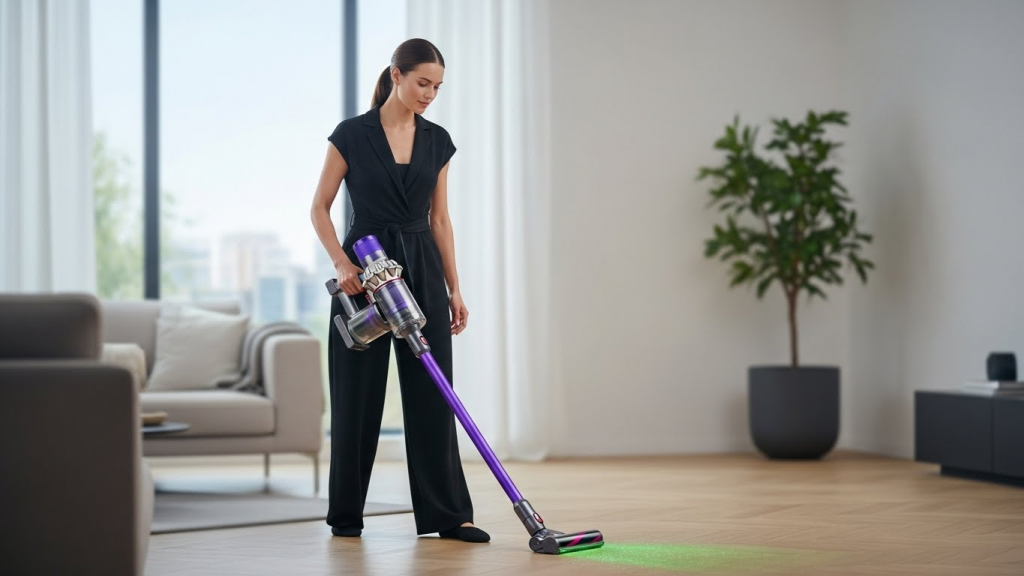
Choose Dyson V12 if you want something noticeably lighter for daily cleanups, stairs, quick passes, and smaller spaces, while still keeping strong “real vacuum” performance.
If you want the keyword answer in one line: The Cordless Power Players: Dyson V15 vs. V12. Which is Right for You? comes down to whether you value maximum power (V15) or maximum agility (V12).
Dyson V15 vs. V12 at a glance
Here are the official headline specs side by side.
| Spec | Dyson V15 Detect | Dyson V12 Detect Slim |
|---|---|---|
| Suction power | 240 Air Watts | 150 Air Watts |
| Weight | 6.83 lb | 5.22 lb |
| Max run time | Up to 60 min | Up to 60 min |
| Bin volume | 0.2 gal | 0.09 gal |
| Charge time | 4.5 hrs | 3.5 hrs |
| Cyclones | 14 | 11 |
Sources: Dyson product pages.
A quick “power-to-weight” number (original calculation)
This is not an official Dyson metric, it is just a helpful way to compare “how much punch you get per pound.”
| Model | Air Watts | Weight | Air Watts per lb (calculated) |
|---|---|---|---|
| V15 | 240 | 6.83 lb | ~35.1 |
| V12 | 150 | 5.22 lb | ~28.7 |
The V15 wins on raw power and on power per pound, but the V12 still wins on total carry weight and handling.
The biggest differences that actually matter
1) Power: V15 pulls ahead, especially when floors fight back
Dyson lists the V15 at 240 Air Watts and the V12 at 150 Air Watts.
That gap shows up most on:
- carpets and rugs
- embedded grit near entryways
- thicker pet hair on fabric and carpeted stairs
If your home is mostly hard floors with some area rugs, you can often live happily with the V12.
2) Weight and “grab-and-go”: V12 is the daily driver
Dyson lists the V12 at 5.22 lb versus 6.83 lb for the V15.
That 1.6 lb difference sounds small until you:
- clean stairs
- vacuum couches
- do ceiling corners
- carry it room to room
If you vacuum in short bursts and hate anything that feels top heavy, the V12 usually feels easier to live with.
3) Bin size: V15 means fewer trips to the trash
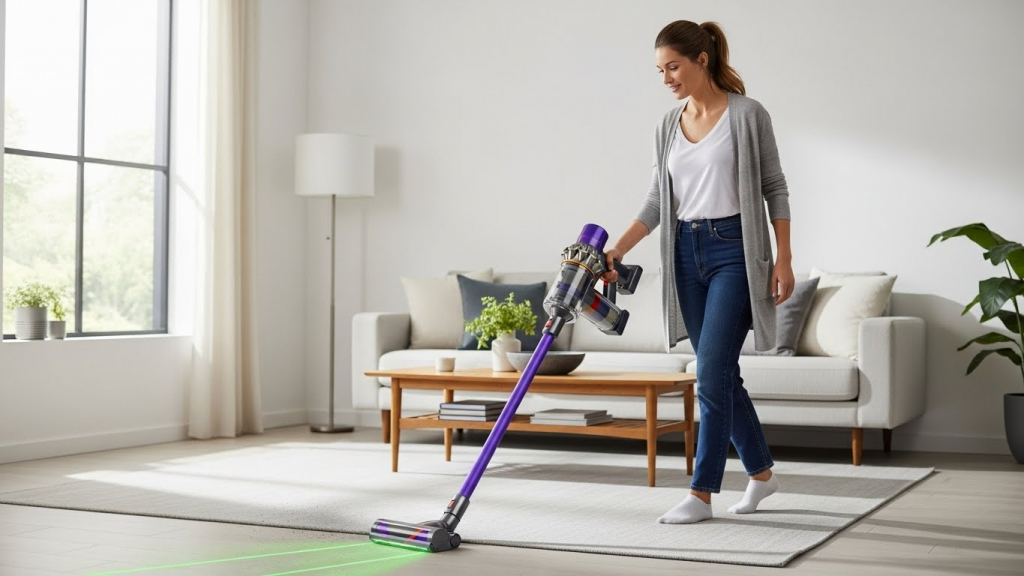
Dyson lists 0.2 gal for the V15 and 0.09 gal for the V12.
That means the V12 bin is about 55% smaller (simple ratio using the listed volumes).
If you have pets, kids, or lots of tracked-in debris, a bigger bin is a real quality-of-life upgrade.
4) Smart dust sensing: both count particles, both adjust power
Both models are built around Dyson’s “detect, count, react” idea.
They use a piezo sensor that counts particles up to 15,000 times a second, then adapts power to optimize suction and run time, and shows results on the LCD screen.
If you like proof that “yes, I actually cleaned this spot,” you get that with both.
Floors and home types: which one fits your reality?
Mostly hard floors (wood, vinyl, tile)
Both include a hard-floor head designed to reveal fine dust you normally miss.
Pick V12 if your goal is quick daily passes and easy maneuvering under furniture. Dyson highlights the V12’s low-profile hard-floor cleaning reach.
Pick V15 if you also have lots of rugs, or you want more margin when you hit heavier debris.
Lots of carpet (or high-pile rugs)
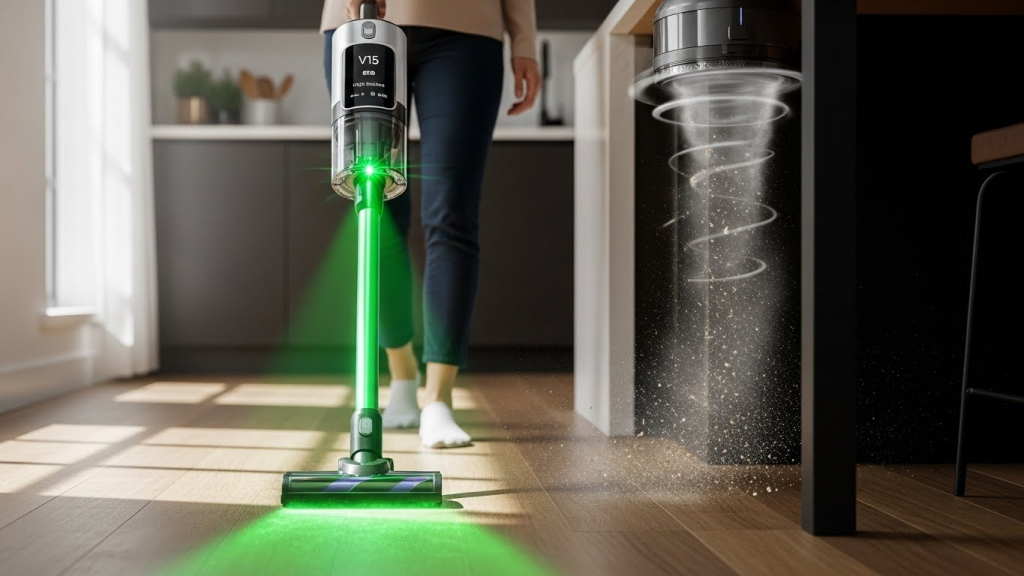
This is where V15’s extra suction is easiest to justify.
You still get de-tangling cleaner head tech in both lines, but power matters when carpet holds onto grit.
Pets and long hair
Both support anti-tangle approaches, and both are positioned as effective for pet hair with the right head/tool setup.
If your main headache is fur on upholstery and stairs, weight and handling can matter more than max power. That leans V12 for many people.
If your main headache is fur ground into carpet, the V15’s extra suction tends to be the safer bet.
Apartments and small homes
The V12 is often the sweet spot here: lighter, easier to store, still up to 60 minutes listed run time, and strong suction for its class.
Larger homes and “one vacuum for everything”
If you want one cordless to handle most of the house without feeling like you compromised, the V15’s bigger bin and higher suction help it feel more “whole-home.”
Filtration, allergens, and the “HEPA” question
Dyson describes fully sealed filtration capturing 99.99% of microscopic particles and allergens as small as 0.1 microns on both the V15 and V12 product pages.
QVC’s listings commonly describe filtration around 0.3 microns (and note different filtration percentages by mode).
So what is the deal with 0.1 vs 0.3 microns?
A key context point is that “true HEPA” is commonly defined around 99.97% at 0.3 microns, which the U.S. EPA explains as the “worst case” particle size (most penetrating particle size).
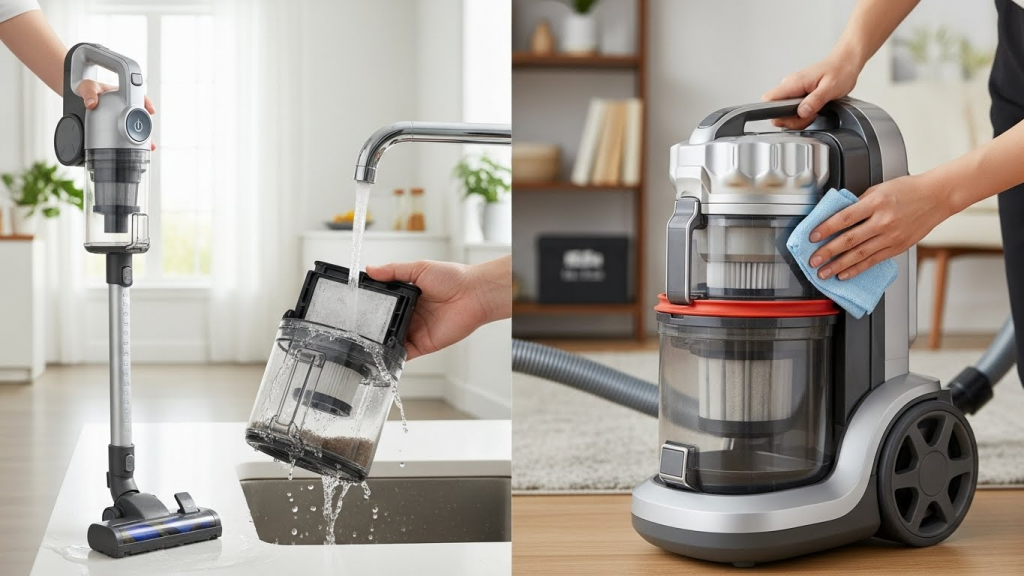
Practical takeaway: if filtration matters to you, both are designed to be high-filtration machines. You should still focus on good habits (emptying the bin before it overfills, keeping seals clean, washing or replacing filters as directed).
Battery and run time: what “up to 60 minutes” really means
Both list up to 60 minutes maximum run time, and both note that actual run time varies based on mode, floor type, and attachments.
A simple way to think about it:
- Eco mode can get you closer to the max
- Auto varies based on what the sensor detects
- Boost is for short, intense cleaning
If you routinely need longer cleans, consider bundles that include extra batteries, or consider stepping up to a model/bundle explicitly built around extended runtime.
What to buy on QVC
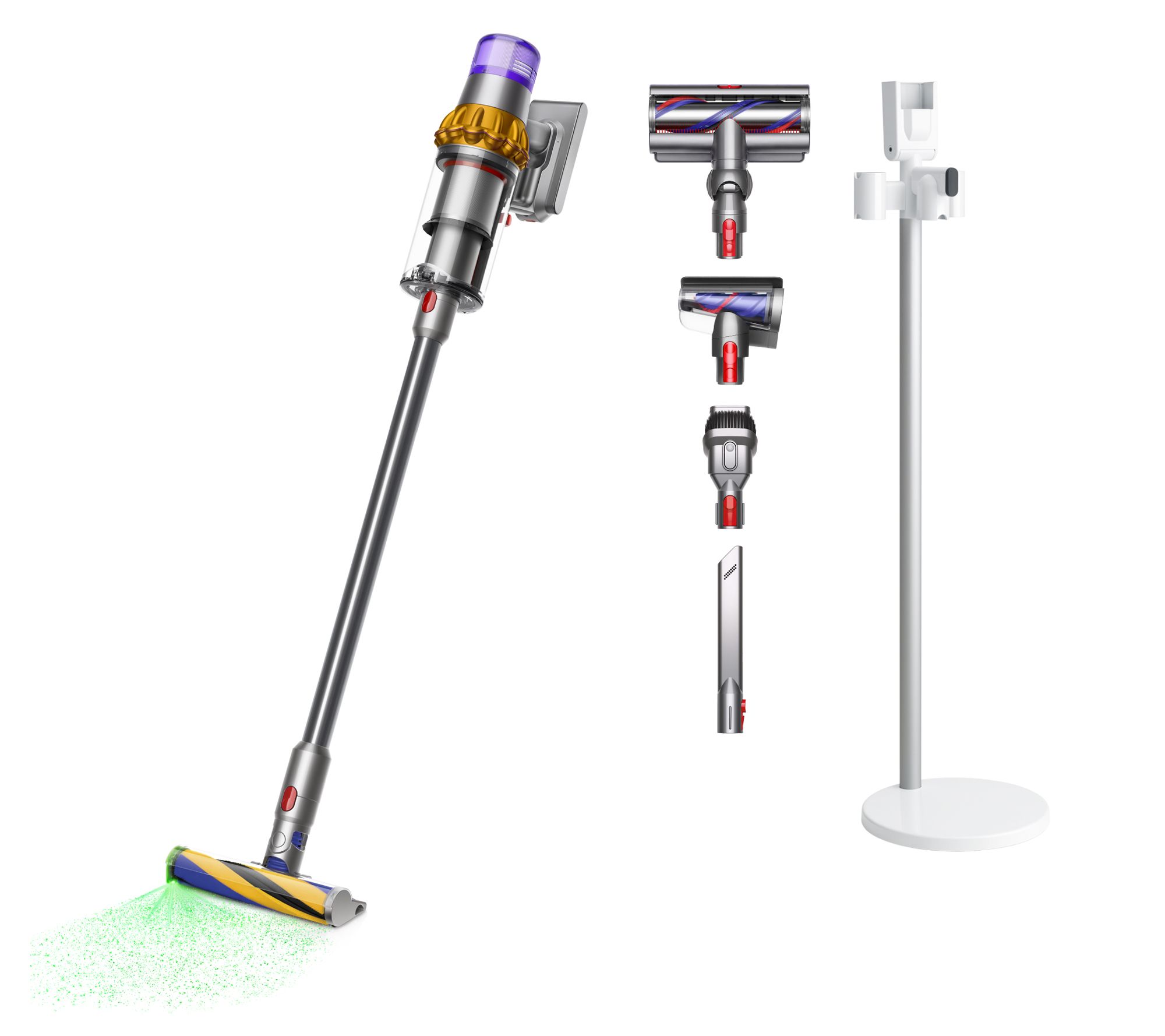
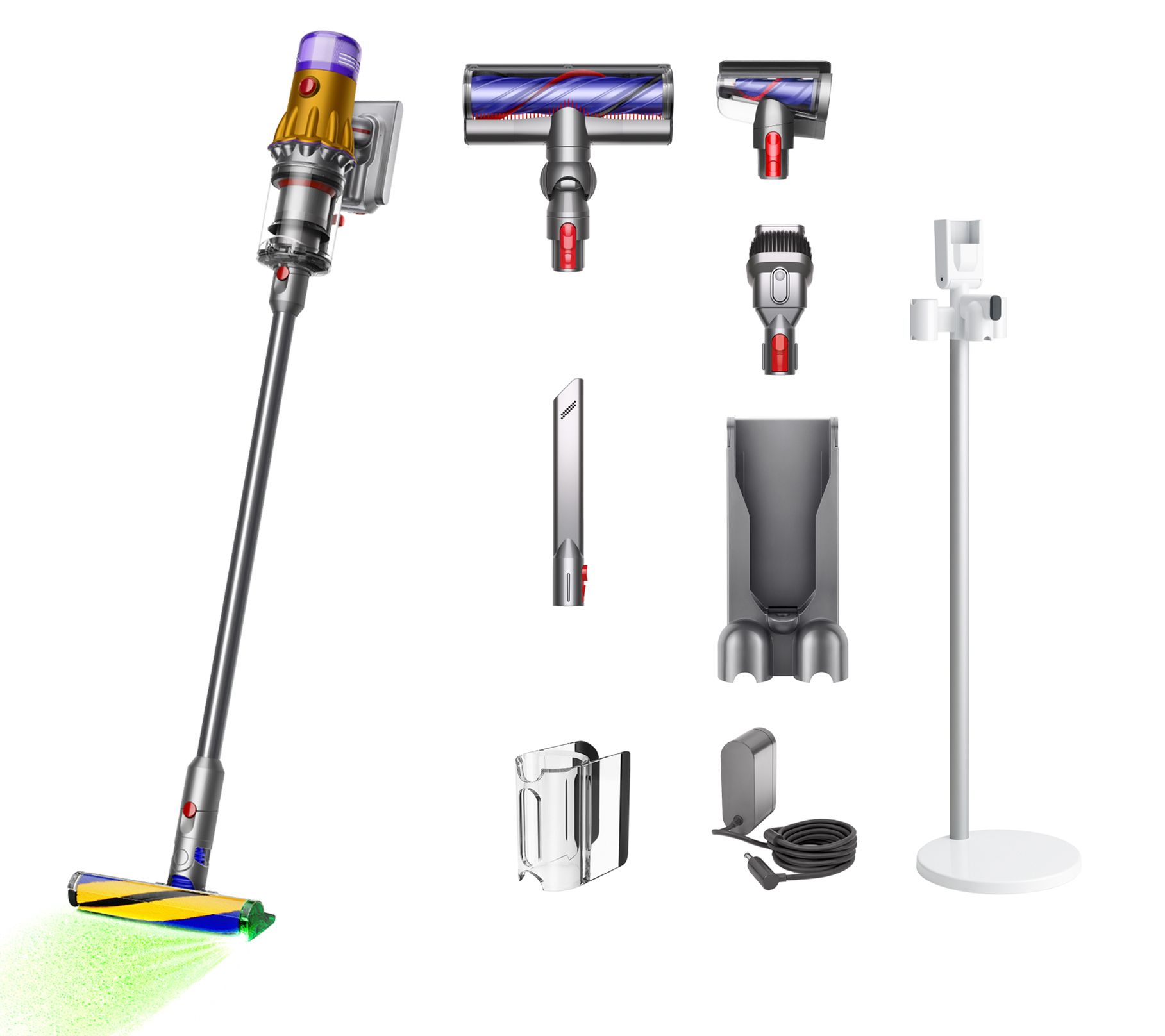
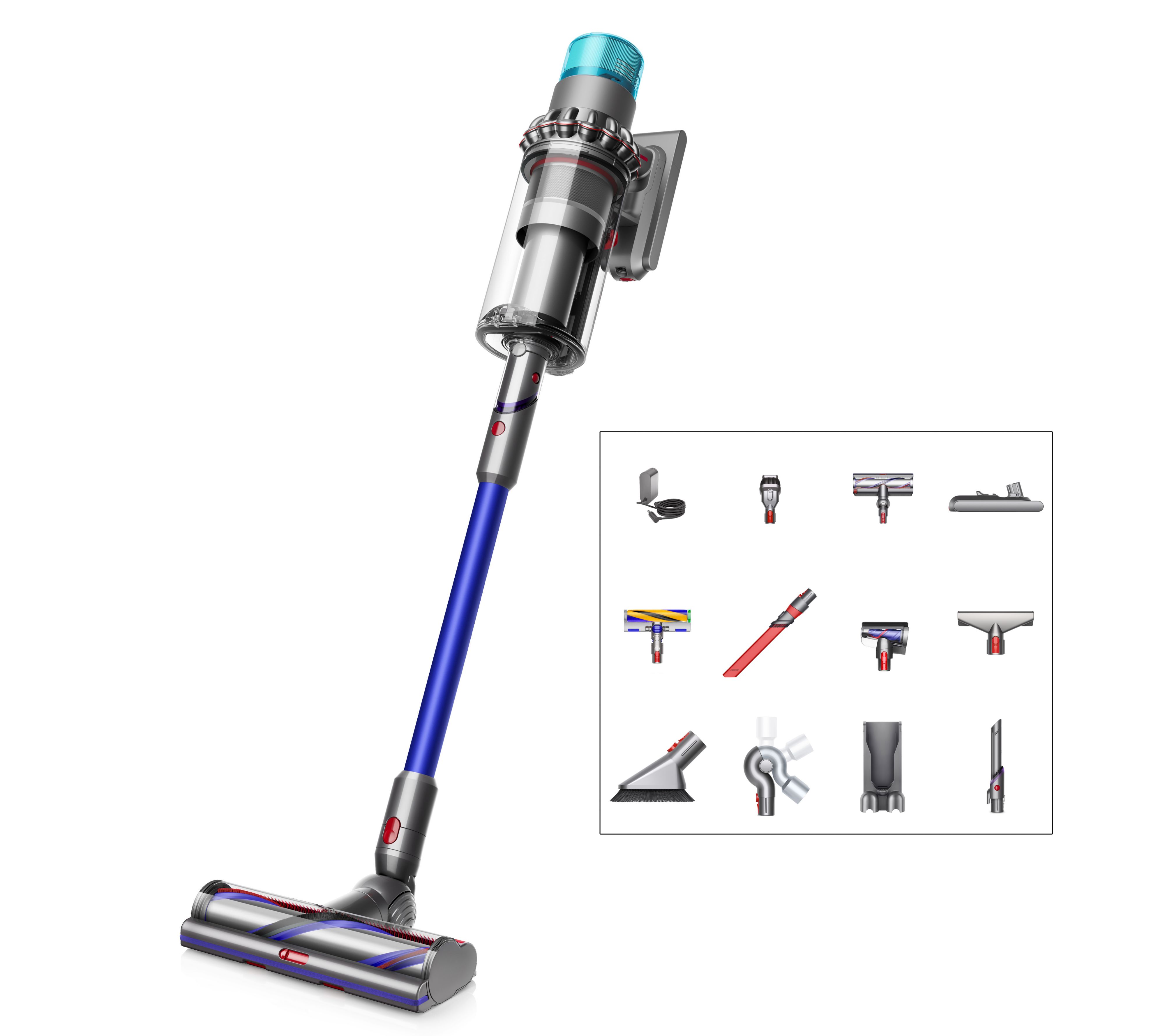
Buying checklist (use this to decide in 2 minutes)
Pick V15 if you check 3 or more:
- You have lots of carpet.
- You have pets and carpet.
- You want fewer bin empties.
- You want the strongest suction in this comparison.
- You prefer “one vacuum that can do almost everything.”
Pick V12 if you check 3 or more:
- You value light weight and easy handling.
- You clean in quick bursts.
- You do lots of stairs, furniture, or above-floor cleaning.
- Your home is smaller, or mostly hard floors.
- You want strong Dyson performance without the extra bulk.
People Also Ask style questions
Is Dyson V15 worth it over V12?
It is worth it when your floors are harder to clean (more carpet, more pet hair, more debris), and when the bigger bin and extra power reduce frustration.
If you mostly want a lightweight daily vacuum, V12 can be the “right” choice even if it is less powerful.
Do both have the laser dust illumination?
Both product pages describe a Fluffy Optic style hard-floor head that reveals fine dust you might not see normally.
Do they really adjust suction automatically?
Yes, both describe dust sensing and automatic adaptation, and both reference particle counting up to 15,000 times per second.
Which is better for allergies?
Neither is a medical device, but both are designed around sealed filtration and capturing fine particles. If “HEPA-level” filtration is your priority, remember the EPA definition centers on 0.3 microns at 99.97% efficiency, and compare claims carefully across modes and tests.
Conclusion: which one should you choose?
If you want the confident, no-regrets powerhouse, go V15. The suction is higher, the bin is bigger, and it is built to push through tougher whole-home jobs.
If you want the vacuum you will actually grab every day, go V12. It is lighter, easier to maneuver, and still brings smart sensing and strong performance for everyday cleaning.
Either way, The Cordless Power Players: Dyson V15 vs. V12. Which is Right for You? is not about which vacuum is “best,” it is about which one fits how you clean, and how often you want to clean.
The responses below are not provided, commissioned, reviewed, approved, or otherwise endorsed by any financial entity or advertiser. It is not the advertiser’s responsibility to ensure all posts and/or questions are answered.