

Spring is supposed to feel fresh, but your carpet often gets the worst of it.

Muddy shoes. Wet umbrellas. Grass streaks. A dog who sprints inside like it’s a race. One knocked-over latte, and suddenly you are staring at a stain that looks “permanent.”
The good news is that most spring stains are beatable if you act fast and use the right method for the right mess. This guide gives you a simple system, shows how to use Campanelli stain remover correctly, and helps you choose the best carpet cleaner for pets based on the kind of stains you actually get.
The 60-second game plan (what to do before any cleaner touches the carpet)
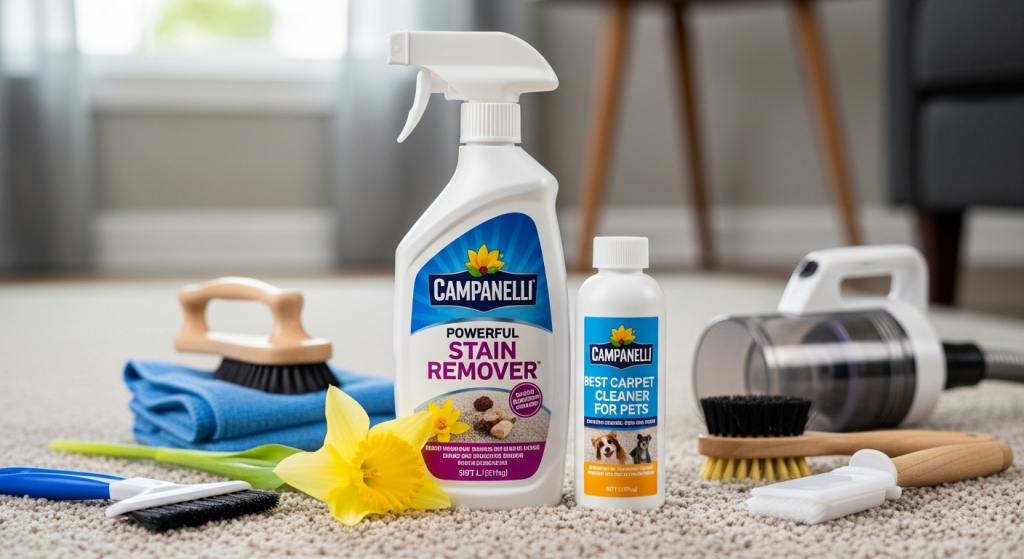
- Remove solids first. Scoop gently with a spoon. Vacuum dry debris.
- Blot, don’t rub. Press with a white towel to pull liquid up. Rubbing pushes stains deeper.
- Test for colorfastness. Try any product in a hidden spot first, especially on wool.
- Use the right tool: spray foam for spots, portable extractor for pet accidents, upright cleaner for whole-room grime.
Quick tip: If a stain looks gone but the area feels crunchy later, it might be leftover residue that attracts dirt. Rinse lightly and blot dry.
Why spring stains “lock in” (and how to stop it)
Spring stains are sneaky because they come in layers.
Mud is not just dirt. It is water plus fine particles that sink into fibers as it dries. Pollen is sticky. Food and drink stains carry sugars, dyes, or oils.
That is why the best approach is usually lift first, then treat, and avoid over-wetting. The Carpet and Rug Institute’s spot-removal guidance is consistent: work gently from the edge toward the center, and don’t scrub like you are sanding a table.
Campanelli stain remover, how it works best (and what people get wrong)
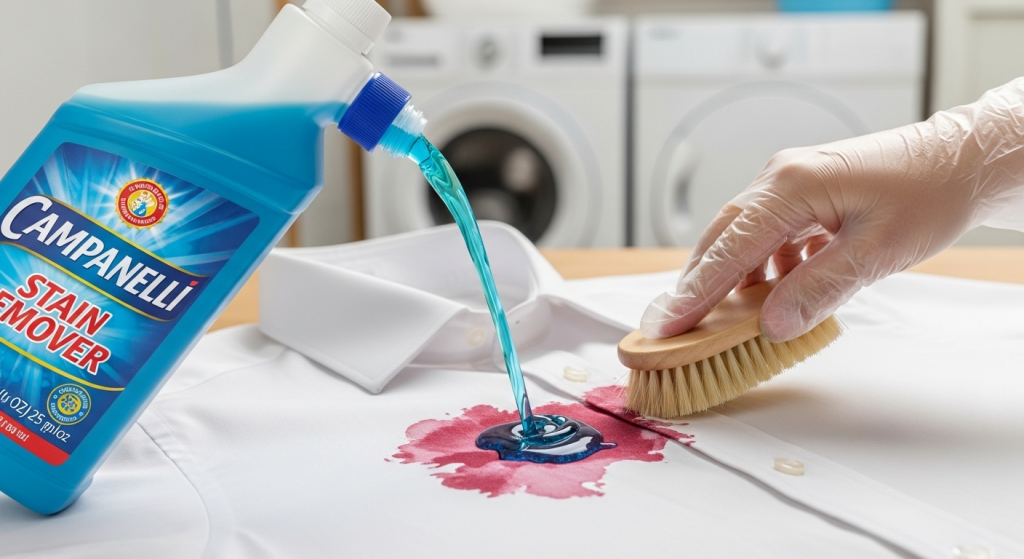
If you are using Campanelli stain remover (including the popular Point & Spray style), the key is to follow the label-style timing and technique.
The right way to use it on carpet or upholstery
Campanelli’s help center directions are simple and specific: shake well, invert can, point and spray.
- Fresh stains: remove excess material first (blot up liquid, scrape solids), then apply.
- Older stains: allow about 60 seconds for the product to saturate before you judge results.
- If needed: some blotting, mild agitation, and a second application may be required.
Safety and fabric checks (especially for pet homes)
- Check the care label and test for colorfastness, particularly on wool or delicate materials.
- Do not use on or near glass.
- Campanelli’s help content also notes their stain remover is water-based and does not contain bleach, which matters if you are trying to avoid harsh whitening effects.
Callout: If the stain lightens but does not disappear, let the area dry fully, then reassess. Some stains treated by dyes or acids can be permanent.
What “best carpet cleaner for pets” really means (it depends on your mess)
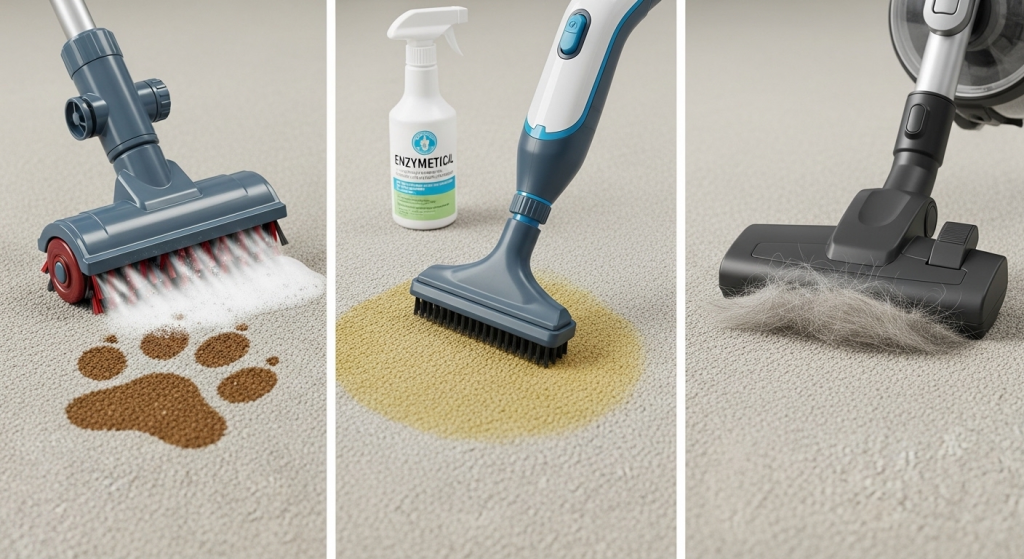
Many people search “best carpet cleaner for pets” and expect one magic answer.
In reality, you are choosing between three cleanup levels, based on how deep the mess goes.
Level 1: Spot sprays and foams (fast, inexpensive, great for fresh stains)
Best for: coffee, mud splatter, small pet “oops” caught immediately, food drips.
This is where Campanelli stain remover fits. A foam can be very convenient when you need a quick, targeted treatment.
Level 2: Portable spot extractors (best for pet accidents and upholstery)
Best for: urine that soaked in, vomit, repeat accidents, couch cushions, stairs, car interiors.
The Carpet and Rug Institute specifically recommends small hand extractors for quick cleanup in pet facilities, while reminding you they do not replace periodic deep cleaning.
Level 3: Upright deep cleaners (best for whole-room buildup)
Best for: wall-to-wall carpet, heavy traffic paths, spring “reset” cleaning.
Consumer Reports’ carpet-cleaner testing highlights why machines vary: they score models on cleaning performance, dryness (how much solution is left behind), and convenience.
For pet homes, dryness matters more than people think, because damp padding can hold odor.
Compare 3 similar QVC options (spot spray vs portable extraction)
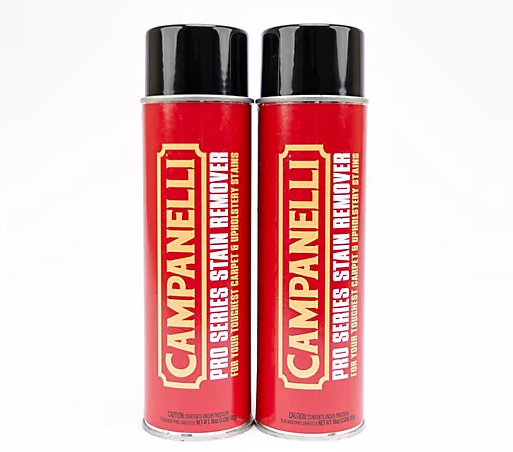
Campanelli Set of 2 18oz Point & Spray Stain Removers
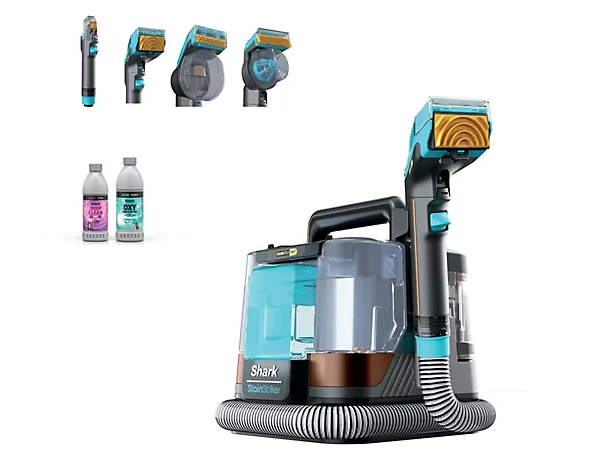
Shark StainStriker HairPRO Pet Portable Stain Remover
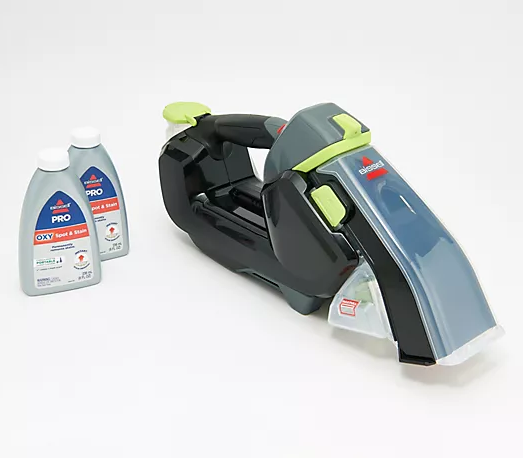
Bissell Pet Stain Eraser Cordless Portable Carpet Cleaner
Below is a practical comparison of three QVC items that target stains and pet messes, including the Campanelli Point & Spray Set and two pet-focused portable cleaners.
| QVC product | What it is | Best for | What you get (high level) |
|---|---|---|---|
| Campanelli Set of 2 18oz Point & Spray Stain Removers (V91825) | Aerosol spot treatment | Fast hits on carpet and fabric stains | Two 18-oz cans |
| Shark StainStriker HairPRO Pet Portable Stain Remover (V85404) | Portable extractor designed for pet hair + stains | Embedded pet hair, odors, repeat accidents on carpet, stairs, upholstery | Pet hair extractor tools and stain tools |
| Bissell Pet Stain Eraser Cordless Portable Carpet Cleaner (V44122) | Cordless handheld extractor | Quick grab-and-go pet mess cleanup | Scrub brush and two 8-oz formula bottles |
How to choose quickly:
- If you mostly battle small, random stains, start with Campanelli stain remover.
- If you deal with urine and odors that soak in, a portable extractor is often the true “best carpet cleaner for pets” choice.
- If your whole carpet looks dingy every spring, plan for an upright deep clean, plus a spot tool for emergencies.
Spring stain playbook (common stains, best method, and timing)
| Spring stain | First move | Best follow-up | Biggest mistake |
|---|---|---|---|
| Mud | Let it dry, then vacuum | Spot treat, then light rinse and blot | Scrubbing wet mud (spreads it) |
| Grass | Blot moisture | Spot treat, mild agitation | Heat (can set some stains) |
| Coffee/tea | Blot immediately | Spot treat, rinse, blot | Over-wetting the pad |
| Red sauce | Scoop solids | Spot treat, repeat if needed | Rubbing from the center outward |
| Pet urine | Blot, then cool-water rinse and blot | Extractor or pet-focused neutralizer | Steam cleaning urine (sets odor) |
| Pollen “yellowing” | Vacuum first | Gentle spot clean | Using too much product, leaving residue |
Pet stains and odors: the rules that save carpets
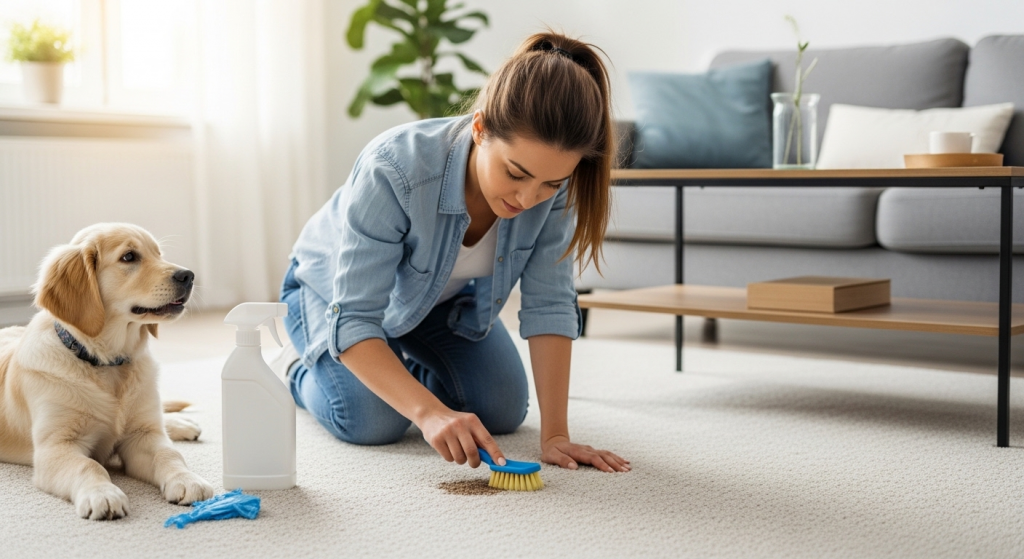
Pet messes are different because they can soak below the visible surface.
For fresh urine on carpet
Humane World (from the Humane Society) recommends absorbing as much as possible, then rinsing thoroughly with clean, cool water and blotting dry.
That “rinse and blot” step matters because it reduces what gets left behind.
For older pet stains and smells
Two important cautions show up in reputable guidance:
- Avoid steam cleaning urine odors. Heat can set stain and odor.
- Don’t mix cleaning chemicals. The CDC warns never to mix bleach with ammonia or other cleaners, and stresses ventilation.
If you are using an extractor, focus on extraction and drying. If you can pull out more moisture and help the area dry faster, you reduce the chance of lingering odor.
The most common mistakes (and the easy fixes)
Mistake 1: Rubbing like you are trying to erase the stain
Fix: blot, then gentle edge-to-center work.
Mistake 2: Using steam heat on urine
Fix: use cool-water rinse, blot, then extract, and use pet-appropriate odor treatment.
Mistake 3: Mixing products or “DIY chemistry”
Fix: follow labels, one product at a time, ventilate.
Mistake 4: Leaving sticky residue
Fix: after the stain lifts, rinse lightly and blot dry. Residue can attract more soil.
A simple maintenance plan for pet homes (so stains stop winning)
- Vacuum more often than you think. The CRI specifically calls out more frequent vacuuming for pet hair and dander.
- Treat accidents fast, then block the area until dry (pets love to revisit the same spot).
- Deep clean every 12 to 18 months, more often if needed, especially with pets.
- Keep a “stain kit” ready: white towels, spoon, gloves, spot spray, and if you have pets, a portable extractor.
FAQ (People Also Ask style)

Should I use a steam cleaner for pet urine?
Usually no. Both the Carpet and Rug Institute and Humane World warn that heat can set urine stain and odor.
How often should I deep clean carpet if I have pets?
CRI suggests professional cleaning about every 12 to 18 months, more frequently if necessary, and notes that quick hand extraction does not replace periodic deep cleaning.
Is Campanelli stain remover safe on every fabric?
Always test first and check labels, especially for wool. Campanelli’s help directions specifically call out testing for colorfastness and checking care labels.
What if the stain “ghosts” back after it dries?
That often means it soaked into padding or left residue. Let it dry fully, then re-treat if needed, and focus on extraction and drying. For pet stains, consider a portable extractor.
Conclusion: the smart way to win spring stains (and pet messes)
If you remember only three things, make them these:
- Blot first, don’t rub, and test before you treat.
- Use Campanelli stain remover for quick spot attacks, and follow the timing (especially the 60-second soak for older stains).
- For true pet accidents, the best carpet cleaner for pets is often a portable extractor, because pulling moisture out beats masking smells.
Next step: Choose your cleanup level (spot spray, portable extractor, or upright deep clean), then build a small stain kit you can grab in under 10 seconds. Most “permanent” carpet stains become manageable when your first minute is fast and correct.
The responses below are not provided, commissioned, reviewed, approved, or otherwise endorsed by any financial entity or advertiser. It is not the advertiser’s responsibility to ensure all posts and/or questions are answered.